I Walked Eight Miles to Leave a Note for a Dead Novelist
The funeral procession came around a curve on Sant Oleguer before I saw it. A black Mercedes hearse, then two more black Mercedes with their lights on, then four or five other cars trailing in a slow line up the cemetery road. My instinct did the thing it had been trained to do for twenty years. I stopped walking. I took off my hat. I held it against my heart as the procession passed. The man in the front car saw me. He raised his hand in acknowledgment. One small wave from a Catalan stranger to an American expat who paid universal respect.
I participated in more than two hundred funerals as a minister. I sang at most of them. I officiated some. I held the hands of the dying. I stood with the bodies before the families came in. That time was long ago, another lifetime. I had not seen a funeral procession in decades.
I had come to Montjuïc Cemetery on June 5th to leave a note at the grave of Carlos Ruiz Zafón. The procession was the first thing the cemetery gave me, before I had even reached the tomb. I stood there for a moment after the cars had passed and I understood, in a way I had not understood walking through the gates ten minutes earlier, that today was not just another day.
Getting there had already taken two hours. Apple Maps will not route you to Montjuïc Cemetery in any reasonable way. It was as if the digital gods conspired to prevent the living from finding the dead. I followed the suggested transit to Paral·lel, waited an hour for the 21 bus that never came, gave up, and took a taxi. The driver had never been to the cemetery. I had to guide him in.
When I arrived at the gate, the office was open. This was unexpected. In Spain it usually isn’t. I waited twenty minutes in a small queue while the woman at the counter handled information for grieving families. When my turn came, she had no English. I have been learning Spanish (slowly, the way an American learns anything), and we managed.
She gave me two maps. Not one. Two. I took them both, glanced at the first one that showed: the artistic route, the historical route, and the combined route. I put the second one in my pocket without opening it. I assumed it was generic; a tourist handout.
She asked me, in Spanish, if I had enough water. I said yes. She nodded. Then she sighed, a small, almost reluctant sound, and said Por favor, ten cuidado. Please be careful. I did not yet know why she said it.
I asked her if the cemetery’s internal shuttle bus was running. She said no, not today. I asked if she could tell me where Miró’s grave was. She did not know the English word grave. I had not yet learned the Spanish word tumba. We failed each other on that one. She did not know where Miró was buried. I said muchas gracias and went outside.
I tried the touchscreen kiosk near the entrance. It returned nothing for Zafón. Nothing for Miró. I sat at a picnic table in the shade, opened the artistic-route map, made my plan, and began to walk.
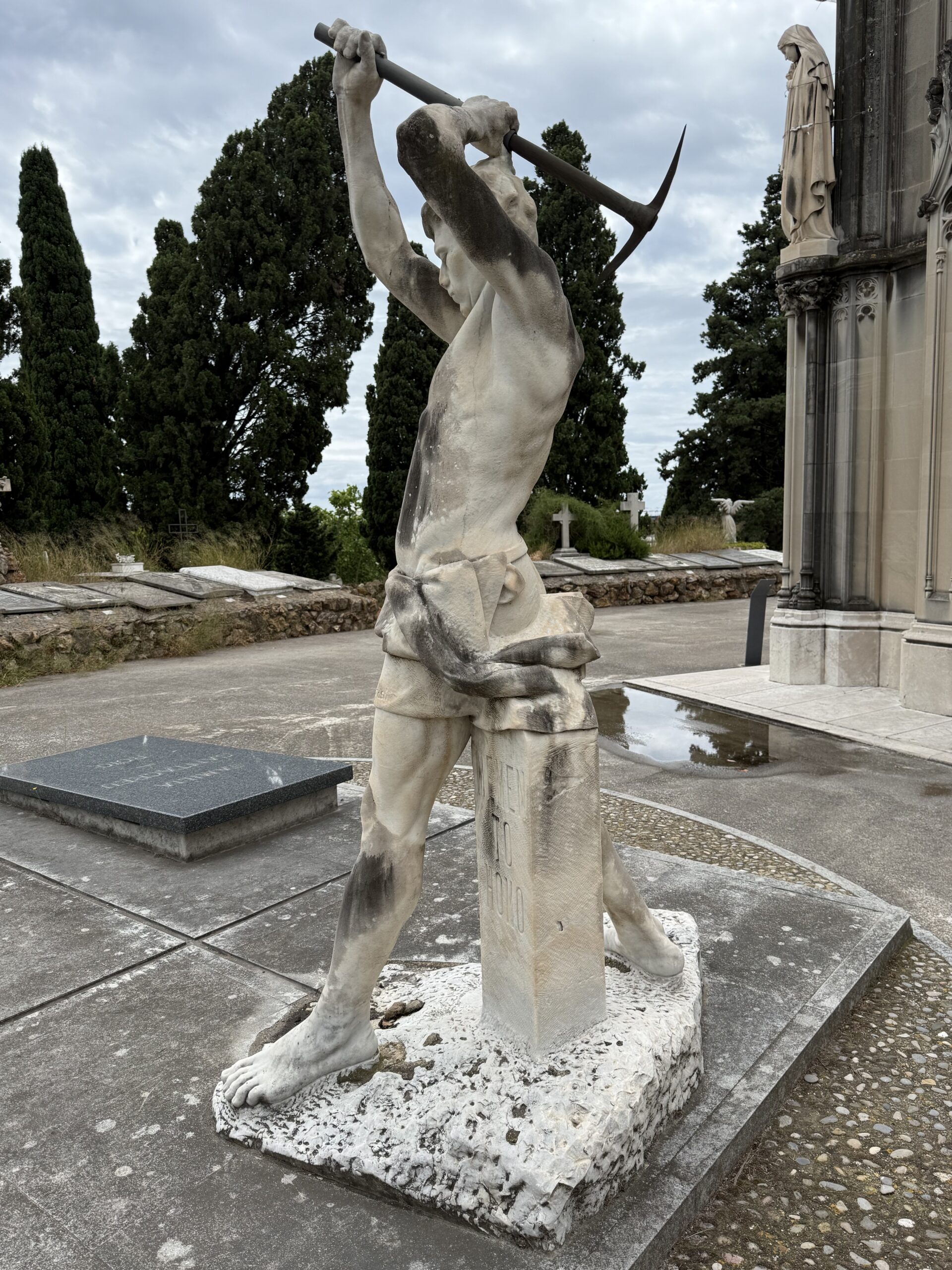
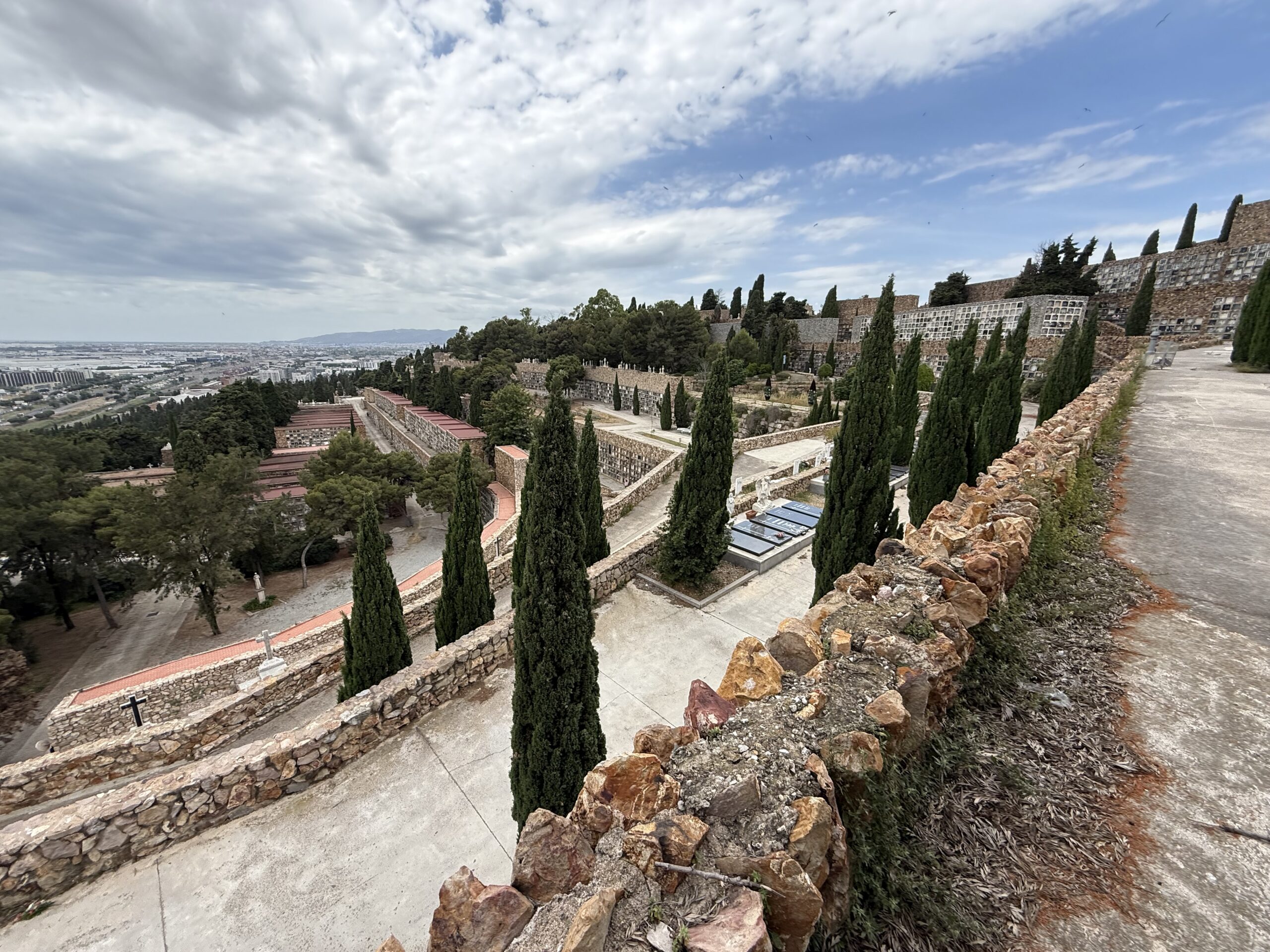
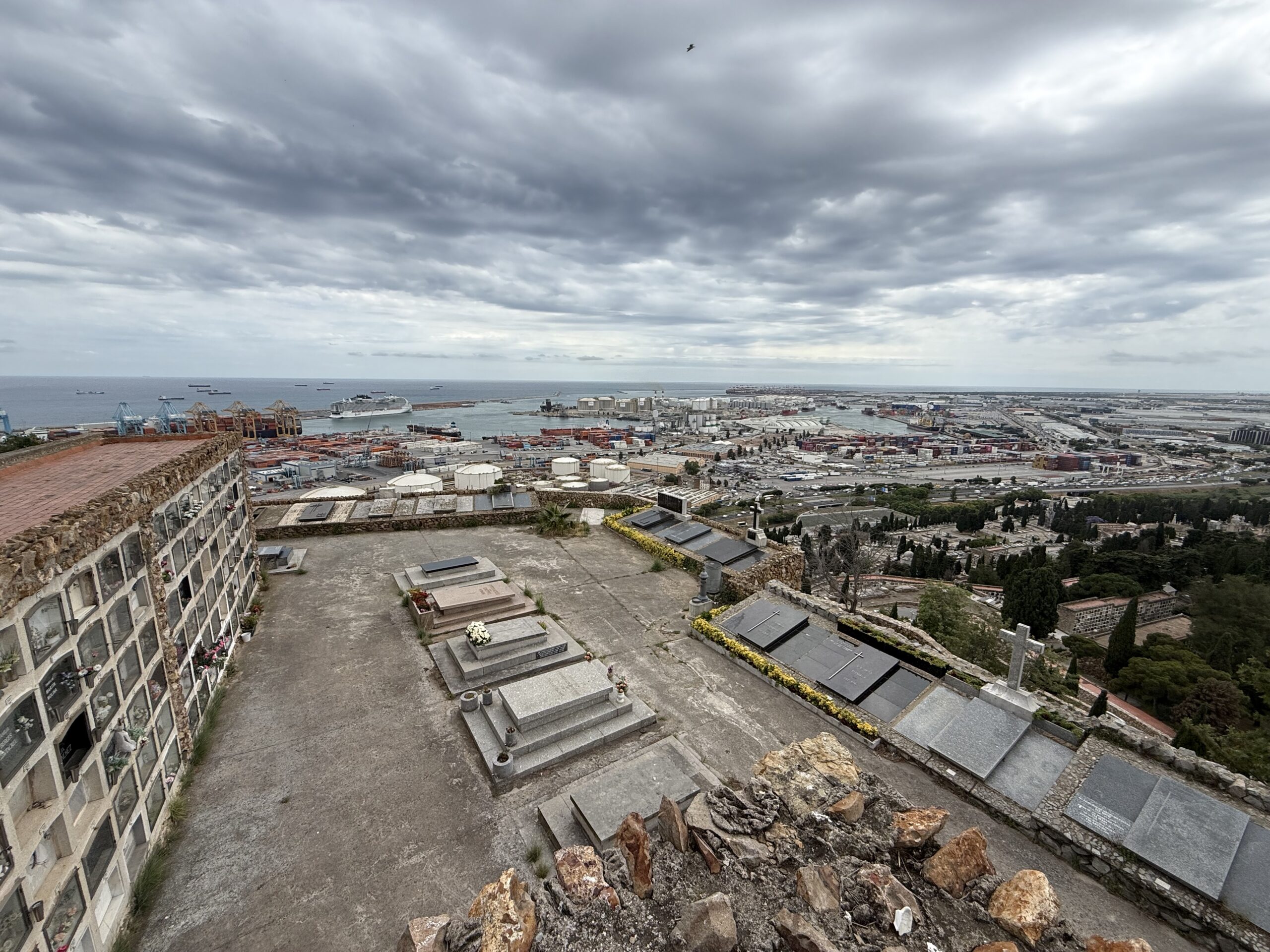
The cemetery is enormous. One hundred and forty acres on a south-facing hillside, more than one hundred and fifty thousand plots, more than a million burials and ash interments since 1883. It is the third-largest cemetery in Europe. I discovered later it is divided into 15 groups or agrupaciós. Two weeks earlier, I had visited Agrupació 1 and 2. I had seen Dr. Farreras’s marble skeleton and Clarasó’s Memento Homo.
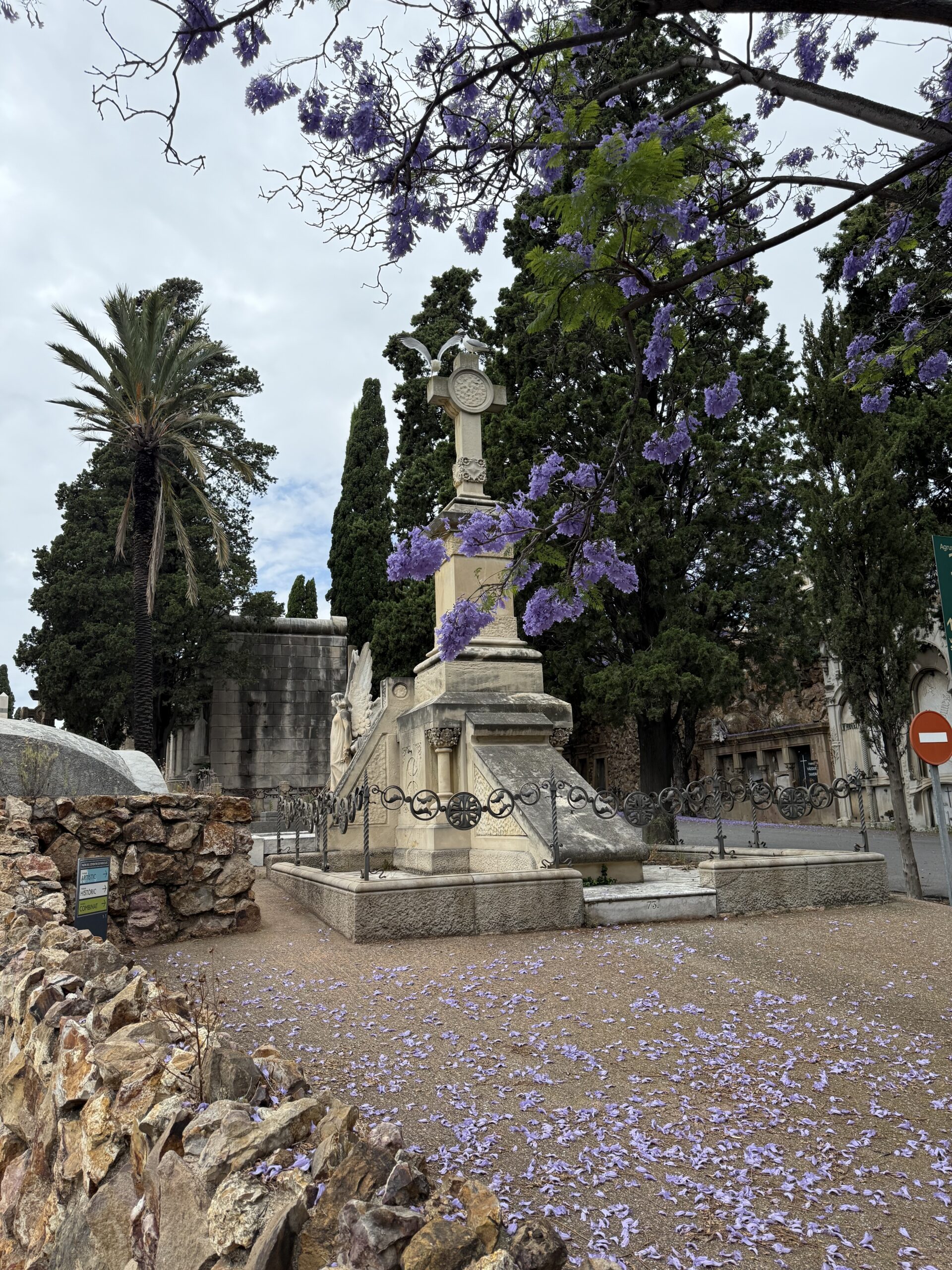
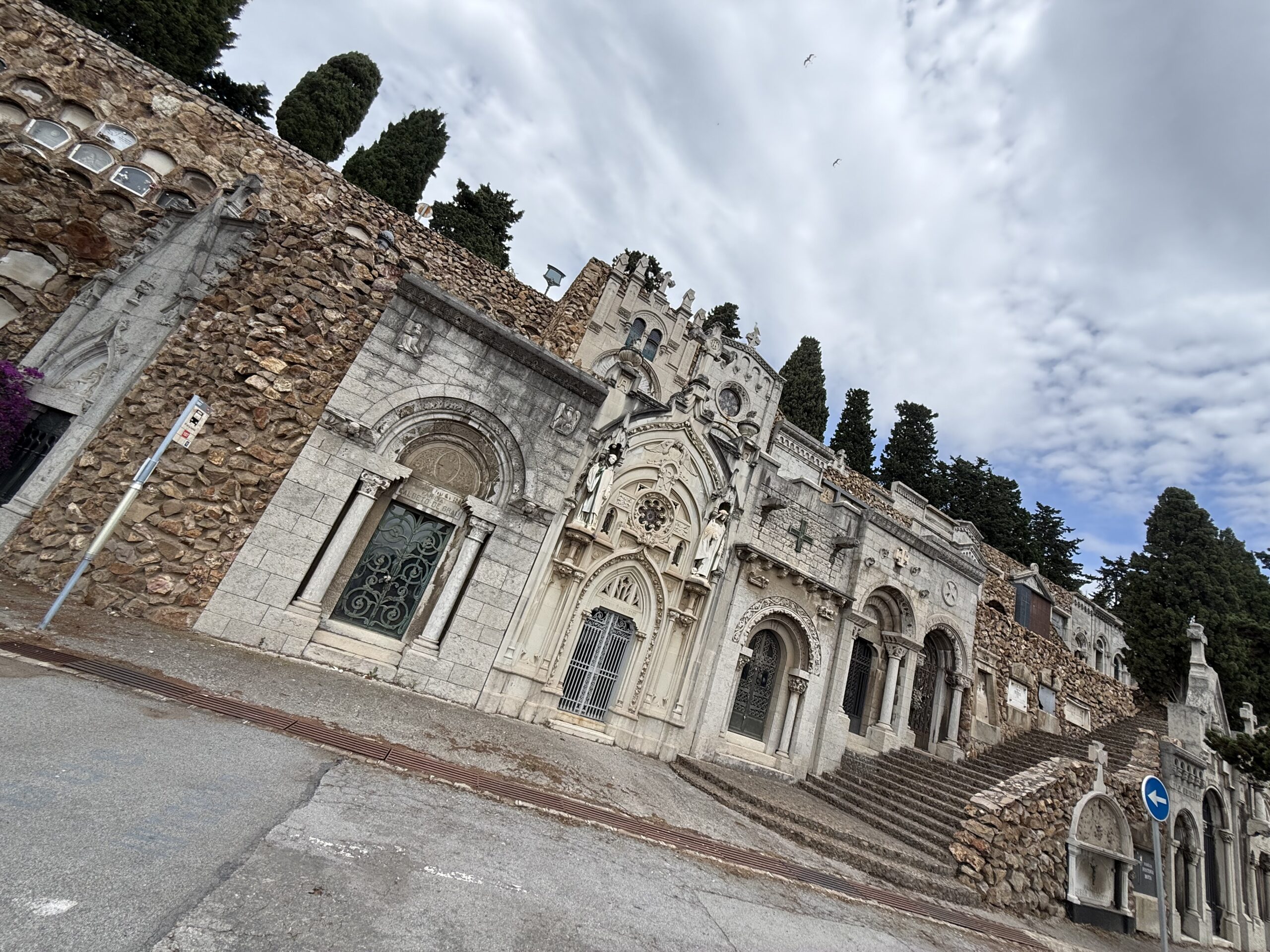
Today I started at Agrupació 3. I followed Sant Oleguer road past the funeral and turned down a narrow path I had not walked before. I began snapping photographs of pantheons and statues I had never seen.
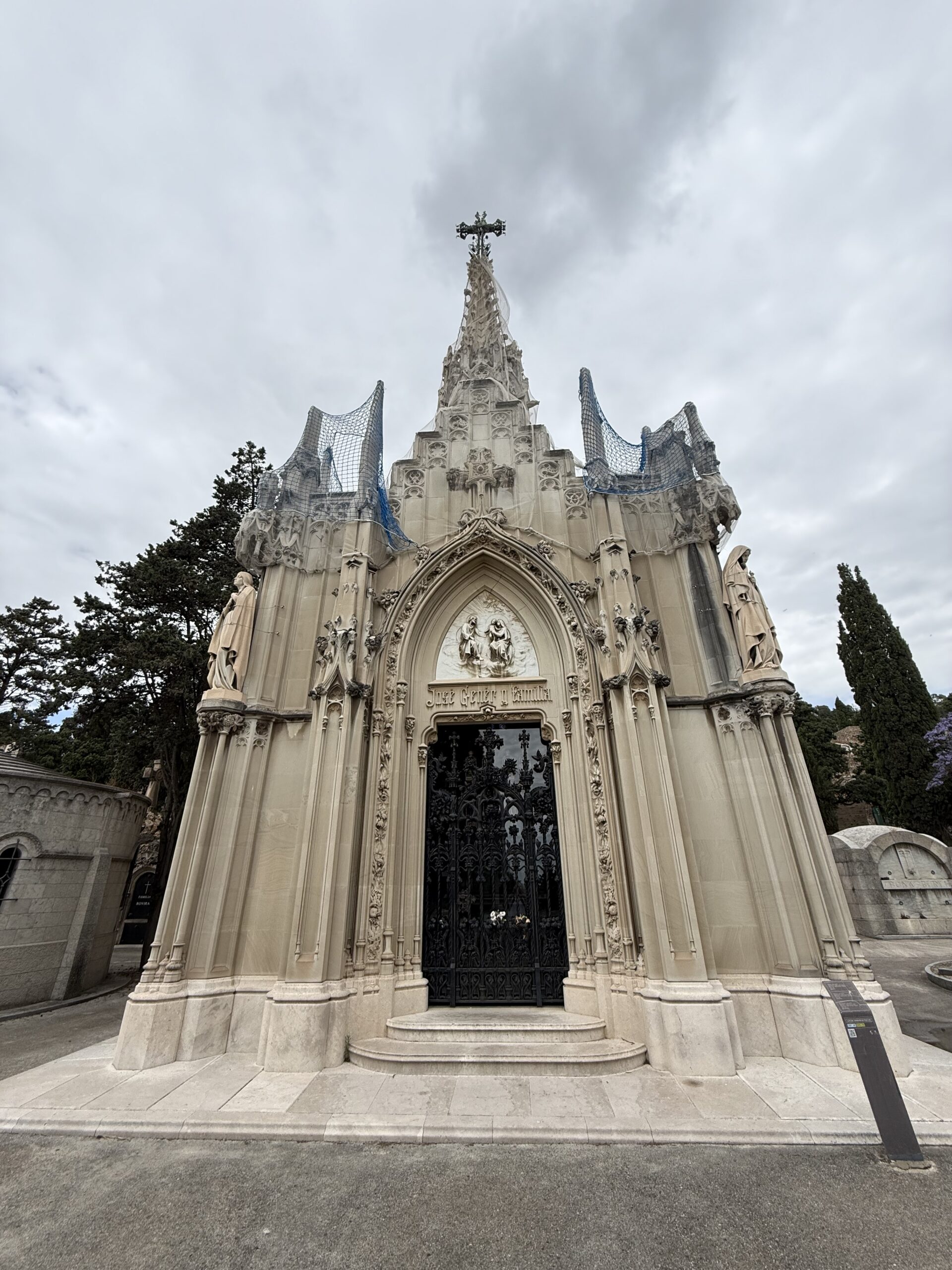
It is the largest free open-air museum I have ever entered. In six hours of walking, I encountered three other living visitors. Three. The mausoleums of the late-nineteenth-century Catalan bourgeoisie sat alone on the hillside, weathered and elaborate and unattended, holding more sculpture per square meter than most national museums, and almost no one comes to see them. The cemetery is too hard to reach. The shuttle bus runs only on weekends and not even reliably then. The tourists go to La Sagrada Família. The dead are left to themselves.
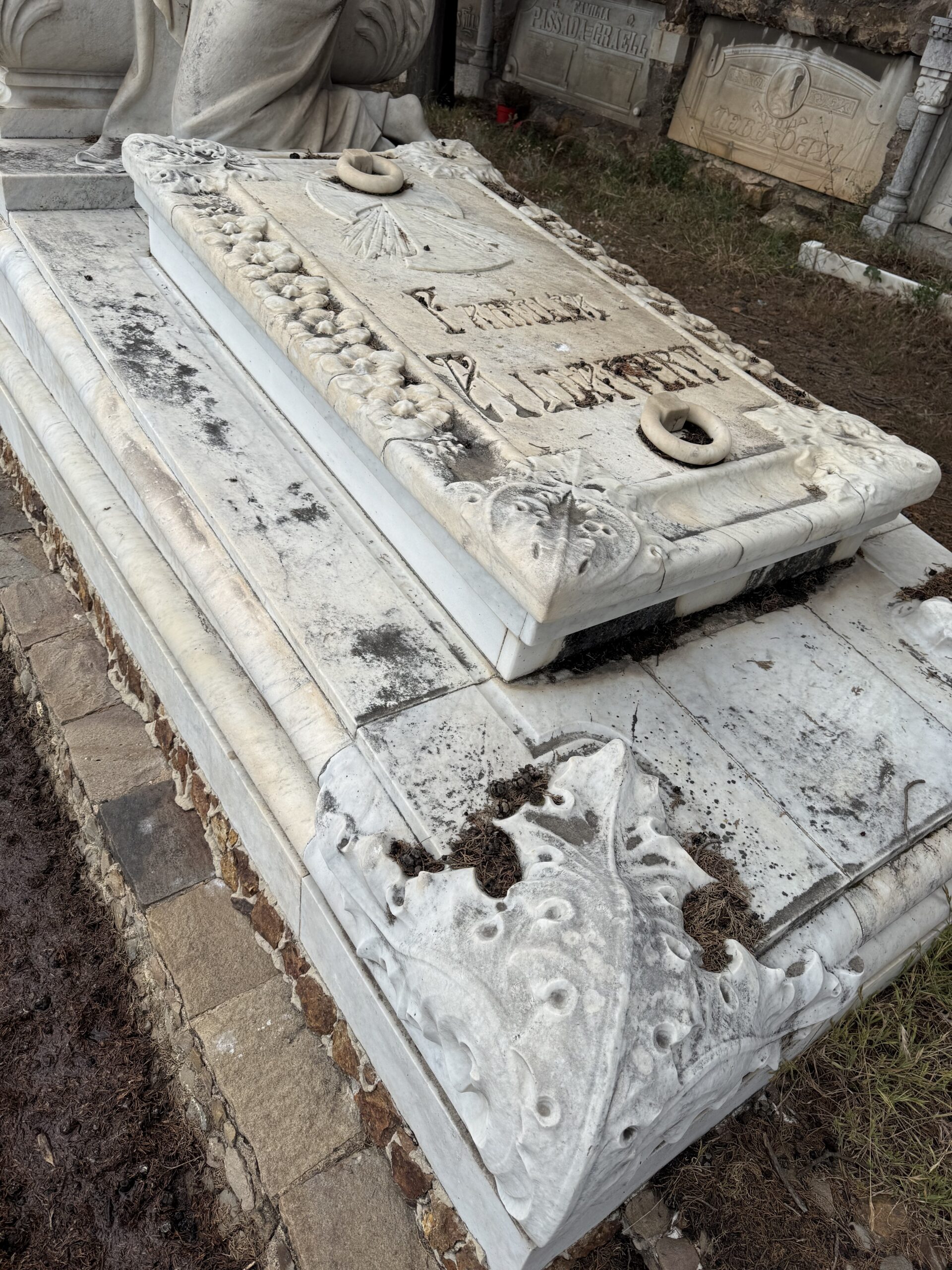
The seagulls were yet another sign that the cemetery had its own mysterious atmosphere. Hundreds of them, large Mediterranean gulls with the wingspan of small dogs, cawing across the marble. The higher I climbed, the louder they became. At one point a gull dove at my head and I ducked, and discovered, on the horizontal slab of a nineteenth-century tomb, a nest. The mate was sitting in it, looking at me, refusing to move. I stepped around the tomb and apologized to her in Spanish, mis disculpas. She glared malevolently as I passed.
I thought of Hitchcock, and I thought of a Titanic memoir I read decades ago in which a survivor described how the gulls had come for the eyes of the floating bodies and how he had despised them for the rest of his life. I thought of the seagulls in Florida, smaller and less intimidating than these Catalan ones. The gulls of Montjuïc are not polite. They are at home here in a way I was not. Visitors are not welcome.
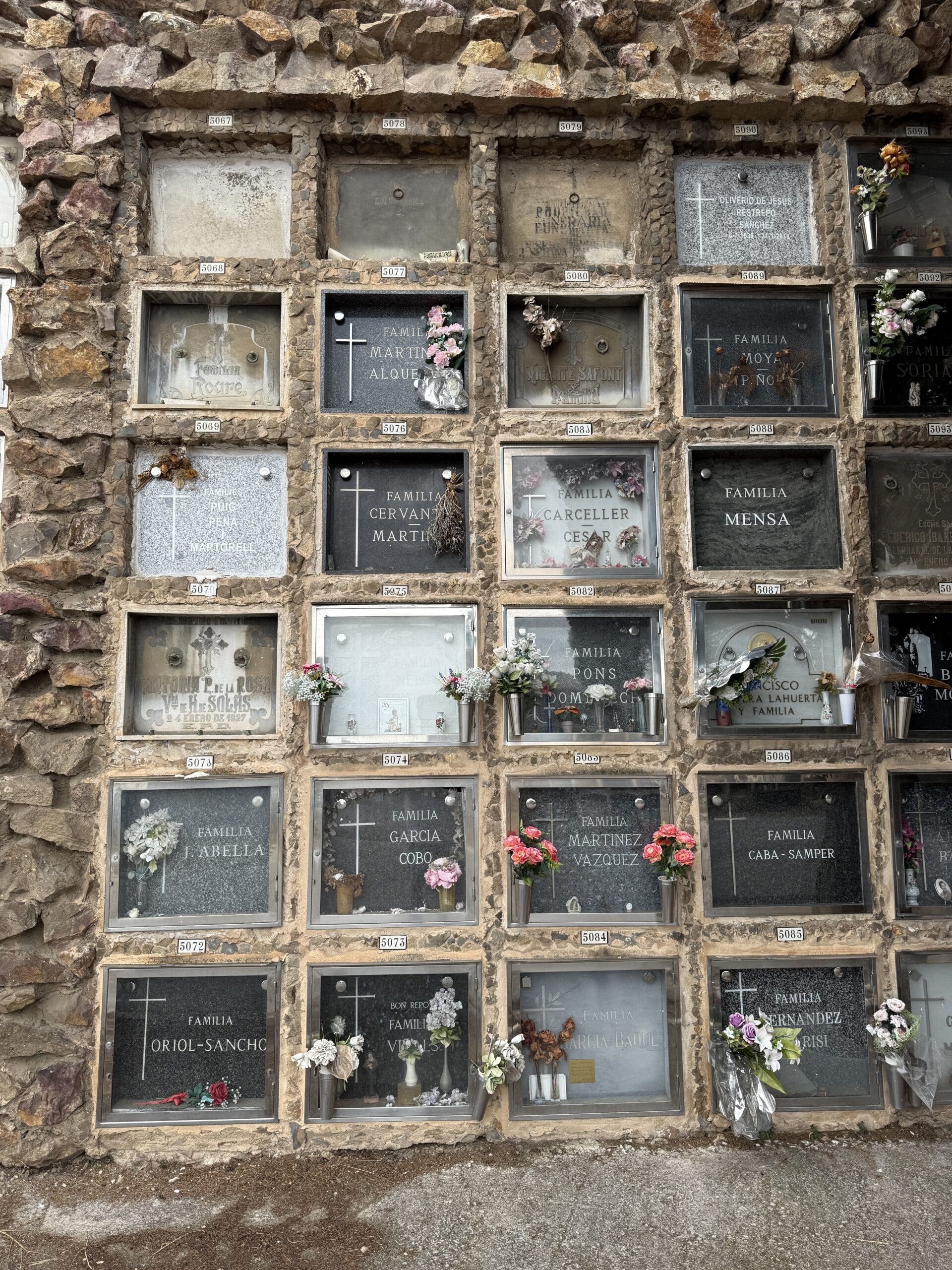
I began walking a grid through Agrupació 3, because the Find a Grave listing for Zafón gives a plot number, tumba 214, but the tombs are numbered sporadically at best. Some have engraved numbers. Most don’t. I walked the agrupació in a grid for almost forty-five minutes, ready to give up, ready to admit that the pilgrimage I had planned for weeks was failing.
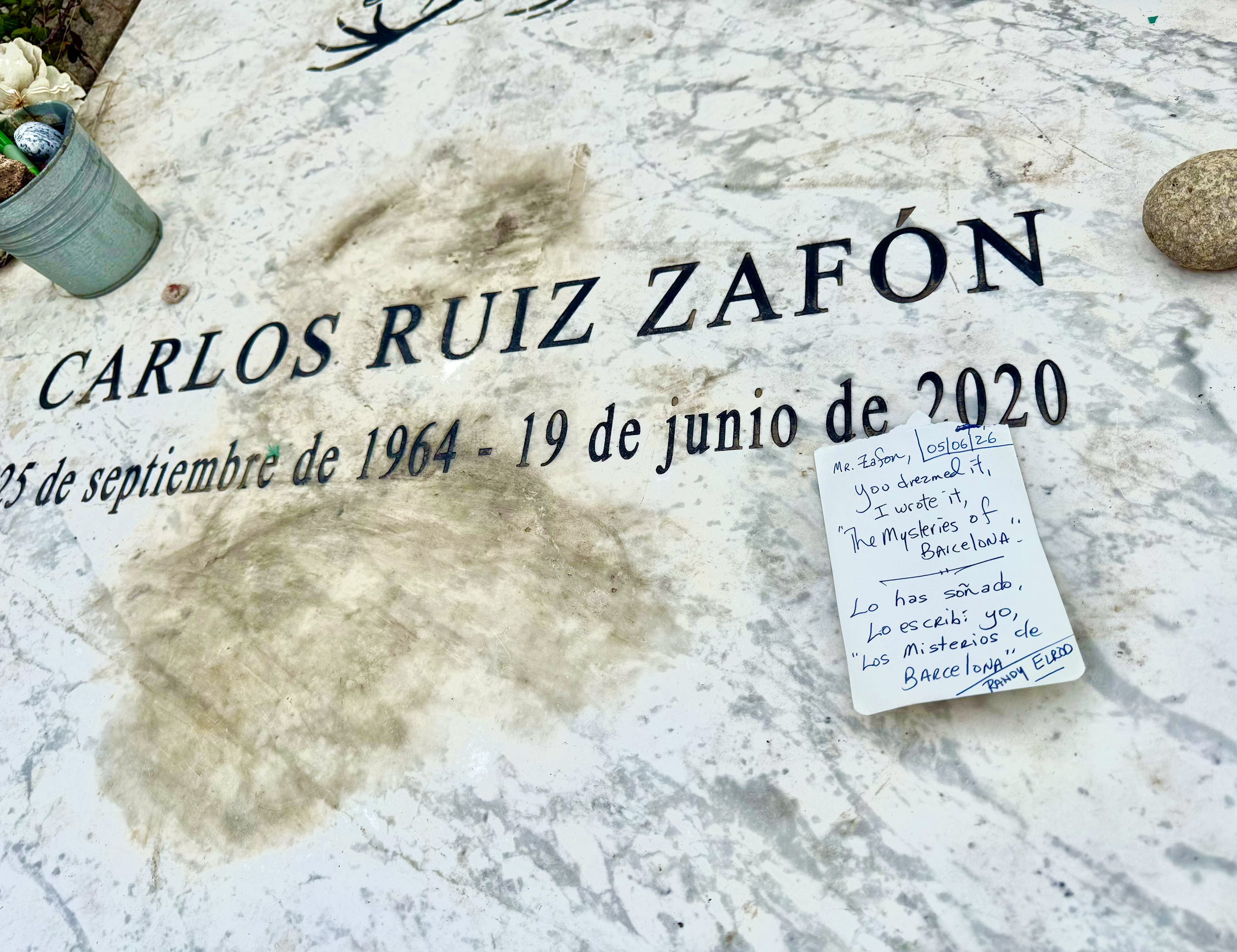
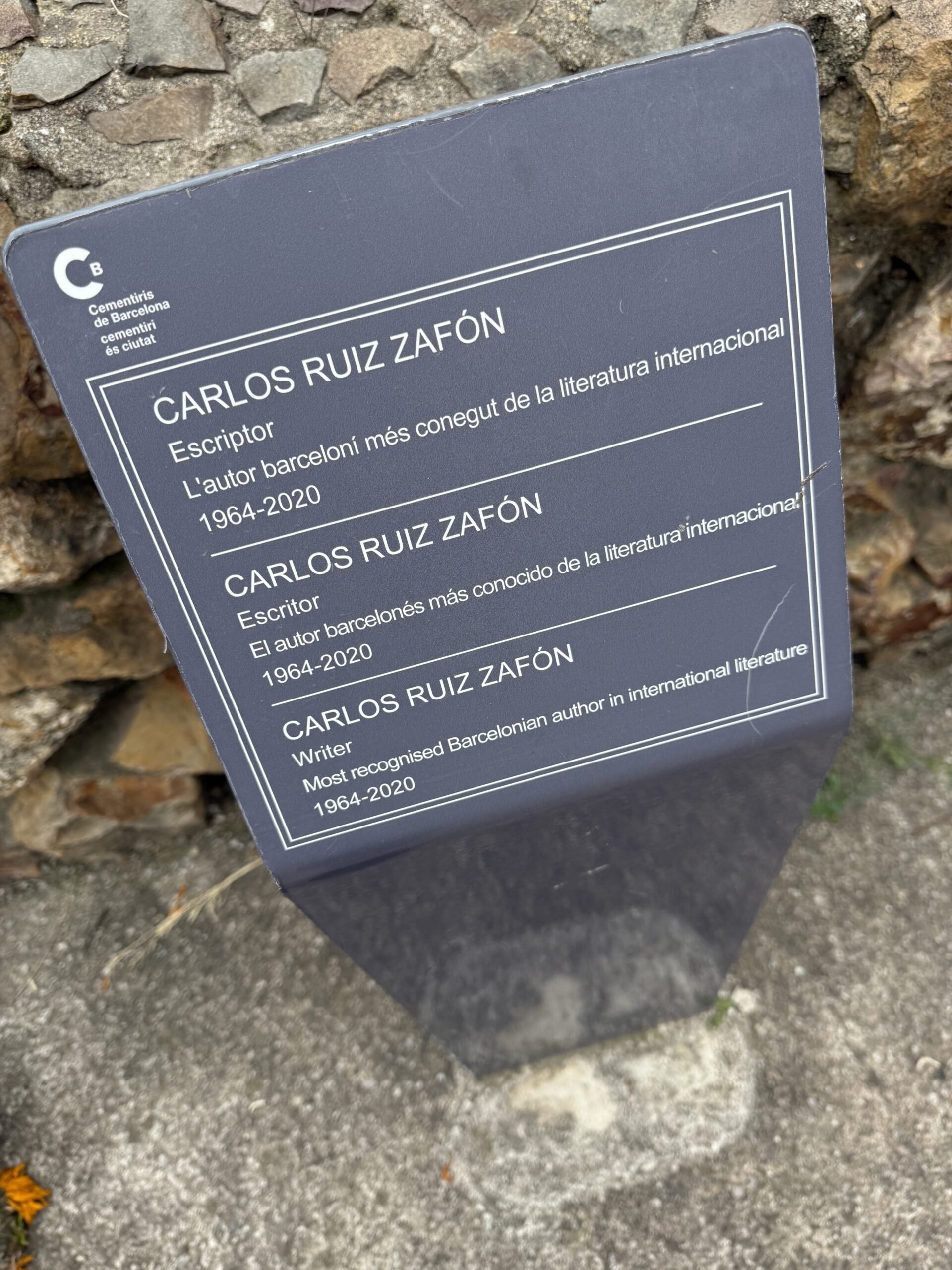
And then he was there. To my right. A flat white marble slab in the ground, with a small dragon-like figure engraved at the top and the name CARLOS RUIZ ZAFÓN in deep black letters, and below it the dates: 25 de septiembre de 1964—19 de junio de 2020.
I had read his novel The Shadow of the Wind in 2018, two years before Barcelona was a twinkle in my eye. I read the other three books in the Cemetery of Forgotten Books series across the next year. Then I reread the first two during the COVID lockdown. In that rereading, I discovered the passage in The Angel’s Game that became the seed of my own novel, The Mysteries of Barcelona, now under review with Zafón’s publisher, Planeta. The book poured out of me once I was living here.
A year ago, before I knew where Zafón was buried, as I was forming the novel, Gina and I spent a few nights at the Hotel Mirlo on the Tibidabo hillside. We were placed by happy accident in Suite Tibidabo 32. The room in which Zafón wrote The Shadow of the Wind, the room that became the legendary writing-room in the series itself. We slept in his bed. I sat at his desk. I did not know that a year later I would stand at his grave.
I had brought paper and pen. I knelt down in front of the marble slab and wrote a note in English and in Spanish, dated it, signed it. Mr. Zafón, You dreamed it, I wrote it, “The Mysteries of Barcelona.” — Randy Elrod, 05/06/26. I folded it. and weighted it with a small stone I had picked up on the path. The slab is surrounded in stones holding down notes from other readers; the wind off the harbor would carry an unweighted page away.
The community of pilgrims that journey to Tumba 214 is real even though we never meet each other. I joined it. I sat with his spirit for a long time. The cemetery was empty. The seagulls had moved on to other parts of the hill. The light was beginning to slant. I said the thing I had come to say. Then I stood up, picked up my hat, and went looking for Joan Miró.
I did not find him for another five hours. However, I found many other things: a secular Pietà that transfixed me, erotic statues, an isolated quarry full of unmarked dead, and the second map that the woman who greeted me at the office had given me, which I had been carrying in my pocket all along and had not bothered to open.
That is Friday’s post.
Friday: A Day at Mysterious Montjuïc Cemetery in Barcelona (The Mother Who Held What Was Taken)
Leave a Reply