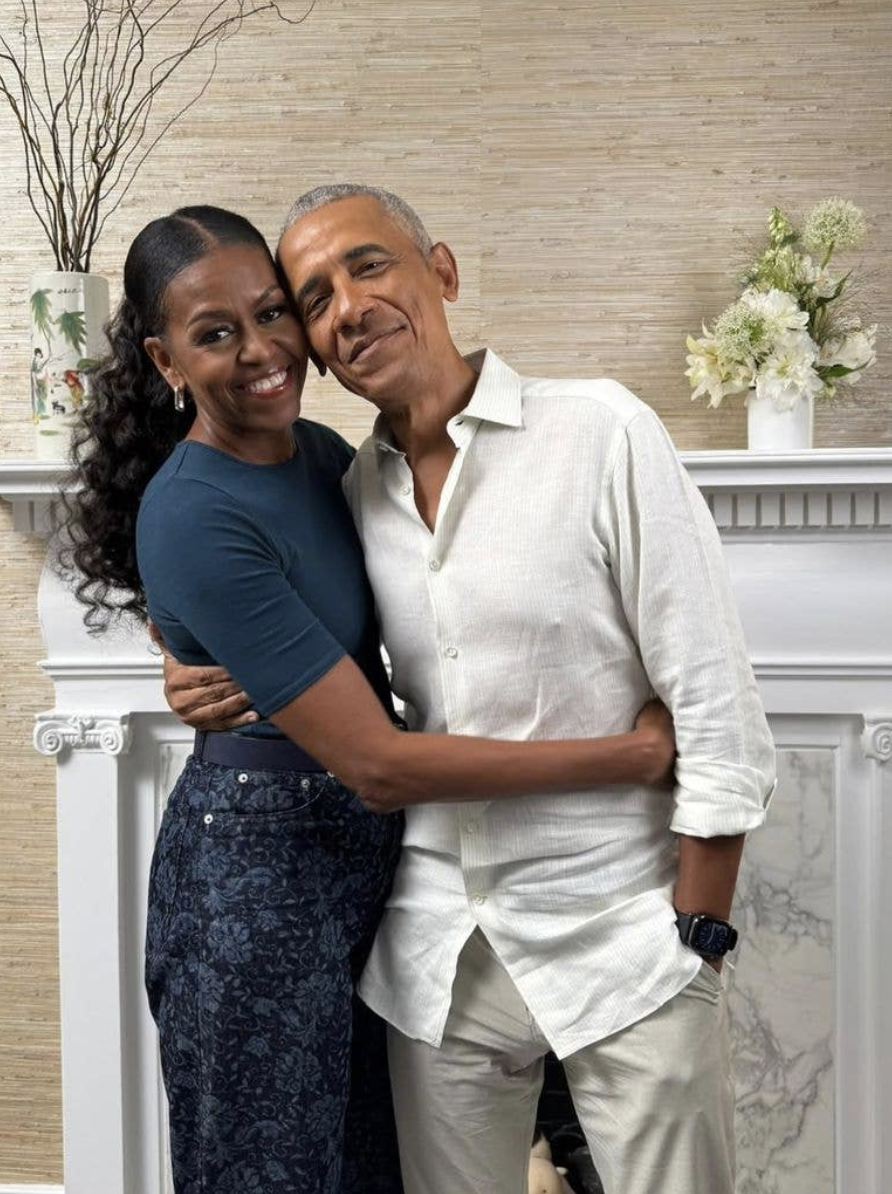
The UFC fighter didn’t write that line. Someone sold it to him.
Last week, a fighter named Josh Hokit won the biggest bout of his life on the South Lawn of the White House, and then leaned into Joe Rogan’s microphone and called Michelle Obama a man. Rogan backed away and did not refute it. The crowd half-cheered, half-groaned. And the MAGA people online treated it as the night’s big moment.
But Hokit didn’t originate that line. It’s a years-old smear he reached for like a weapon, because the ammunition was already loaded, already paid for. The fighter was not the creator of that moment. He was the product of it.
This post is not about Hokit. It’s about rage as a lucrative product.
First, to the ones who were wounded
Some of you have been on the receiving end of these men. The bullying. The control. The contempt. Or worse. You don’t need me to describe it; you’ve borne it.
I empathize. So have I. For thirty years I was at the receiving end.
Understand: I was no soft target by their measure. I have run twenty-four marathons. I have lifted weights my entire life. I have solo-summited high and dangerous mountains, and floated Alaskan grizzly country with nothing but a raft and a tent. By every metric they claim to worship, I was a man’s man.
None of it mattered, because I led worship with a tender heart. Because I carried kindness, gentleness, and empathy where they carried rage, contempt, and shame. One of the famous ones had a name for men like me: “effeminate, anatomically male worship leaders.” I held a flowering wand where they demanded a dividing sword—and that, to them, was unforgivable.
I understand now what I could not name then. Their contempt was never really about softness. It was fear. The same fear that made Hokit call Michelle Obama a man. A whole person undoes them. Someone strong and tender at once—who can summit a mountain, stand as an equal to the most powerful man on earth, and still love out loud—exposes how small they have made themselves. The sword always swings at the wholeness it cannot become.
I have a different wound than Michelle and many of you. But it was made by the same weapons.
So hear me clearly: nothing in this post asks you to soften toward these men. Nothing here is for them at your expense. Your trauma is not up for debate, and your anger is not the problem to be solved. I am not writing as a man asking you to pity the kind of man who hurt you. I am writing as someone who was wounded by a similar weapon, who got out, and who finally learned the difference between the men who sell and profit from the rage and the men it spits out. That difference is the whole point of what follows. I do not excuse them. I want to suggest there is a better product.
Rage is a business
Here is the blueprint, in plain words.
A lonely, hurting man is profitable. He clicks. He subscribes. He buys the supplement and the training course. He donates. He tithes. He votes. He fights.
It starts with an ache. The plain human loneliness every one of us knows, the hunger to be wanted and be known. That ache is real, and at first, it is innocent. Then the machine finds it, and goes to work. First it frightens him: you’re losing, they’re coming for you, you’re not man enough. Then it hands the fear back to him as rage, with a target attached: her, them, the culture that is replacing you, anyone who is different. The ache is the wound. The rage is the product. And a wounded man keeps buying.
That’s why the machine needs to keep him afraid. A confident man, comfortable in his own skin, stops coming back. So the rage cure is designed to never quite work. He is told the ache that won’t go away is his fault (he is too soft, too woke, not man enough) and then he is sold a fix. The fix fails. The ache deepens. He buys again. That’s the business model.
And it is run, every time, by the same kind of man.
I have met this man my whole life
I grew up under this man. I can spot him across a room, across a screen, across a pulpit or a podium, because I was raised by one of them.
Watch what he does. He’s always right. He never backs down. He never apologizes. Apology is for the weak. He conjures the threats, “the feminists,” “the gays,” “the transgenders,” “the libtards,” and then offers himself as the strong father who’ll protect you from them, if you’ll just submit, just stay loyal, just keep paying. He demands respect. He punishes dissent.
The first time I watched Donald Trump work a crowd, I did not see a politician. I saw the preachers of my childhood. Same cadence. Same swagger. Same never-wrong, never-sorry, always-the-victim-and-always-the-strongman trick. Trump talking about himself in the third person, virtually every story ending with some big man calling him “sir.” I had seen that spin from a hundred pulpits.
Members of Steven Furtick’s own worship team told me, years ago, that when this new-breed ultra-conservative pastor entered a room, everyone was required to rise. And that he corrected anyone who used his first name. Never Steven. Only Pastor Furtick.
Mark Driscoll built a megachurch preaching macho dominance, called women “penis homes,” and mocked sensitive men like me. Until his elders forced him out in 2014, one board advisor calling it “the most abusive, coercive ministry culture” he had ever seen. So Driscoll built another church in Arizona, this time without elders who could check him, where former staff members say he is “guarded like royalty” and demands “unconditional loyalty.” When it finally caught up with him, he played the victim. The grievance salesman, aggrieved.
Trump. Lindsey Graham. Ted Cruz. Tucker Carlson. Jordan Peterson. Al Mohler. Driscoll. Furtick. Line them up, and they blur together: same mannerisms, same methods, same hunger for power. They aren’t clones because they coordinate. They’re clones because they’re all running the same ancient con.
I’m not writing from the cheap seats. For years I helped build businesses like this. I filled their rooms with music. The worship team that told me about Furtick? I helped them get their record deal. And at sixty-eight and after two decades of freedom, I am only now healing from living in that rage machine. The warning bells I feel when I watch these men are not partisan. They are a human being remembering.
The first one I ever knew
Let me show you a prototype, because the machine is older than the internet, older than Trump, Rogan, and Musk, older than all of it.
My first church was in Keith, Georgia. A tiny poor farming community, dirt and pine. The new pastor was a former Hormel ham salesman named Tom, a domineering, charismatic, never-wrong, never-back-down man, who ruled that church with an iron fist. I came to him at nineteen, and he put me on staff and worked me like a hired hand.
The more I worked for him, the more I saw what he was.
Tom was a master salesman. His product changed from ham and bacon to fear and rage. And he bilked those poor church people for every dollar they had. Love offerings. Tithes. Money they did not have, handed over because they had been told their giving was the measure of their faith. Tom bragged that his tiny church out-gave congregations ten times its size. Evangelists lined up to preach there because nobody raised a love offering like Tom. It was his trophy. His bragging rights.
And the way he raised it was fear. Always fear. Fear of hell, fear of the world, of not being a “real” man, a submissive wife, a soldier in God’s army. Frighten them, then pass the plate. Then pass it again.
That was 1977. A ham salesman in a poor country church, running the exact con the manosphere now runs at scale. Tom had a congregation of a hundred or so. Rogan has tens of millions: same product, same frightened men. Fleeced and kept afraid. Just better distribution.
Name the rest of them, then
So who’s stoking the rage today?
The podcast bros who hand a man like Hokit a microphone and a cheering room, then say nothing when he reaches for the smear—and air it to millions anyway, because the outrage is the content.
The “high-value male” coaches and the pickup artists—the PUA hustlers, they call themselves—who sold a generation of lonely men scripts to manipulate women into bed, then sold them rage when the scripts failed. First they monetized his loneliness. Then they monetized his resentment at being lonely still. Two sales off one wound.
The manosphere influencers farming his clicks with an endless feed of grievance, telling him the reason he’s miserable is her.
None of them deliver what they promise. The man stays lonely. He stays broke. He stays angry. A “victim.” Because a healed man is a lost customer, and they are not in the business of healing him. They are in the business of enraging him.
A few words of hope
I am now selling a different male product. And it is NOT viagra.
Thankfully, there are a growing number of powerful and confident people who refuse to be con artists sowing division. Are we perfect? Hell no! But we are “calm artists” cultivating a different masculinity: equanimity and serenity instead of rage and fear.
Consider the words of Barack Obama yesterday at the opening of his presidential library, a monumental symbol of freedom and strength: “Deep in our gut, we want to find a way to turn toward each other again, not further away.”
Pete Buttigieg said, “Life is short, and we do not have much time to gladden the hearts of those who travel with us; so be quick to love, make haste to be kind, and go in peace to follow the good road of blessing.”
And from a female perspective, the philosophy of Sophie Strand in her book The Flowering Wand. She posits that we mistook the phallic, generative, green, Dionysian masculine, the wand that makes things grow, for the sword that cuts and divides and conquers. The con artists of patriarchy chose the sword and called it the only masculinity. But the older, truer image is the flowering staff: Aaron’s rod that buds, the thyrsus of Dionysus, the green man, the masculine that is fertile rather than dominant, that tends rather than takes.
And fashion designer Simone Rocha told the New York Times this morning that she is turning more of her attention to men’s wear and men’s softer side as the culture reaches its peak “masculinity crisis.” When she began designing menswear seriously, she said, she wanted it to feel “grounded but also quite tender.”
Rocha’s feminine take on men’s wear, which makes up 30 percent of her business, has found a strong consumer base that flies in the face of the masculinist surge exemplified by figures like Mark Zuckerberg, who trains in mixed martial arts; President Trump, who recently hosted a bloody UFC fight on the White House lawn; and members of the manosphere, who discuss He-Man workout routines at length and dress in tight black T-shirts to show off their biceps.
I spent my life being told the wand I was born holding was a defect. Too soft, too tender, too green. They handed every boy a sword and called it manhood, and called everything else weakness.
They had it exactly backward.
The sword only ever divides. It cuts the world into above and below, winner and loser, man and not-man, and it must keep cutting, because a sword that stops cutting is just a man alone with himself. But there is an older image of a man, the one they buried: the staff that flowers. The rod that buds. The hand that makes things grow instead of making them kneel.
The opposite of rage was never calm. It is generativity. To plant instead of conquer. To tend instead of take. To turn toward instead of away.
This part is for those of us who took the worst of the sword: the women who absorbed it, the sensitive men who would not perform it, the children who grew up under it.
You are not broken. You never were.
If you are a woman who spent a childhood, or a marriage, or a whole life under a man like this, told in a thousand ways that you were too much, or not enough, that the coldness you lived in was somehow your doing, please hear me: it was never a verdict on your worth. It was a product, manufactured by frightened men and sold and bought at your expense. The smallness they pressed you into was never the size of you. Your anger is not a flaw in you. It is the healthiest thing about you. You saw the machine for what it was, maybe long before anyone believed you.
I see it in my own life, late: a man on a terrace with a brush in his hand and a powerful woman who holds him when the old rage flares (thankfully, a much rarer event these days), learning at sixty-eight that the life-giving, tender thing in me was never the wound. It was the original gift.
I hope for a world where we put down the dividing sword. And pick up our flowering wands. And watch what our one wild life can still grow.


Leave a Reply