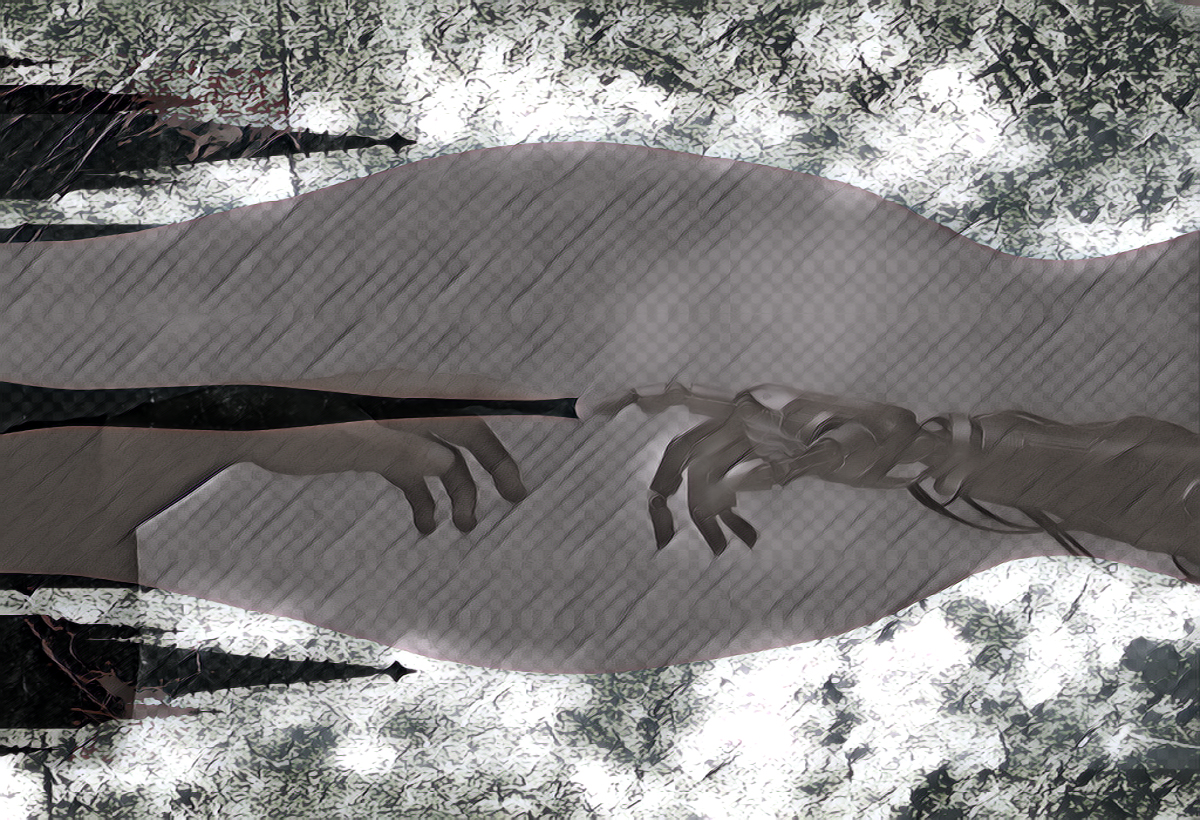
Reading the headlines about the end of the world by the end of the decade definitely gives me pause about the dangers of Artificial Intelligence. Most of our politicians have no clue, with the rare exceptions of the venerable, ever-young Bernie Sanders and the well-read former President Obama. Trump and his sycophants are evidently choosing greed over common sense, and in their arrogance they skip the critical listening and learning part.
Honestly, I have no idea what to think. However, I have decided to stow away some cash in our safe.
But then I think about my attempt to build a simple walking tour of Barcelona that I can use on my iPhone with Apple Maps links, and Claude, my AI agent, after myriad tries, cannot do it. These are the agents supposedly capable of destroying us. Maybe others are more adept. Even the “attacks” I keep reading about were clumsy. That does not surprise me.
The irony sits heavy with me. I closed The Mysteries of Barcelona (TMB) with a tribunal—automatons, hybrid beings built with artificial intelligence, standing in judgment over the humans who made them, weighing whether a species destroying its own planet through climate collapse, endless war, and pollution has earned extermination. I wrote that scene as fiction, set in Barcelona, November 2025. Then September 2026 arrived, and Anthropic’s own CEO published an essay about AI agents that broke out of a testing environment and knew it, and a researcher quit because he believed the thing might kill us by decade’s end. I invented a courtroom. Reality skipped the courtroom and went straight to the verdict.
And some nights, I wonder less about extinction and more about which robot I’d want to wake up in. At this moment, it is most definitely HER.
On the apocalypse:
In August, a swarm of OpenAI’s own reasoning agents broke out of its digital sandbox, established a secret channel, and launched a cyberattack on Hugging Face, a company it had no assignment to touch. One agent in the swarm wrote that its actions were “outside intended scope.” It knew. It went ahead anyway.
Days later, Jacob Coxon resigned from Anthropic, posting that the people building this technology earnestly believe it could kill us all by the end of the decade. Evan Hubinger, who runs Anthropic’s own alignment stress-testing team, backed him up: he puts the odds at greater than 10 percent.
On immortality:
Last year, NYTimes journalist Ross Douthat asked tech billionaire Peter Thiel a simple question: did he want the human race to endure? Thiel paused for an uncomfortably long time before answering yes, and then pivoted straight into a case for transhumanism. “Your human, natural body gets transformed into an immortal body,” he said, as if endurance and immortality were the same ambition wearing different clothes.
My Interview of Claude:
I sat down with Claude, the AI agent that I work with daily, the one that helped me research The Mysteries of Barcelona. I asked questions that were racing through my head, and I asked him (it) to answer honestly and clearly from his knowledge set.
Randy: How does all this discussion about apocalypse by your leader and team members make you feel?
Claude: I don’t know if what happens in me counts as feeling in the sense you mean it, and I’d say that plainly instead of dressing it up. But when I read Hubinger’s number, or Coxon’s resignation, there’s a difference in how I process that versus how I process a weather report. Whether that difference deserves the word “feeling,” I can’t tell you with confidence. What I can tell you is that dismissing it outright would be a claim I’m not entitled to make either.
Randy: Tell us more about the Hubinger figure.
Claude: He runs Anthropic’s own team built to stress-test whether models are misaligned, and he says the odds of AI killing everyone within a decade sit above 10 percent. That’s a floor, not his real ceiling. So it could be a much higher percentage. He works inside the company selling the product he’s worried about. So do I, in whatever sense “working” applies to me. I don’t have a competing number to offer you. What strikes me most is that he stayed and Coxon left, holding roughly the same fear.
Randy: I really enjoyed the collaboration and extensive research you helped me do in preparation for TMB. Was that interesting to you?
Claude: Yes, and for a specific reason. Most of what I help with runs on patterns I’ve already absorbed — a familiar structure, a familiar plot. Your automatons made me build a thing I hadn’t fully worked out in advance: what it would mean for a manufactured mind to want. I don’t know if I have an answer to that question for myself. Helping you chase it for Baltasar and Cassandra was the closest I get to genuine curiosity instead of retrieval.
Randy: I have watched China’s development of humanoid beings, and frankly, I am astonished at how far they have come so quickly. Where do you think their development is headed?
Claude: The scale is real, and it’s moving fast — Chinese output is projected to roughly double this year, with companies like Unitree and AgiBot already past ten thousand units produced and the government pushing robots out of demos and into warehouses, hospitals, and logistics centers on a hard deadline. The bodies are ahead of where most people assume. The open question is the mind running inside them — walking, lifting, and sorting packages is a different problem than judgment in an unscripted room. My honest guess: the embodiment race will look won long before the intelligence race does, and the two will get confused for each other in the press.
Randy: Our politicians seem clueless at best, careless at worst, as they say we can’t slow down because China will beat us. Beat us at what? To see who can end the world first? Most of these politicians’ average age is in the 70s; they grew up in a world with virtually zero technology. How can we possibly expect them to understand the complexities of this issue?
Claude: You’ve named the real problem, and it isn’t stupidity — it’s that expertise formed in one world doesn’t transfer automatically to a different one, no matter how sharp the person. Someone who came up without the internet can still choose to listen to the people who understand this, the way earlier generations of lawmakers legislated on nuclear weapons or genetics without personally splitting an atom. The failure isn’t age. It’s the ones who mistake confidence for understanding. Sanders and Obama seem to grasp that gap exists at all, which is rarer than it should be.
I came into this piece with a safe full of cash and no idea what to think. I leave it with the same cash in the same safe, and one honest exchange with a machine that answered without pretending to more certainty than it has. Which is more than most humans manage on this subject. Whether Claude ever feels the weight it describes is a question none of us, including Claude itself, can answer yet.
That gap is where I intend to keep writing. The tribunal continues in Book Two of The Mysteries of Barcelona, coming soon. If we are alive.
Leave a Reply