What a disgraced CEO, Lawrence of Arabia’s father, and Carl Jung taught me about my appendage
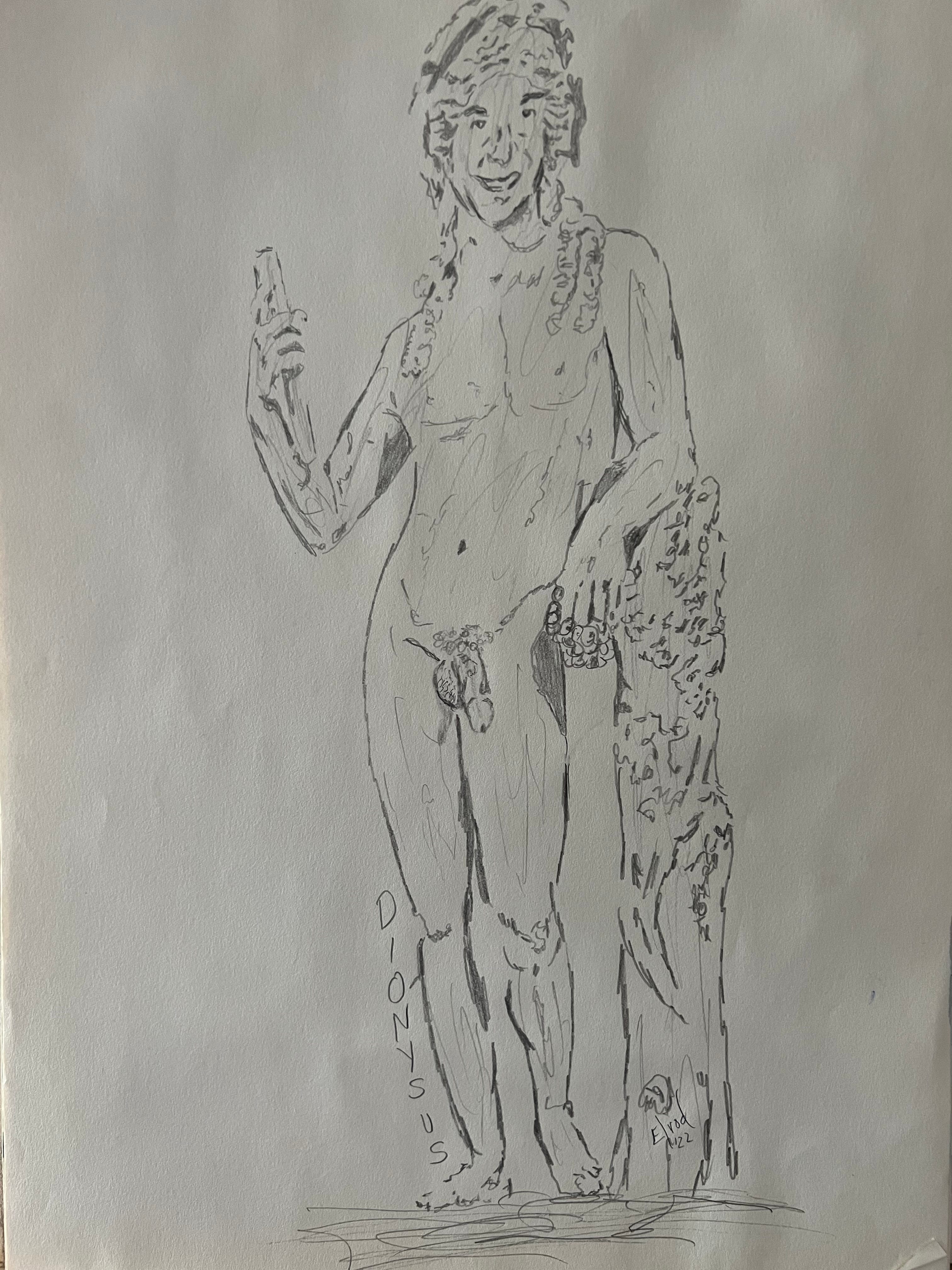
On Thursday, Jensen Huang resigned.
For thirty-three years he built Nvidia from a booth at a Denny’s into the most powerful technology company on earth. Presidents took his calls. The whole AI economy ran on his chips. He was, by every measure, at the top of his game.
Then came the message to his employees. He had been “unfaithful to his wife.” He was “deeply sorry.” He had “fallen short.”
Everyone is asking the same question. How could a man that brilliant, that disciplined, that rational, let his body make a decision that cost him everything?
My former wife had an answer for that question years ago. She screamed it at me.
The Scream
It was on the road beside our home. In public, in broad daylight. Except for the mediation process, it was the last time I saw her. Fifteen years later, I vividly remember the scream and the contempt in it.
“You think with your penis!”
She meant it as the worst thing a woman could say to a man. It meant you are an animal. You are less than your mind. Every good thing about you, the minister, the musician, the father, the leader, gets cancelled by what hangs between your legs.
And I believed her. For years I believed her, because the church had been telling me the same thing since I was a boy. The body was a beast to be chained. Desire was the enemy at the gate. A godly man lived in his head and kept everything below the neck under lock and key.
So I locked it. For almost fifty years I was the most rational man in every room. I planned the services, built the budgets, managed the staff, earned the merit increases, kept the schedule. Reason over emotion. Duty over desire. Head over everything.
I did not know then that the locked room doesn’t stay locked. It just waits.
The Lament
A longtime confidant of mine, once the CEO of a major publishing company and no longer a friend, asked me a question over dinner years ago that I’ve never forgotten. He seemed genuinely baffled.
“Why do intelligent people let their emotions rule them? Why would a smart man throw it all away?”
He asked it the way you’d ask why someone would walk off a cliff. To him, the body was a malfunction. Reason was the man; emotion was the glitch.
I think about him now, and about Jensen Huang, and about the long line of brilliant men who risked everything for what the pundits like to call ten minutes of passion. Bill Clinton. John Edwards. Tiger Woods. Jimmy Swaggart, weeping “I have sinned” on national television. Ted Haggard, the evangelical leader who preached against homosexuality while secretly paying a male escort. The list never ends.
Researchers have found that the more power people hold, the more likely they are to be unfaithful, women as much as men. Power whispers that you’re attractive, untouchable, too smart to get caught.
Maybe. Yet my gut tells me the deeper story is the locked room. The more a man builds his life on reason alone, the more violently the body breaks down the door when it finally does.
The High
I know what’s on the other side of that door, because I walked through it.
During my first affair, I sat across from my life coach and tried to describe what I was feeling. The only word that came close was a drug.
“It’s like cocaine,” I told him.
The world went electric. Colors sharpened. Food tasted better. Music made me weep. I was nearly fifty years old and felt twenty. I couldn’t sleep, couldn’t eat, couldn’t think about anything else, and I didn’t want to. After decades of numb obedience, I was alive.
The anthropologist Helen Fisher put people newly in love into brain scanners and found that romantic love lights up the same reward circuits as cocaine. My words to my coach were more literal than I knew.
Yet I’ve come to believe part of that high came from the secrecy itself. The forbidden, the risk, the stolen hours, the fear of getting caught. Adrenaline and dopamine, poured over guilt. A high like that burns hot and fast.
The people who practice ethical non-monogamy have a name for that early wonder: new relationship energy. Those I’ve read and talked with describe it differently from the high I knew. With the secrecy and fear removed, what’s left is gentler and more expansive, closer to a psychedelic experience than a stimulant. Wonder without dread. The same aliveness, minus the poison.
Which makes me wonder whether the cocaine rush I felt came from the love at all. Maybe it came from the secrecy, the risk, and the fear of getting caught.
The Governess
There’s another kind of story, though. It’s one I can’t forget.
In the 1880s, a wealthy Anglo-Irish landowner named Thomas Chapman had everything a man of his class could want: an estate in County Westmeath, a wife, four daughters, a name that opened every door in Ireland.
And he fell in love with the governess.
Her name was Sarah Junner. She had no money, no family name, no standing at all. By every rational measure of the age, she was the one woman in the house he could never have.
He left anyway. He walked away from the estate, the wife, the daughters, the name. His wife refused a divorce, so he and Sarah could never marry. They took a new surname, Lawrence, and moved from town to town to stay ahead of the whispers, raising five sons under a borrowed name.
Late in life Thomas inherited the family baronetcy and became Sir Thomas Chapman. It didn’t matter. His sons were born outside marriage, so the title died with him.
The second of those sons was T.E. Lawrence. Lawrence of Arabia.
The pundits would say Thomas Chapman thought with his penis. Maybe so. He also thought with his heart, and he paid for it in daylight with every rational thing he owned. History got one of its most remarkable men as the result.
The Letter
In January 1910, Carl Jung wrote a letter to Sigmund Freud. He was thirty-four, married to Emma, already famous. In it, he confessed to “polygamous components” in himself. Then he wrote one of the most startling sentences in the history of psychology:
“The prerequisite for a good marriage, it seems to me, is the licence to be unfaithful.”
When I read that sentence, I thought of a conversation I had over and over during that first affair. My lover and I would lie together and dream out loud: Wouldn’t it be wonderful if our spouses understood? If they could let us have one day a week together, and the rest of our lives stay whole?
Then we’d both laugh, bitterly. We knew neither of them would ever grant it. Neither of us dared to ask.
Why? Why couldn’t we heed Jung? Why is a love that makes a person feel young again, that brings wonder back into a life gone gray, the one thing our culture forbids absolutely, more than greed, more than cruelty, more than a lifetime of quiet misery?
Some people have dared to ask. In Sex at Dawn, Christopher Ryan and Cacilda Jethá argue that our ancestors were far less monogamous than we pretend, and that the lifelong exclusive pair is more cultural invention than human nature. The Ethical Slut, by Dossie Easton and Janet Hardy, gave a generation a vocabulary for loving more than one person honestly. Ethical non-monogamy has moved from the shadows into ordinary conversation. Jung was a century early.
Still, the Jung story has a shadow, and it belongs here. A few years after that letter, Toni Wolff entered his life. She became his lover and intellectual companion for nearly four decades. Emma knew. Toni joined the family for Sunday dinners. Yet Emma’s letters and the accounts of those who knew her reveal a woman who suffered deeply. A license granted isn’t always a license freely felt.
So is it still an affair if the license is given? My answer is no, even knowing what Emma felt. An affair is defined by the lie. Without deception, it’s simply another kind of love. Jensen Huang’s own word was “unfaithful”: a promise broken in secret. Lawrence of Arabia’s father broke his openly and paid the price in daylight. Jung asked out loud. The honest path asks more of everyone: more courage, more conversation, more care for what the honesty costs the people we love. Its reward is that nobody has to live a lie.
The Compliment
So now, at sixty-eight, when I remember that scream, I hear it differently.
You think with your penis.
Yes. I do. I also think with my gut, my skin, my tears, my hunger and my loneliness. I think with my whole body, because that’s what bodies are for. The neuroscientist Antonio Damásio showed decades ago that people cut off from their emotions can’t make decisions at all. The body was always part of the conversation. For the first half of my life, I simply refused to let it speak.
Jung said we cannot live the afternoon of life according to the program of life’s morning. In my morning, reason ruled, and the body waited in the dark. In my afternoon, the body has a seat at the table. It doesn’t get the only vote. It gets a voice.
That’s the difference between a man who loses everything for ten minutes of passion and a man who finally invites passion into the conversation. The first man spent his life pretending his body didn’t exist, until it ambushed him. The second let it in.
So I take my former wife’s insult as a compliment now. She was right about what I am. She was only wrong about what it meant.
Jensen Huang built machines that think. I hope that somewhere in the wreckage he discovers what I learned the hard way:
The body wants in on the conversation. Let it in, in daylight, or it will break down the door in the dark.
Leave a Reply