
Another Near-Death Experience at Kalien from A Life in Four Movements: An Unfinished Symphony
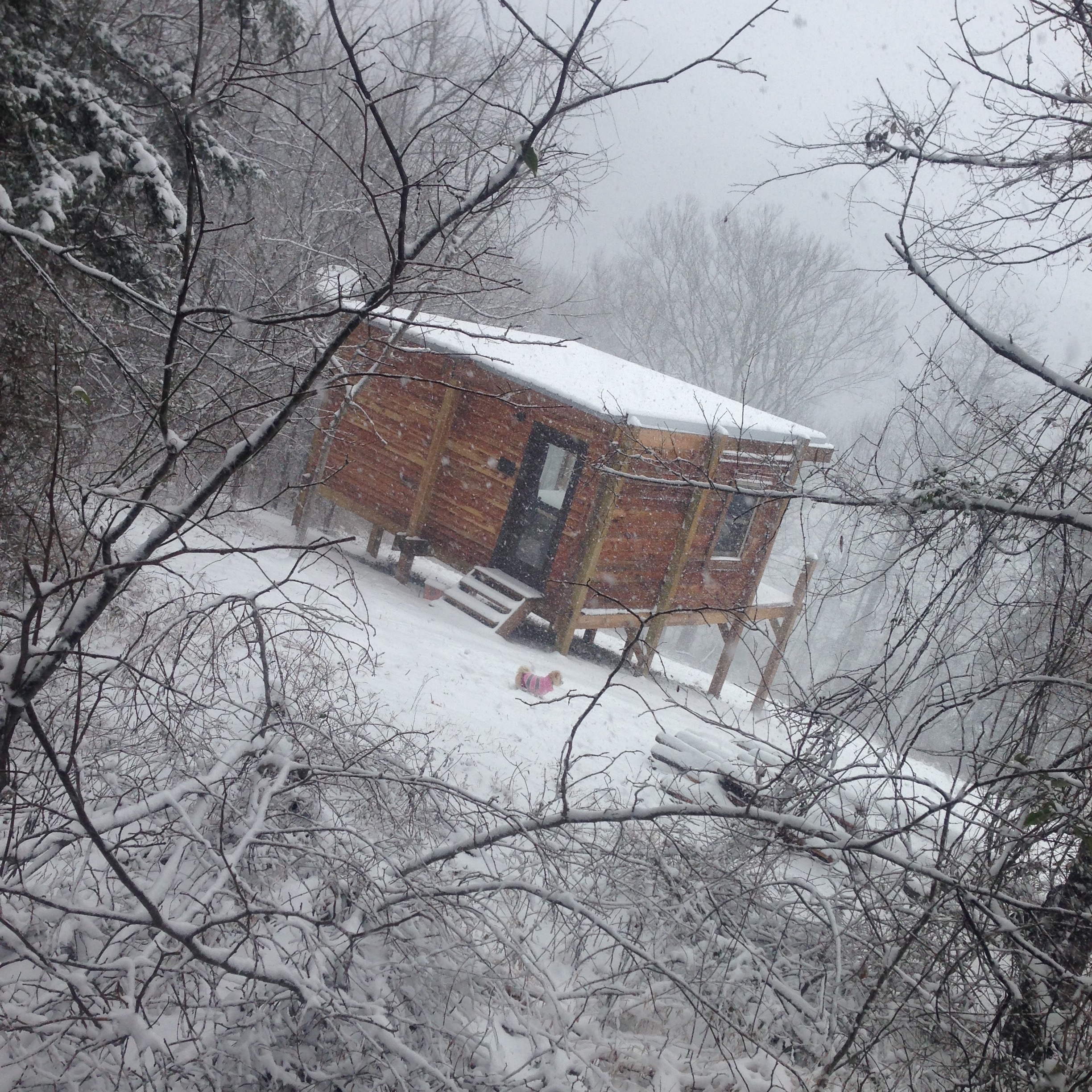
Building Hawk’s Nest—my artist studio and the first thing in my entire life I had ever constructed from scratch—generated an impressive collection of wood scraps, sawdust, bent nails, and the kind of construction debris that accumulates around any project undertaken by someone whose previous building experience consisted entirely of assembling IKEA furniture.
The trash pile grew larger every day, fed by my learning curve and the generous contributions of mistakes, miscalculations, and materials that had seemed essential when purchased but turned out to be completely wrong for the job. Eventually, we realized that the only practical solution was to burn the whole mess, since the lighter pieces kept blowing around the ridge in the mountain wind, creating a constant cleanup project that made our wilderness retreat look like a construction site hit by a tornado.
We waited carefully for the wind direction to shift away from the under-construction cabin. This was crucial because the bonfire would be perilously close to Hawk’s Nest—closer than any fire safety manual would recommend, but then again, fire safety manuals don’t account for the realities of building on ridges where level ground is measured in square feet rather than acres.
When the wind finally cooperated, blowing steadily away from our investment in cedar siding and artistic dreams, we seized the moment. The bonfire caught beautifully, flames leaping skyward with the enthusiasm of wood that had been waiting weeks for this moment of glory. The smoke billowed away from the cabin exactly as planned, and I turned to Gina with the kind of triumphant smile that men reserve for moments when they’ve successfully managed fire without burning down everything they own.
That’s when something that sounded like a flaming rocket whistled so close to my ear that I felt it singe my hair.
Time slowed in that peculiar way it does when your brain is processing the fact that death just missed you by inches. I watched, mesmerized, as whatever had nearly taken my head off continued its trajectory and burned a substantial hole in the grass about six feet in front of me, hissing and smoking like an angry dragon that had crash-landed in our meadow.
Somehow—and this is where employing teenage helpers without proper supervision reveals its limitations—one or more of the local kids we’d hired to dig holes for the support poles had tossed aerosol cans into our debris pile. Paint cans, WD-40, some kind of spray lubricant—I never did determine exactly what had nearly turned me into a cautionary tale about wilderness construction safety.
As I stood there watching the smoking crater in our pasture, I shivered with the realization of how fragile life becomes when you’re living an hour away from the nearest hospital and your medical backup plan consists of hoping that whatever kills you does it quickly enough that the drive to town becomes irrelevant.
Gina’s face was a study in shock and delayed terror. “Oh my God,” she kept saying, “oh my God, that could have killed you.” She was right, of course. A pressurized can turned into an accidental missile by bonfire heat could easily have taken my head clean off, or at minimum provided me with injuries that our rural emergency room—which we’d visited once and found to be more comedy than medical facility—was not equipped to handle.
I had read somewhere about the statistics of deaths on wilderness farms, or maybe it was about shorter life expectancy for people who choose to live in remote areas where medical help is measured in hours rather than minutes. The numbers weren’t encouraging for people like us, who had traded suburban safety for mountain authenticity and were learning that every aspect of wilderness living came with elevated risks that most people never have to calculate.
The aerosol can incident joined the growing list of ways that Kalien was teaching me about mortality: runaway trailers, power tools I didn’t understand, steep slopes, and now explosive debris management. Each near-death experience was adding to my education in the difference between watching homesteading shows on television and actually trying to live the reality.
But here’s what I found most unsettling: these weren’t the kinds of dangers you could prepare for or avoid through careful planning. I had checked the wind direction, waited for optimal conditions, taken reasonable precautions. The problem was teenage helpers who didn’t think to mention they’d thrown pressurized containers into the burn pile, because to them, this was probably normal behavior that didn’t require special announcement.
Living at Kalien meant accepting that rural life operates by different assumptions about risk management, where people grow up understanding that certain dangers are simply part of the landscape, and where the margin for error is calculated differently because help is far away and weather can make it even farther.
As we stamped out the grass fire and made sure no other unexploded ordnance was waiting in the debris pile, I realized that building my artist studio was teaching me more than construction skills. It was teaching me about living with calculated risks, about the importance of communication when working with people who’ve grown up with different assumptions about safety, and about the reality that wilderness living means accepting responsibility for dangers that suburban life has taught us to delegate to professionals.
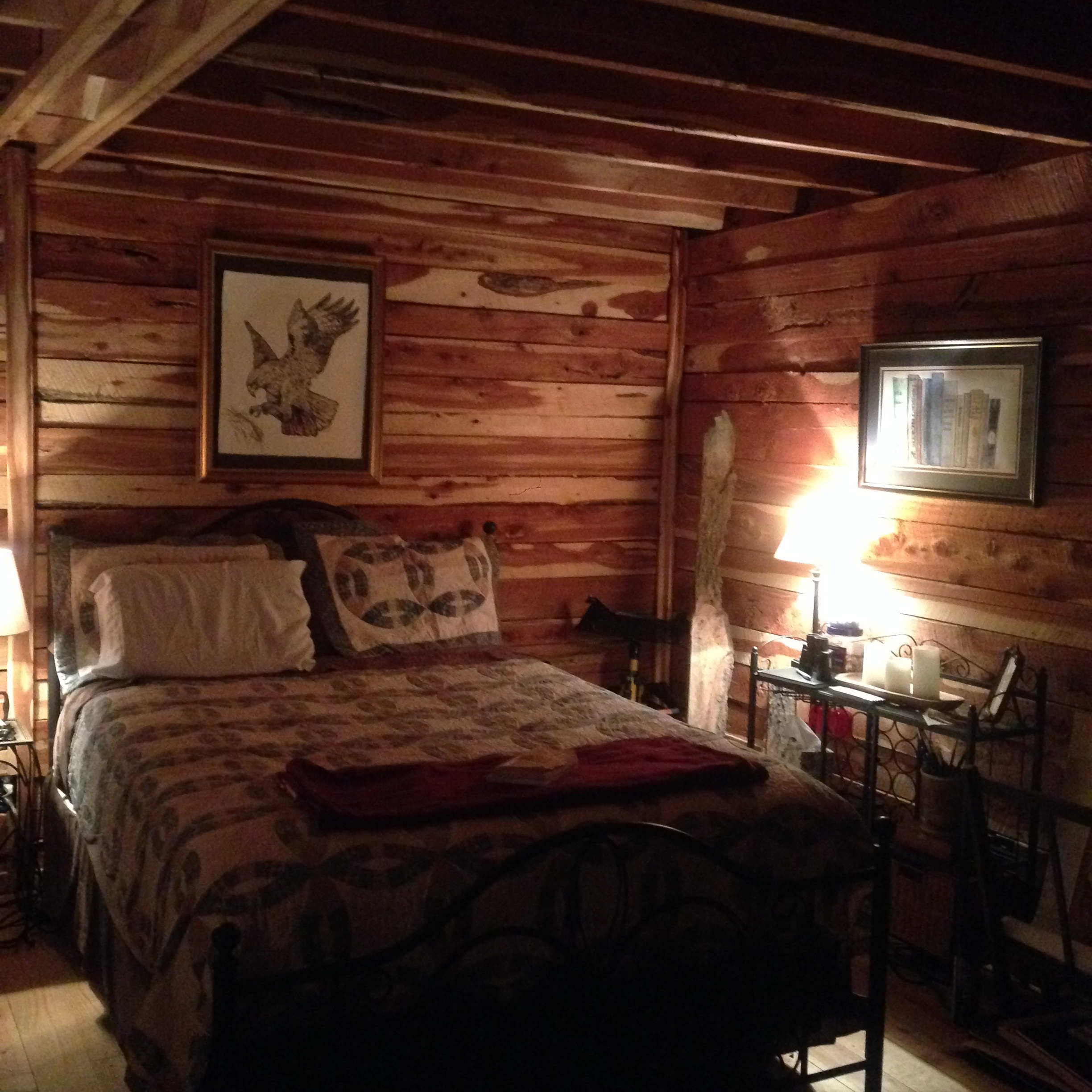
The studio turned out beautiful, by the way. Perched on that ridge with its view of the hawk’s nest in the valley below, it became the place where I would write some of my most honest work about the journey from institutional religion to authentic spirituality. But every time I sat at that desk, I would remember the day I learned that building dreams in the wilderness requires not just vision and determination, but also a healthy respect for the fact that even trash disposal can become a life-threatening activity when you’re learning as you go.
Hawk’s Nest stood as proof that you can survive the learning curve of wilderness construction, but also as a reminder that survival sometimes has more to do with luck than skill, and that the difference between a good story and a tragic accident can be measured in inches and split seconds.
The next time we burned construction debris, we checked every piece twice and made sure our teenage helpers understood that aerosol cans and bonfires don’t mix. Some lessons you only need to learn once, especially when the alternative is not being around to apply the knowledge.
Leave a Reply