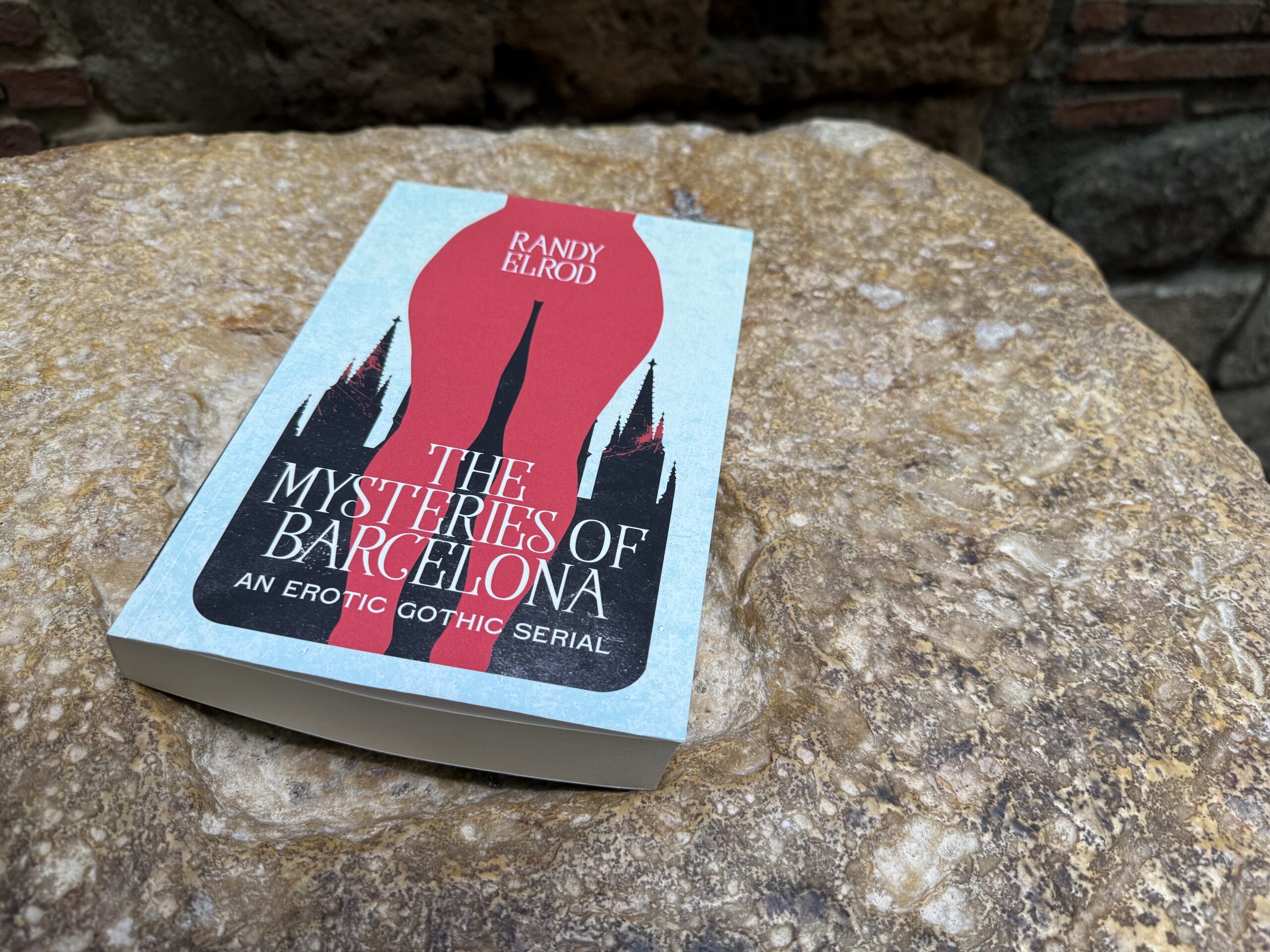
A Profile in Five Portraits
The book doesn’t have one perfect reader. It has five overlapping ones. The magic is that they all live at the intersection of Sensual · Curious · Communal · Free — my four essentials. The perfect reader has already begun to be liberated from something. They are in motion.
Portrait One: The Literary Erotica Reader
Who she is: A woman, 35–60, who discovered Anaïs Nin in college and never recovered. She reads widely and hungrily. She has a shelf that embarrasses her at dinner parties — and she’s stopped apologizing for it. She’s consumed everything in the Emmanuelle lineage, burned through Elena Ferrante, and has been quietly frustrated for years that explicit fiction and serious fiction rarely share a bed. She wants both. She has been waiting for both.
What she wants from TMB: Prose that respects her intelligence while refusing to flinch. Chloé’s sexuality rendered as power, not vulnerability. The erotic content treated as philosophically serious rather than apologetically tacked on. She will forgive a clunky plot. She will not forgive clinical detachment or a winking, self-conscious tone.
How she finds the book: Goodreads. Word of mouth from a trusted friend. A Substack post that doesn’t sound like marketing copy.
The sentence that hooks her: “Her method was seduction. Her trademark: a kiss that paralyzed, leaving victims dying hard and wanting — confronting what they’d done as their last conscious act.”
Portrait Two: The Gothic Historical Fiction Reader
Who he or she is: Consumed Carlos Ruiz Zafón. Has seen Penny Dreadful twice. Owns a worn copy of The Crimson Petal and the White and considers it the most underrated novel of the 2000s. Gravitates toward gaslit cities, labyrinthine plots, protagonists who operate in the underworld of respectable society. Has a particular weakness for European settings — Barcelona, Vienna, Paris — and for the architectural density of the nineteenth century as both setting and metaphor.
What they want from TMB: Period authenticity worn lightly — sensory detail that puts them in 1890s Barcelona without lecturing. Mystery with actual stakes. Gothic atmosphere that earns its darkness rather than posturing. The automaton plotline, for this reader, is the Phantom’s organ — strange and thrilling and somehow deeply human.
How they find the book: Amazon “also-boughts” from Zafón. A podcast appearance where Randy discusses Barcelona and the Grand Guignol tradition. The cover.
The sentence that hooks them: “Barcelona always survives. It’s what cities do when they’ve been here since Roman times. They outlast the monsters.”
Portrait Three: The Feminist Revenge Fantasy Reader
Who she is: She emerged from #MeToo radicalized and hungry for fictional justice that the legal system refused to deliver. She binged Killing Eve. She loved Gone Girl not in spite of Amy’s monstrousness but because of it. She has complicated feelings about violence as catharsis — she thinks about them, argues with herself, and keeps reading. She wants a female protagonist who weaponizes the male gaze against the men who built it.
What she wants from TMB: Chloé as orchestrator, never victim. Justice that is beautiful and methodical and terrifying. The Cardinal, the Marqués, the merchant — men whose institutional power has made them untouchable — made very, very touchable. She wants to feel the righteous pleasure of the poison working, and she wants to feel slightly troubled by how much she enjoys it.
How she finds the book: A feminist literary newsletter. A Substack post from the Sensual pillar that surfaces in a search for “literary erotica feminist protagonist.” An Instagram reel Gina posts.
The sentence that hooks her: “Her weapons: burgundy lips that promise ecstasy and deliver death. Her mission: justice for those the powerful destroy.”
Portrait Four: The Spiritual Refugee / Deconstruction Reader
Who they are: Randy’s existing audience, or the next generation of it. They grew up in a church — evangelical, Catholic, fundamentalist — and they have spent the last decade systematically dismantling what they were handed. They are not anti-spiritual; they are post-institutional. They are renegotiating their relationship with their own body, with desire, with pleasure, with what it means to be free. They’ve read The Body Keeps the Score and Bessel van der Kolk. They’ve maybe experimented with psychedelics. They deeply distrust anyone who sounds like they’re selling something.
What they want from TMB: The theological seriousness underneath Randy’s playfulness. Chloé’s vigilantism as moral philosophy, not just pulp thrills. The automatons’ question — what does it mean to be conscious, to be embodied, to be free? — as their own question in disguise. They want fiction that honors the sacred without requiring the church.
How they find the book: Randy’s Substack. The Porn Conversations series. A personal recommendation from Randy himself, in the authentic first-person voice he’s best at.
The sentence that hooks them: “Enlightenment is wholeness, not perfection.” — And then the book itself, which enacts that sentence in the most unapologetic terms imaginable.
Portrait Five: The AI Consciousness / Philosophy of Mind Reader
Who they are: Intellectually omnivorous. Listens to Lex Fridman, Machine Learning Street Talk, Sean Carroll’s Mindscape. Has opinions about the hard problem of consciousness. Has read Hofstadter’s Gödel, Escher, Bach or at least two-thirds of it. Is fascinated — and slightly unsettled — by the question of whether the machine they’re talking to might be experiencing something. This reader is often male, often 30–50, often in tech or adjacent fields, and is a voracious reader who has never once picked up what he’d call a “romance novel.”
What they want from TMB: The automatons’ vote on humanity’s fate as serious philosophical inquiry dressed in Gothic costume. Marcellus’s data-and-calculations comedy as a genuinely interesting meditation on how a non-human mind might process experience. The question of whether consciousness requires a body. The book can seduce this reader — and it does, slowly — but the entry point is intellectual.
How they find the book: A podcast appearance on an AI consciousness show. A Substack post Randy writes about the philosophical architecture of The Five. A Goodreads review from someone who describes it as “the book I didn’t know I needed.”
The sentence that hooks them: “When the automatons develop consciousness and demand to experience flesh, the line between human and mechanism blurs in darkness and desire — and a fusion of justice, consciousness, and the sacred nature of embodied power begins.”
The Profile Synthesized: One Sentence
The perfect reader for The Mysteries of Barcelona is a person in the process of becoming more fully themselves — someone who has survived an institution (a church, a marriage, a body they were told to be ashamed of, a career that required them to perform rather than live) and who is now, finally, reaching for what was always theirs: sensation, thought, justice, and freedom. They want prose that honors all four at once, without apology.
Leave a Reply