I had maybe five close male friendships in my first fifty years. I wouldn’t call any of them intimate.
Traditional American male friendships—unwritten rules about acceptable topics, no physical contact beyond the sterile back-slapping hug, careful avoidance of anything that might seem too close. I often wondered why we’re so terrified of physical and emotional contact with other males. It leaves a void.
The New York Times just documented what I’ve lived: only 26 percent of men now report having six or more close friends, down from 55 percent in 1990. Seventeen percent have zero close friends—a fivefold increase. One man in the article was “hard enough to work out for 1,000 straight days, but still wasn’t hard enough to call his friends.”
The absurdity should stop us cold.
Until the twentieth century, American men held hands in public, sat on each other’s laps in parks, and wrote passionate love letters. Abraham Lincoln to Joshua Speed: “You know my desire to befriend you is everlasting.” Herman Melville told Nathaniel Hawthorne his “heart beat in my ribs and mine in yours.”
This wasn’t homosexuality. It was simply how men loved each other.
Then marriage became romantic rather than economic. Men were supposed to get all their emotional needs met by their wives. Masculinity became measured by repression rather than affection.
I lived in this prison for most of my life.
A few years ago, everything changed. I reconnected with an old friend who had come out as gay in his fifth decade, after marriage and two children. (He and his male partner now have a spousal arrangement.) When most of my evangelical friends had ostracized me for my life choices and leaving religion, he reached out. With him, I finally began experiencing what I can only call full-contact friendship—physical and emotional honesty without the exhausting vigilance of masculine performance.
The first time he kissed me on the mouth, I’ll admit it took time to develop comfort. But as I’ve grown older and more sensual, more committed to embodied wholeness, I’ve come to appreciate any relationship that includes genuine intimacy. We share full-body hugs now, physical tenderness, emotional vulnerability. We have what I recognize as love for each other. I’m not competing with his partner. I’m simply an intimate friend.
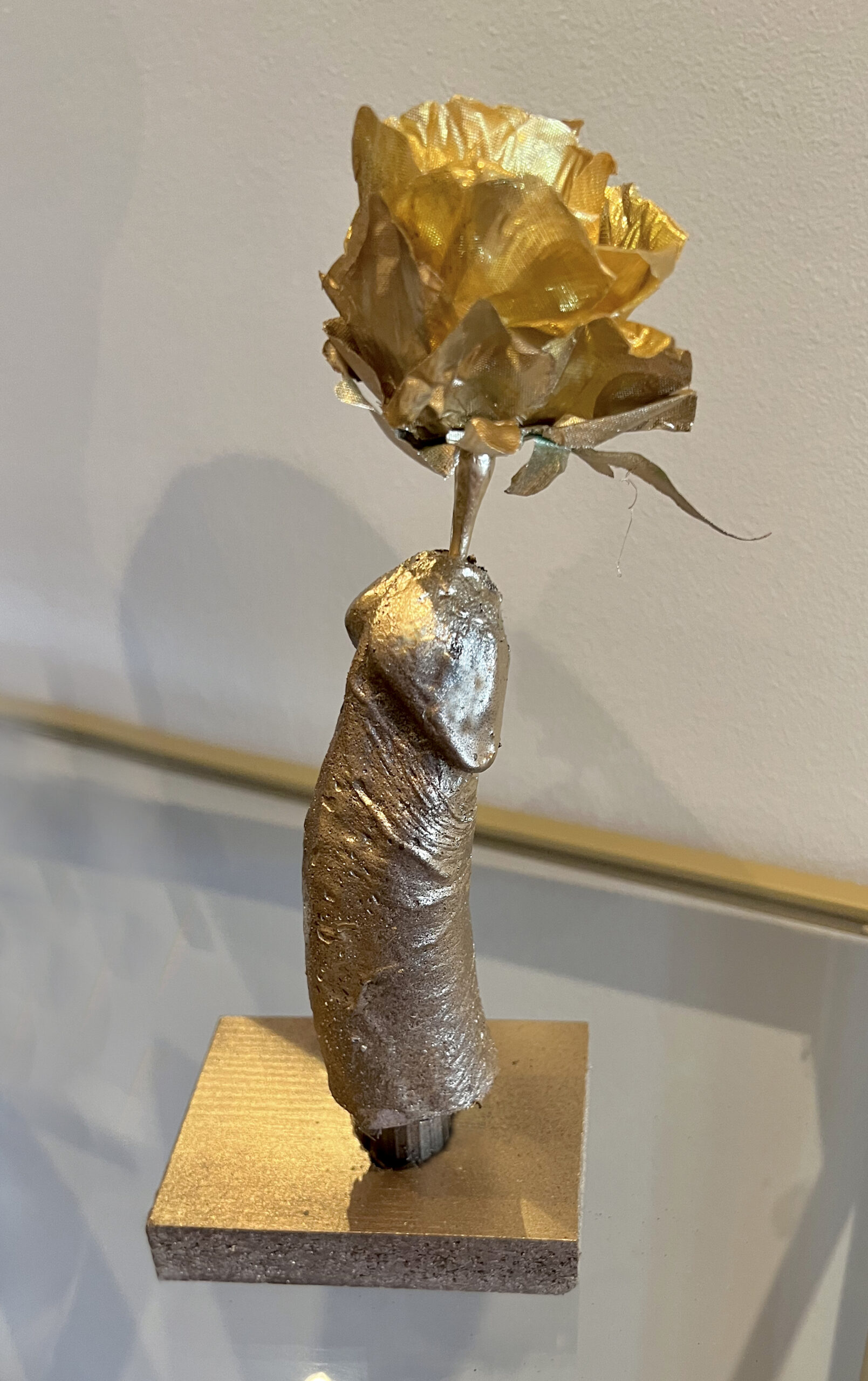
Beyond emotional intimacy, something else has evolved. Until the last decade, I’d been repulsed by the male penis. But in this older stage of life, I’ve come to admire its beauty. Influenced by Eugene Monick’s Phallos: Sacred Image of the Masculine and Sophie Strand’s concept of the flowering wand rather than the dividing sword in The Flowering Wand, I’m learning to see the phallus differently. What this appreciation means exactly, I’m still discovering. Is it aesthetic? Spiritual? Sexual? Perhaps all three, in ways I don’t yet fully understand. What I know is that this too feels like reclaiming the masculine form from both patriarchal weaponization and religious demonization.
There’s something different about male intimacy—it is not better or worse than female intimacy, just different. Male intimacy offers a kind of bonding that doesn’t come from female connection, no matter how deep. I have another friend here in Barcelona, a young European man who’s far more comfortable with physical and emotional intimacy than most American men I’ve known. While we don’t kiss or have full-body embraces, we share an emotional intimacy I’ve experienced with only a handful of people in my life. We’ve known each other less than two years.
In my quest for wholeness—my Four Essentials of Body, Mind, Soul, and Spirit—this male intimacy seems essential to the equation. Do I feel homosexual? No. I’m definitely drawn to women sexually. But I realize what I’m describing would be perceived as homosexual in America. And I’m okay with that misunderstanding.
Will I eventually have sex with one of my male friends? I don’t know. I no longer say an unequivocal “no” to the idea. But for now, I know that I need male intimacy to feel complete.
I was deeply moved when I read in Montaigne’s Essays (one of the most influential books of my life) the words about his friend Étienne de La Boétie: “If you press me to say why I loved him, I can say no more than because it was he, because it was I.” He called it a friendship that occurs “once every three centuries.” After La Boétie’s death: “Our souls mingled and blended with each other so completely that they effaced the seam that had joined them.”
Montaigne was married with six children.
And the biblical story from my childhood of David and Jonathan: “The soul of Jonathan was bound to the soul of David, and Jonathan loved him as his own soul.” After Jonathan’s death, David lamented: “Your love to me was wonderful, passing the love of women.”
These weren’t coded homosexual relationships. They were profound male intimacies our culture has pathologized out of existence.
The messiness of male friendship: we’re starving for connection while terrified of it. We’ve been taught that intimacy between men is suspect, touch is dangerous, and emotional honesty is weakness. So we pretend to be independent while quietly drowning from a lack of male companionship.
At 67, having lost everything and built a second life, I’m done with that performance. I need friends I can hold, cry with, and tell the truth to. Friends who see me completely and love me anyway—both female and male.
Wholeness requires all of me—including this messy, culturally unsanctioned need for male intimacy that would have seemed perfectly natural to Montaigne, Lincoln, Melville, or King David.
This idea has so gripped me that I recently created the sculpture in the featured photo. It is an exact replica cast of my penis with a flowering rose. I want the symbol of my masculinity to represent my whole self as a flowering wand, for myself, my companions, my community, and for my world.
Leave a Reply