From: A Life in Four Movements: An Unfinished Symphony
Before Kalien, I had never owned a gun. This wasn’t a political statement or moral position—it was simply suburban reality. In my world of mega-churches and gated communities, firearms were abstract things that other people owned for reasons I didn’t need to understand.
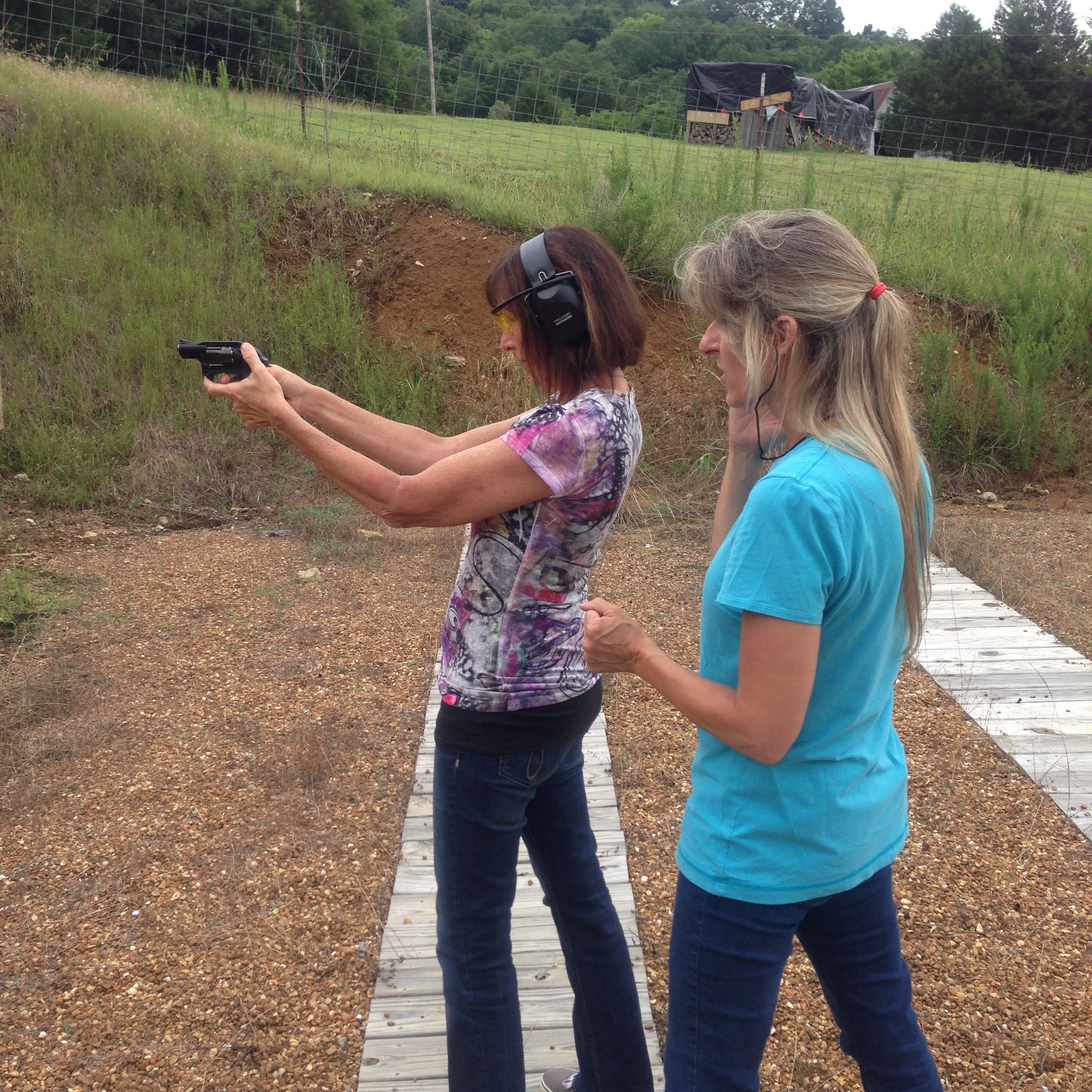
But Gina’s dad was worried about us living in the wilderness and insisted on buying us each a handgun and me a shotgun. He also paid for us to get carry permits, which in bright red Tennessee requires approximately the same level of bureaucratic difficulty as getting a library card. He bought Gina a Ruger LCR revolver and me a 9mm, and we dutifully passed our target shooting tests with the kind of competence that suggested we might not immediately shoot ourselves in the foot.
It felt surreal, like playing dress-up in someone else’s life. I never thought I would be a person who owned guns, just like I never thought I would be a person who chased runaway trailers or nearly got decapitated by construction equipment. Kalien was teaching me that identity is more fluid than we imagine—sometimes circumstances require you to become someone you never planned to be.
We weren’t allowed to bring the guns to Barcelona, nor did we want to, so my brother—who is a gun enthusiast bordering on addict—is keeping them safely for us until we might need them in the future, say if MAGA takes over the world and suburban sensibilities become insufficient for survival.
The incident that turned theoretical gun ownership into moral education happened on an ordinary afternoon. I had just finished a long day of construction work and was about to jump in the shower when I spotted a skunk ambling down the hiking path from our new Keefer-Roberts artist cabin. Something about its movement seemed off—erratic, unfocused, the kind of behavior that triggers primitive alarm systems in humans who’ve learned to read animal body language.
I had recently read an article about skunks and rabies, and I instantly panicked at the thought of this potentially diseased animal encountering our little Morkie, Remy, who lived in the house with us and slept in our bedroom in her tiny dog bed. The image of Remy being sprayed or, worse, bitten by a rabid skunk, triggered something instinctual and protective that bypassed rational thought entirely.
Without considering alternatives, I grabbed the shotgun from its designated place, ran out to our wrap-around deck on the second floor of our home, and took aim. I was naked as a jaybird, which wasn’t unusual—we often went nude during life at the farm because we had absolutely no neighbors and couldn’t be seen from the road thanks to the massive black walnut trees. There was almost never a car that ventured all the way back to our sanctuary except the crusty mail woman, who had probably seen enough in her rural delivery career to be unshockable.
I aimed and fired.
What happened next will haunt me forever. Not because of the violence—though that was part of it—but because of the absolute, anticlimactic finality of death. The skunk simply fell sideways and never moved again. There was no drama, no struggle, no cinematic death scene. Just the sudden transition from living creature to inert matter.
This wasn’t the pomp and circumstance of gunshot wounds on television. This was the stark reality of ending a life: silent, immediate, irreversible. One moment there was a confused animal following its instincts down a hiking trail, the next moment there was a body requiring disposal.
I stood there on the deck, naked and holding a shotgun, overwhelmed by the weight of what I had just done. The only other living things I had killed were two of the many rattlesnakes that were plenteous on our land—and those had been clearly aggressive, obviously dangerous encounters where the choice was them or us. This felt different. This felt like I had acted out of fear rather than necessity.
What made it worse was what I learned later: skunks often act erratically when pregnant. The behavior that had triggered my panic—the wandering, the apparent disorientation—might have been a mother looking for a safe place to have her babies, not a diseased animal threatening our dog.
I had thought that a skunk would never bound down a road in broad daylight unless it was diseased, but my understanding of skunk behavior was based on suburban assumptions rather than wilderness reality. In my attempt to protect Remy from a theoretical threat, I might have killed a pregnant mother who posed no actual danger.
The disposal process became its own form of penance. The death had caused the skunk to release its spray, creating a smell so horrific that it required a gas mask, hazmat suit, shovel, and cardboard boxes lining the back of Helga (our Honda 4 x 4) to transport the body up the mountain far enough away that the stench wouldn’t permeate our living space.
As I carried that dead weight up the ridge, breathing through a mask and trying not to vomit from the smell, I made a vow: I would never kill another living thing unless I absolutely had no choice. The ease with which I had ended a life—the instantaneous transition from concern to action to irreversible consequence—had taught me something about the responsibility that comes with lethal capability.
Gun ownership, I realized, wasn’t just about target practice and permits. It was about living with the knowledge that you possessed the power to make split-second decisions with permanent consequences, and that fear could make you use that power in ways you might later regret.
The skunk incident became part of my ongoing education in the moral complexity of wilderness living. Everything at Kalien required decisions that suburban life had taught me to delegate to others—pest control, security, medical emergencies, conflict resolution. But with that self-reliance came the weight of responsibility for outcomes that couldn’t be undone, explained away, or fixed by calling the appropriate authorities.
I never had to use the guns again during our time at Kalien, for which I remain grateful. But I also understood why Gina’s dad had insisted we have them. Living in the wilderness means accepting that sometimes you are the only authority available, that sometimes survival requires actions that civilization has taught us to avoid.
The moral education wasn’t about whether gun ownership is right or wrong—it was about learning to live with the weight of capability, the responsibility of lethal power, and the recognition that good intentions don’t always lead to outcomes you can live with easily.
Years later, when people ask me about our time at Kalien, they want to hear about the romantic aspects of wilderness living—the sunrises, the connection with nature, the escape from suburban stress. They don’t want to hear about standing naked on a deck with a shotgun, killing a possibly pregnant skunk out of fear for your dog’s safety.
But that story is as much a part of the Kalien education as any sunrise or spiritual ceremony. It taught me that authentic living means accepting responsibility for the full spectrum of your choices, including the ones that teach you about yourself in ways you wish you didn’t need to learn.
—
This incident captures another aspect of Kalien’s ongoing moral education—the weight of self-reliance when it includes the power to end life, and the recognition that good intentions can lead to outcomes that challenge your understanding of who you are and who you want to be.
Photo above: Gina (L) qualifying for her gun license.
Leave a Reply