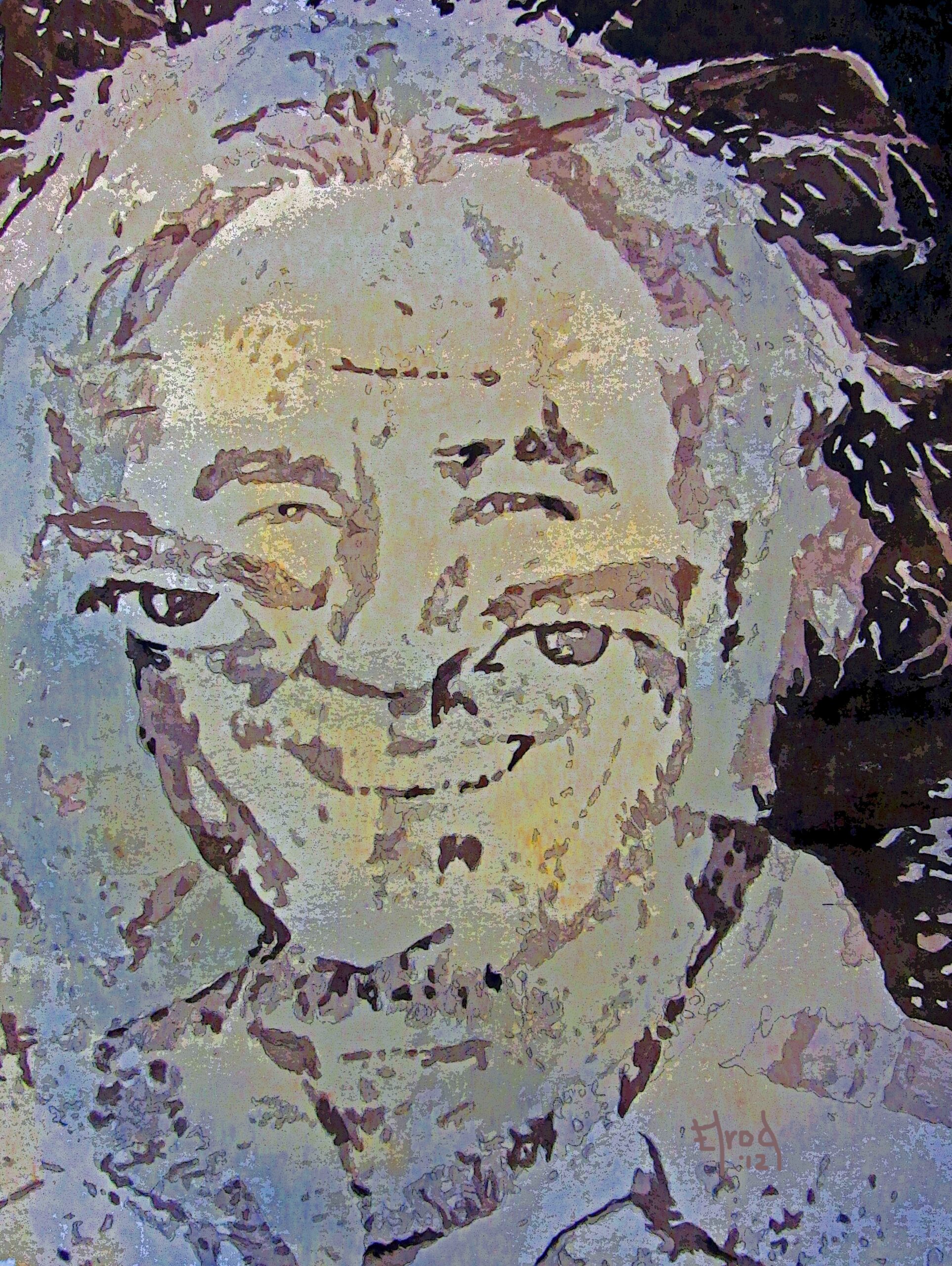
I turned 68 this year, and as I read a fascinating article in The Atlantic this week, the question hit me: am I still middle-aged?
The instinct is to laugh it off. Sixty-eight sounds like a number that should settle the matter. But I’ve spent twenty years building a framework I call The Quest, My Theory of Being, that maps the stages of a life onto four ages: childhood, first adulthood, second adulthood, and elderhood. So the question isn’t vanity. It’s cartography. Where exactly am I standing on my own map?
The experts can’t agree, and that’s the whole point
The article quotes a psychologist at Brandeis named Margie Lachman who has spent over thirty years running one of the largest studies of midlife in existence. Her official position: middle age runs from 40 to 60, “plus or minus 10 years.” Which is another way of saying nobody knows, including the woman who wrote the book on it.
The pattern that fascinated me: the older people get, the later they place the boundaries of middle age. People in their twenties draw the line at 39 to 55. People in their seventies push it out to 48 and 65. Ask a room full of humans when middle age ends and you’ll get a room full of self-portraits.
Chip Conley, who founded a school for reinventing midlife, takes a bigger swing. He splits it into three movements: early midlife from 35 to 50, the core of midlife from 50 to 60, and later midlife from 60 to 75. Seventy-five, in his accounting, is still midlife. I read that line twice.
Lachman offers the definition I trust most, and it has nothing to do with a birthday. Midlife, she says, is the place where people both younger and older than you are looking to you for help. You’re the load-bearing wall. Everyone leans, and you give more than you get.
That defines this stage of my life exactly. The psychographic matters; the demographic never did.
My own map agrees, in its own language
Here’s where The Quest and the Atlantic article shake hands more than I first realized.
In my book, I chart four stages, each with its own transition:
- Childhood — Development. Birth to 25.
- First Adulthood — Establishment. 25 to 50.
- Second Adulthood — Enjoyment. 50 to 75.
- Elderhood — Enlightenment. 75 and beyond.
I built those numbers around a mandala: a circle with four axes. Northern axis: birth. Eastern axis: 25, the end of childhood. Southern axis: 50, the end of first adulthood. Western axis: 75, the end of second adulthood. And back to the north, to whatever comes after.
Second Adulthood is my name for mid-life. I built the category myself, and I built it to run from 50 to 75, which happens to land almost exactly on Conley’s ceiling. So the frameworks aren’t in conflict. Lachman studies it from the outside and calls it midlife. I built mine from the inside and called it Second Adulthood, the Enjoyment stage: same territory, two maps.
By that math, at 68, I am eighteen years deep into the third stage of life. I’m past the second stage, establishment years: the striving, the pulpit, the performing. I live now in the stage I once described as reading all day if I want to, vermouth or sherry in hand, Metallica on the speaker, no clock running my life. The guilt from sixty years of serving everyone else is still unlearning itself, but I’m working the muscle daily.
And Elderhood waits approximately seven years out. I’ve already started sketching what it looks like: free and clear of the past, self-acceptance instead of self-improvement, a quieter mind, a spiritual practice built for this stage rather than borrowed from an earlier one. Resilience. Serenity. Equanimity. Transcendence. Lao Tzu instead of Da Vinci.
The ranges flex, and that’s the honest part
The expert whose thoughts I respect most said it plainly: give any of these boundaries five or ten years of slack on either side. Lachman’s midlife window flexes by a decade depending on who’s answering. My own Quest stages carry the same elasticity. I wrote “approximately” next to every age range for a reason. A life transition arrives on its own schedule, not a candle count.
Louise Aronson, the geriatrician whose work shaped my thinking on this more than almost anyone, points to a study that should embarrass every culture obsessed with youth: people between 65 and 79 report the highest well-being of any age group measured: higher than 18 to 21, higher than middle-of-the-career forty-somethings drowning in influence and unhappiness. The years I’m standing in right now, statistically, are the good, no, the BEST years.
The math makes its own case
Here’s where the numbers surprised me enough to reopen the question I thought I’d settled.
The concept of middle age was never really about a birthday. It was about the midpoint, half of however long you’re going to live. So I ran my own numbers instead of the population’s.
I’m male, active, non-smoking, eating a Mediterranean diet, walking or swimming or running daily, and living in Spain, which is projected to overtake Japan as the country with the longest life expectancy on earth within the next two decades. Spanish men already outlive most of Europe. Add the Mediterranean diet shown to cut all-cause mortality by roughly a quarter, add the three to four extra years the research credits to regular swimming and running, subtract the car I no longer drive, and the flat actuarial number climbs fast. A calculator I took at 63 put my odds at living to 101. Run the same logic today, five years and several thousand running miles later, and the number holds or improves.
Conley’s map said middle age could run to 75. My own longevity math says it might be fair to still call myself, however audaciously, middle-aged.
So, am I middle-aged?
By the Atlantic’s numbers, yes, if you use Conley’s generous ceiling of 75, the one that happens to match my own Western axis exactly. So by my own map, yes as well: I’m eighteen years into Second Adulthood, the stage I built and named as mid-life, with seven years or more to run before Elderhood. By the raw math of my own longevity odds, yes a third time, and more emphatically, the actuary’s midpoint keeps sliding out to meet me.
Three different measuring sticks, three different vocabularies, one answer. What I know for certain, regardless of the label: I’m not fighting old labels anymore. Nobody’s identity performance is required of me today, not the redneck, the Renaissance man, the performer, the Christian, even the shaman I called myself in my fifties. I’m enjoying life instead of enduring. That’s the real marker, more reliable than any birthday, any actuarial table, or any mandala. A mindset, not a number.
Sixty-eight isn’t what it used to be. Hell, maybe it’s the new forty-eight. And I like exactly where it places me on the circle.
The Quest, my Theory of Being, grew out of a mid-life crisis that fragmented me at 48. I begged elders for a map and found none, so I built one myself: fifteen years of research, therapy, and lived experience, distilled into ten waypoints for anyone navigating the transition to second life. The Quest (Discover A Way To Enjoy the Second Half of Life) is the book that came out of it.


Leave a Reply