Sobremesa
Author’s Note: I thought a bit of humor may be in order during these crazy times. Brief and fun.
Let me tell you about the sixteen-foot concrete walls.
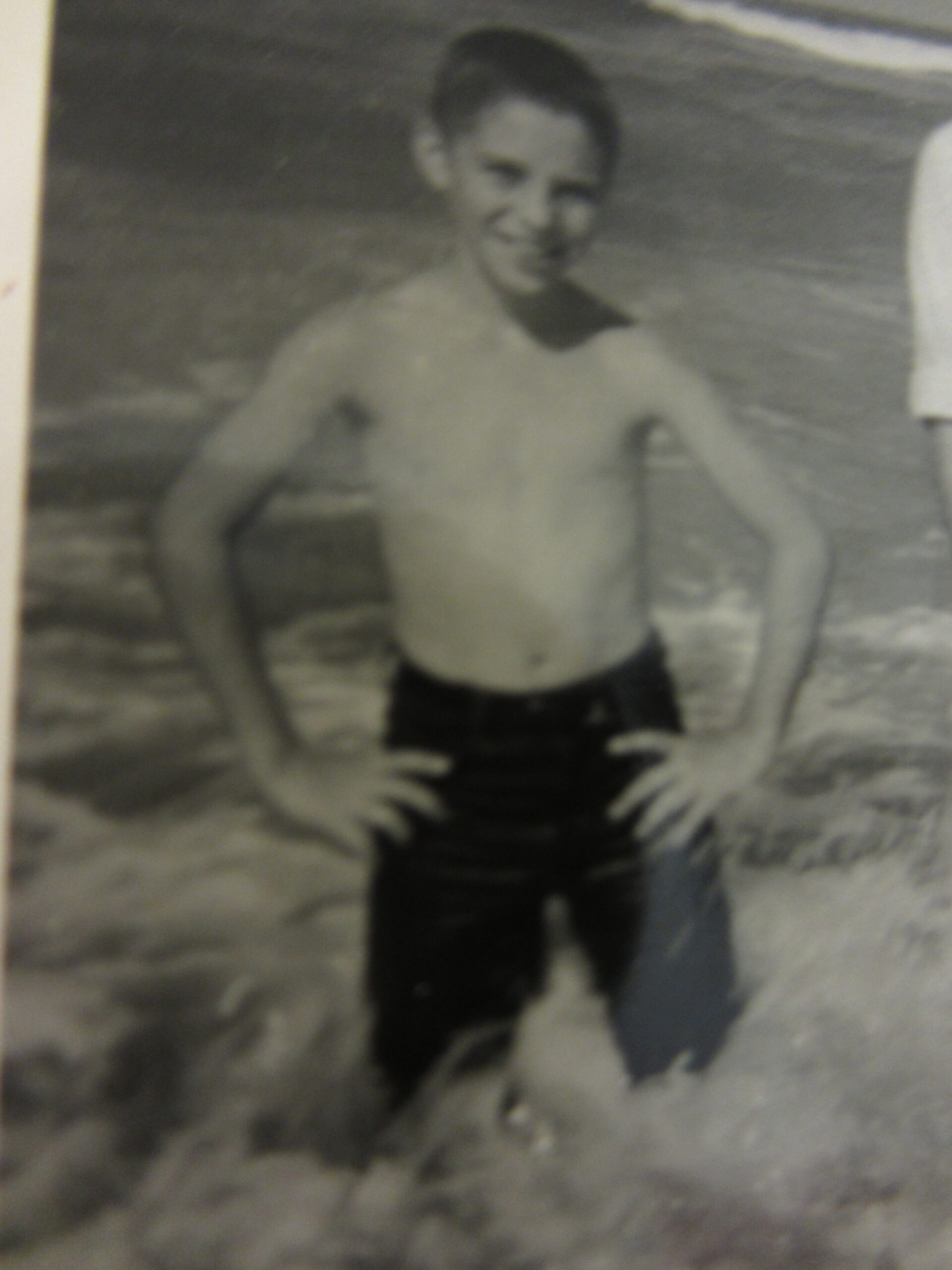
I was maybe thirteen years old, standing at the edge of the Church of God youth camp pool in my ragged cutoff blue jeans—because we did not own a bathing suit, or swimsuit as the more evolved Pentecostals apparently called them—staring up at these massive, prison-grade concrete block walls that completely encircled the pool. I mean completely. No gaps. No light from the outside world.
I asked my counselor why.
“Because,” he explained with the patient gravity of a man who has rehearsed this answer many times, “we do not allow mixed bathing.”
I nodded slowly, as though this made sense. It did not make sense.
What it did do was confirm my growing suspicion that the body— my body, anyone’s body—was essentially a sinful emergency that required constant supervision. (And you wonder why I feel SO free at Barcelona’s nude beaches.)
ºººº
Now fast-forward two years. Our family made the pilgrimage to Daytona Beach. This was a significant event, you understand, because we had never been out of Tennessee. Dad drove the car directly onto the beach—because apparently you could do that in those days—and kept driving. We boys pressed our noses to the glass like hound dogs watching a squirrel. The Atlantic Ocean. Actual sand. Women in bathing suits. Mixed bathing!
Dad did not stop.
My brother Terry and I begged. Finally, finally, he pulled over and gave us thirty minutes. Thirty minutes at the beach. Mom and my sister walked into the surf in their dresses. Full old-time Pentecostal dresses. Holding them up to the knee, but dresses. Terry and I, still in our rolled-up jeans and buttoned shirts, our skin the approximate color of white paste, made a run for an ice cream stand, where the girl behind the counter had a tiny bathing suit and—God save us—one side of her top came slightly loose, and you could see a hint of her nipple.
Lord have mercy. This was before the world of television (for us) and the Internet, so that brief glimpse of female aureola was like the most pornographic (and sensual) experience of our lives.
We were certain she was flirting with us. In retrospect, she was trying not to burst out laughing at two lily-white Tennessee boys who had apparently time-traveled from 1952 to buy an ice cream.
Then Papa Elrod did it.
Papa Elrod—my Dad’s dad and always the rebel, God love him—took off his shirt. There was an audible gasp from my mother. And then he walked into the ocean and started swimming. Just like that. Like a person who had a body and used it without apologizing. We were stunned. When we asked him later where he learned, he started to mention something about California when he was young, and my father shushed him and would not let him finish the story.
That forbidden story haunted me for decades. To this day, I do not know the details.
ºººº
Here’s what growing up that way does to a man: it plants a fear of the water so deep it lives in your bones. My family treated water the way most people treat electrical outlets—something dangerous that you acknowledged existed but certainly did not put yourself into.
And yet the water kept calling me.
At The Wilds camp (Note: I do not recommend this camp to a sane human being) in my senior year, I nearly drowned trying to win a greased watermelon contest in the lake—because of course I did, because I was me, and winning mattered more than breathing. My girlfriend’s mother later tried to teach me to swim on a trip to St. Simons Island, and I am eternally grateful for her patience and baffled by her optimism. Somehow, she taught me to manage my fear, flap my arms and legs at the same time, and miraculously, I managed to stay afloat.
I snorkeled the Caribbean in St. John once. Panicked when a wave clogged my snorkel. Nearly drowned. No one knew because I was too stubborn to call for help.
I snorkeled the Great Barrier Reef in Australia. The most terrifyingly beautiful experience of my life. Panicked when I swam over a 1,000 ft drop. Nearly drowned again. No one knew because I had swum so far from the group that I was essentially alone with God and the coral.
In my fifties, I did a mini triathlon, my first and last. I swam the pool lengths, one enormous held breath at a time—stroke, stroke, stroke, gasp—like a man playing chicken with his own lungs. I finished…alive. That counts.
Gina, who grew up in Florida and swims like she was born in the water, knew all of this with the gentle bewilderment of a woman who cannot quite believe what she married. “You’ve become a good swimmer,” she would say. “You just need to learn to relax and breathe.”
I want you to understand: I have never successfully treaded water. Not once. Not even a little.
ºººº
And then we moved to Barcelona.
Across the street from our apartment is a luxury gym with an Olympic-size pool—fifty-meter lanes, retractable roof for summer, a gorgeous sunning area where I very maturely try not to stare at the topless women while pretending to read. We would go to cool off in the pool, and one afternoon, I noticed a man swimming laps with a snorkel—but not the kind I had nearly died with twice. This one came straight up from the center of his face. Perfectly vertical. No turning sideways, no awkward craning, no water flooding in from the side.
I stopped and stared like I had seen a burning bush.
I told Gina, “Now. Now, if I could breathe like that, I think I might actually try swimming laps.”
We bought two. Gina doesn’t need one, but she humored me. There was trial and error. There was lots of water up the nose. There were some undignified sounds. And then, one morning in the twenty-five-meter lane, something extraordinary happened: I started swimming. Lap after lap after lap. Peaceful. Meditative. Beautiful. The whole underwater world turning blue and quiet around me, nothing but the rhythm of my arms and the strange miracle of breath underwater.
I built up to 500 meters. Then 750. Last week—last week—I swam my first mile. One full mile. In about an hour. Me. The boy in the cutoff jeans trapped behind the sixteen-foot concrete walls.
ºººº
I think about Papa Elrod walking into that ocean a lot these days. I think about the story my father wouldn’t let him tell. I think about all the bodies we were taught to be afraid of, including our own. I think about how many miles of water I could have swum if someone had just handed me a center-mount snorkel and said, it’s okay, breathe, you’re allowed.
From no mixed bathing to mile swims.
From concrete prison walls to a fifty-meter Olympic lane in Barcelona.
From cutoff jeans on the shore to—well, let’s just say the topless sunbathing area, and I have developed a fond relationship. And I now unabashedly wear one of those skimpy European swimsuits.
The body, it turns out, was never the emergency. The walls were.
ºººº
Randy Elrod is an author, watercolor artist, and former evangelical minister living in Barcelona. His first novel The Mysteries of Barcelona was released Feb. 14 and debuted at #5 on the Hot New Release Chart on Amazon.

Leave a Reply