¡Una versión en español está disponible AQUÍ!
My wife, Gina, asked me last night why I visit cemeteries here in Barcelona. The honest answer is that I don’t entirely know. I have never been drawn to old graveyards (a taphophile) the way I am drawn to old libraries (a bibliophile). Yet there are many similarities. Reading the stones as documents, feeling the layers of history compressed under the moss. History has been my lifelong companion, and while a library is history preserved in books, a cemetery is history pressed into stone.
And yet in America, I never went. The manicured lawn, the identical bronze markers flush with the grass, the corporate hush of perpetual care, these felt sanitized to me, scrubbed clean of meaning. Death, like so many other things, in America has been outsourced, professionalized, and made tidy. The dead are filed away like quarterly reports and forgotten. In America, we pretend we are not going to die, or we believe everyone else will die, but we are somehow miraculously immune.
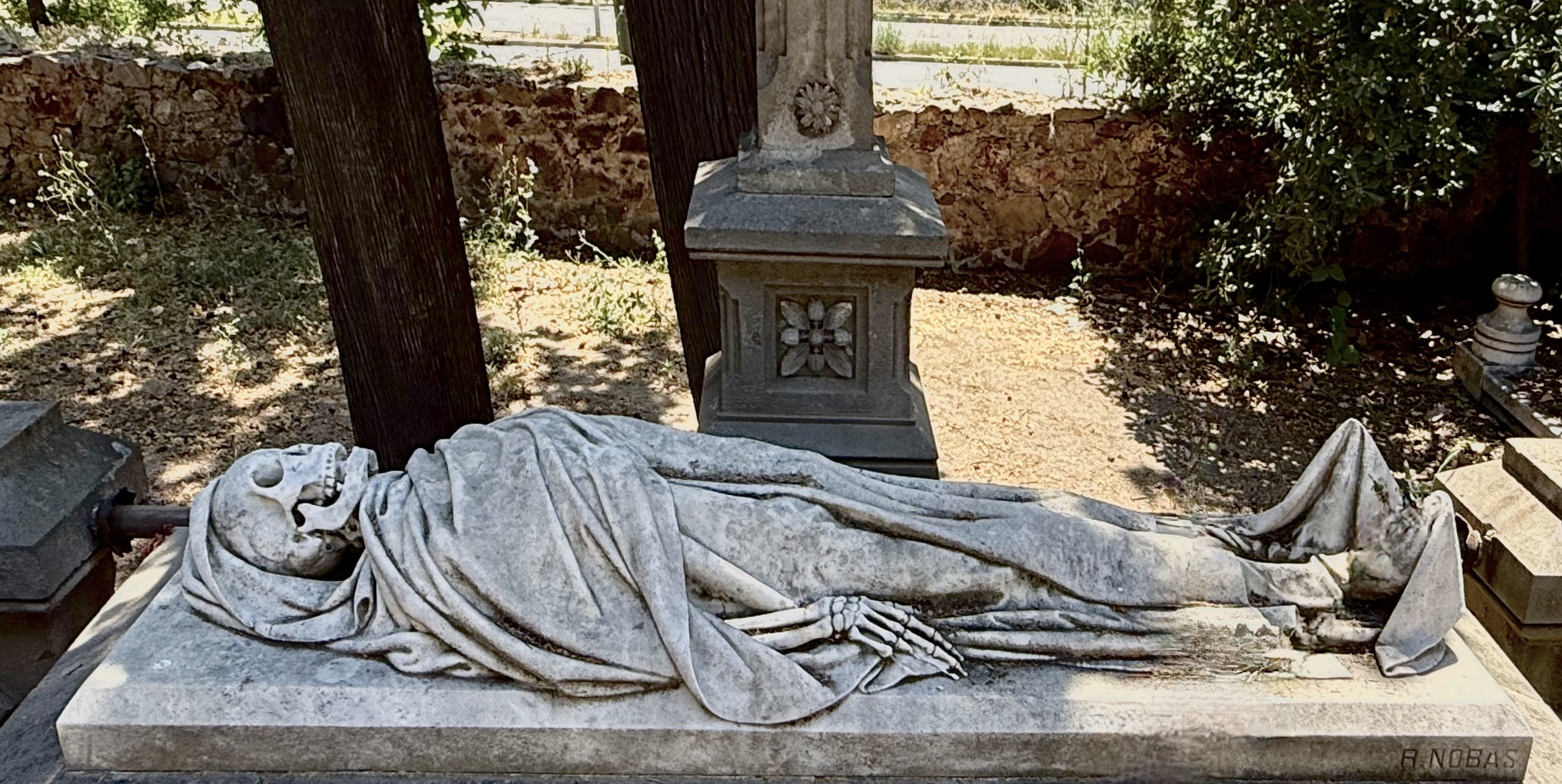
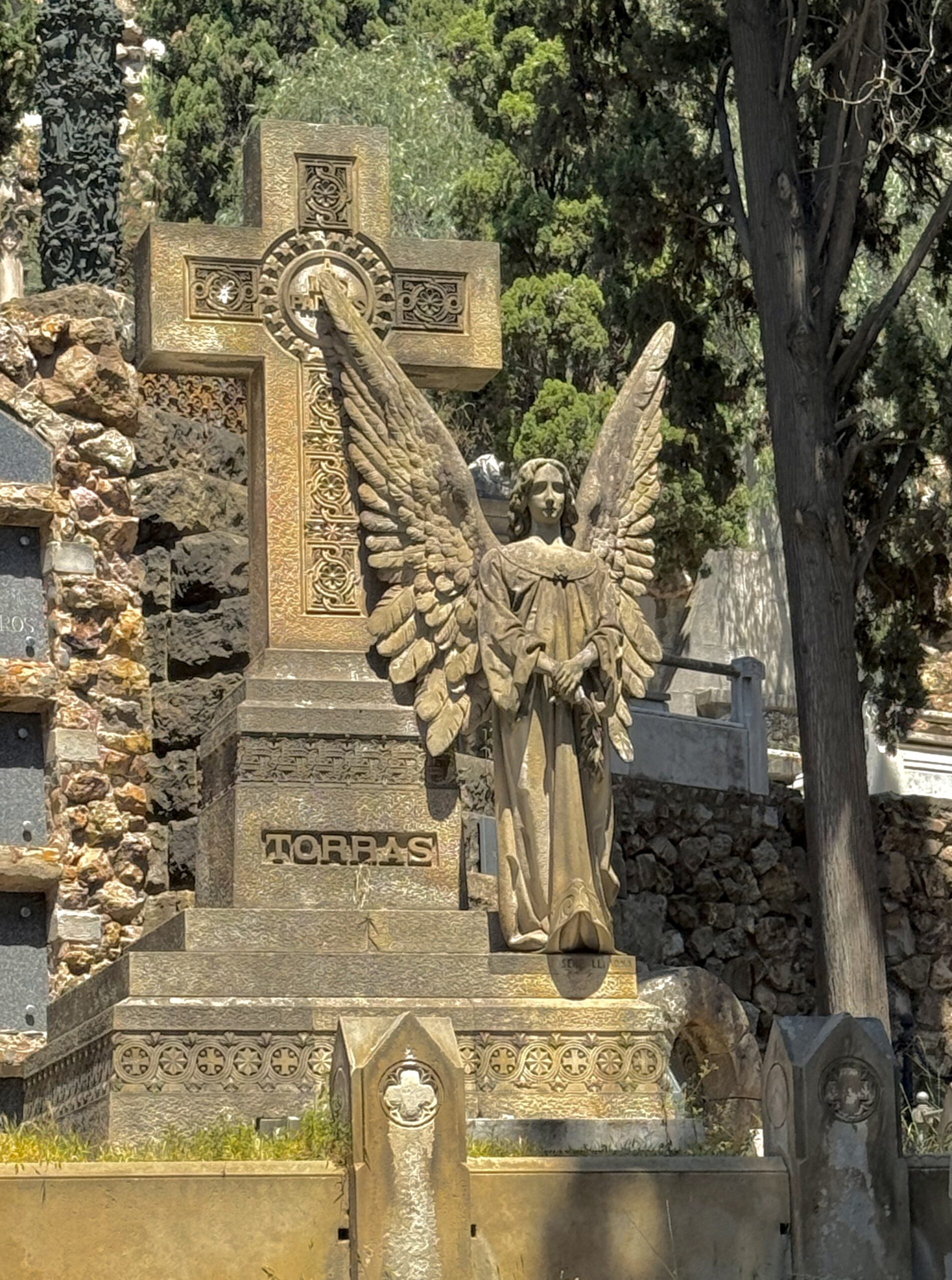
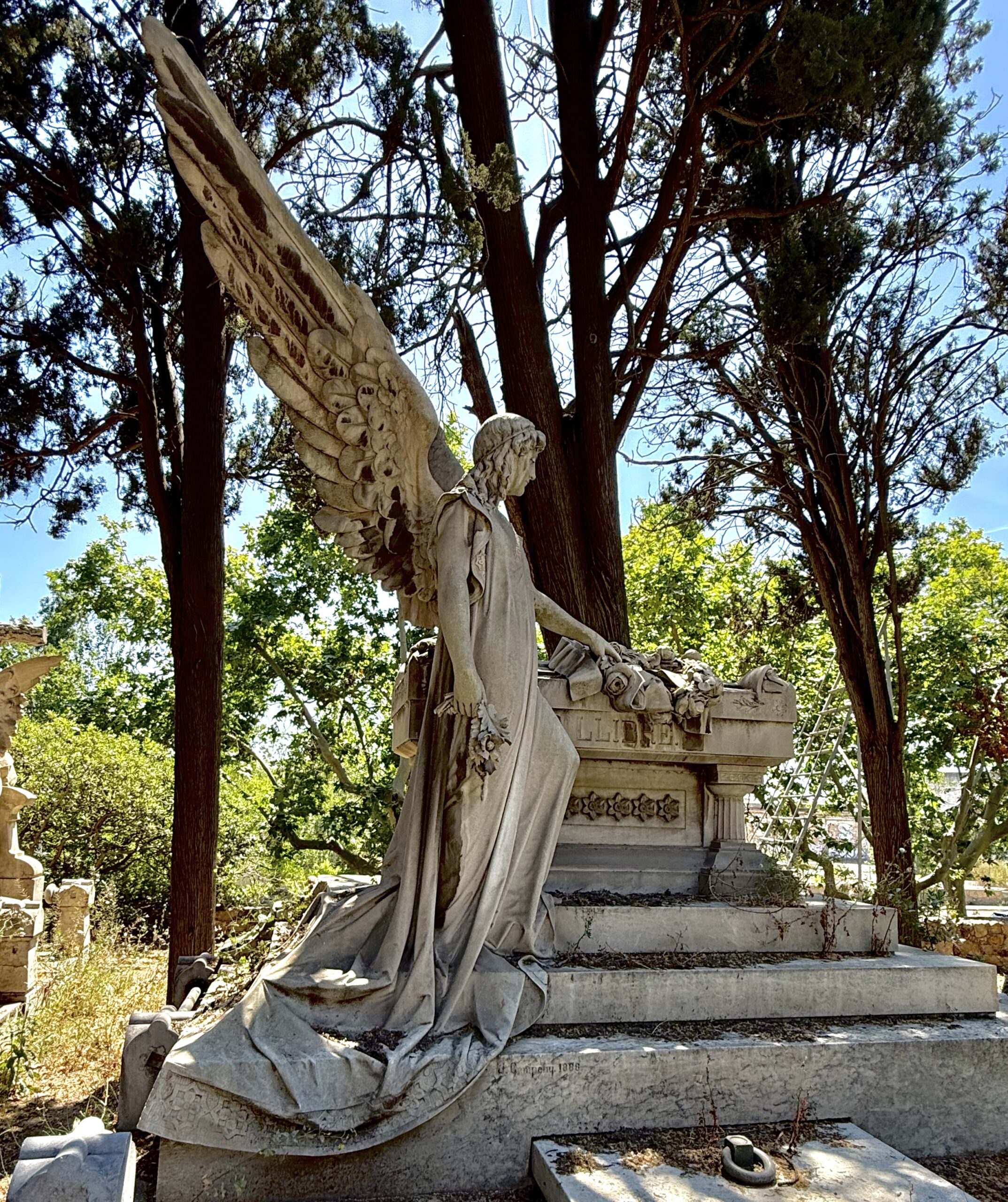
Here, the dead refuse to be filed away. They press up out of the hillside in marble and bronze, weeping angels and grieving widows, and a skeleton wrapped in his own shroud, with its skull and bony hands exposed to the Mediterranean wind. They demand to be looked at. They demand a reckoning.
I think I finally know why I need to visit. Jung said that confronting the body’s mortality is the precondition for any honest psychological life. That the persona drops in front of it, that the shadow includes one’s own bones. I have been researching the idea of my body’s mortality for fifteen years, through eight hundred recorded dreams, books of fairy tales, every nude I have painted, and every birthday selfie I have shared. The American cemeteries never asked me to confront my mortality. The Catalan cemeteries do. That is the answer. Well, at least part of it.
You should know I am not new to the dead. I served as a minister for almost two decades. I held the hands of the dying. I sang their favorite songs at their bedsides to ease their passage. As the pastor on call, I often got the emergency message before the family did, which meant I would arrive first at the hospital and stand alone with the body for thirty minutes or more, the corpse, lit like a stage prop at the center of a frigid, sterile room, sometimes whole, sometimes not, before the wailing family, now mourners, came through the door. I sang at more than two hundred funerals. Most people will live their entire lives without seeing a single dead body. I have seen hundreds. The cemetery should not have surprised me. It surprised me anyway.
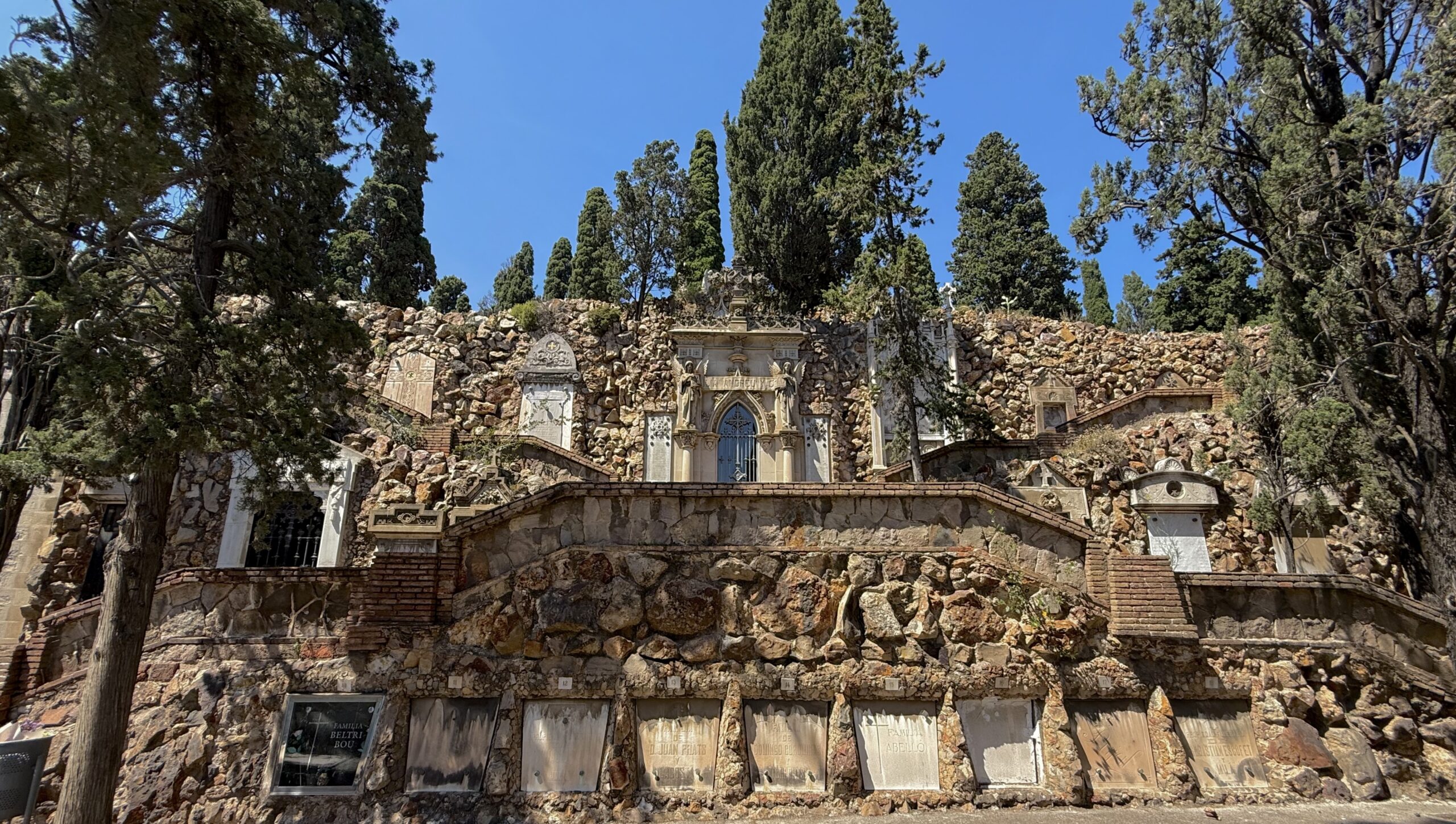
Montjuïc Cemetery opened in 1883. The old Poblenou cemetery, where Barcelona had been burying its dead since 1775, had filled past capacity. Mayor Rius i Taulet commissioned the young architect Leandre Albareda to design a new necropolis on the south-facing slope of the mountain that overlooks the harbor. Albareda had toured the great cemeteries of Europe before drawing his plans, and he wanted his to rival them. He got his wish. Barcelona’s bourgeoisie, textile barons, returning indianos enriched by Cuban sugar, the founder of FC Barcelona, the Amatller chocolate dynasty, turned death into a final boast.
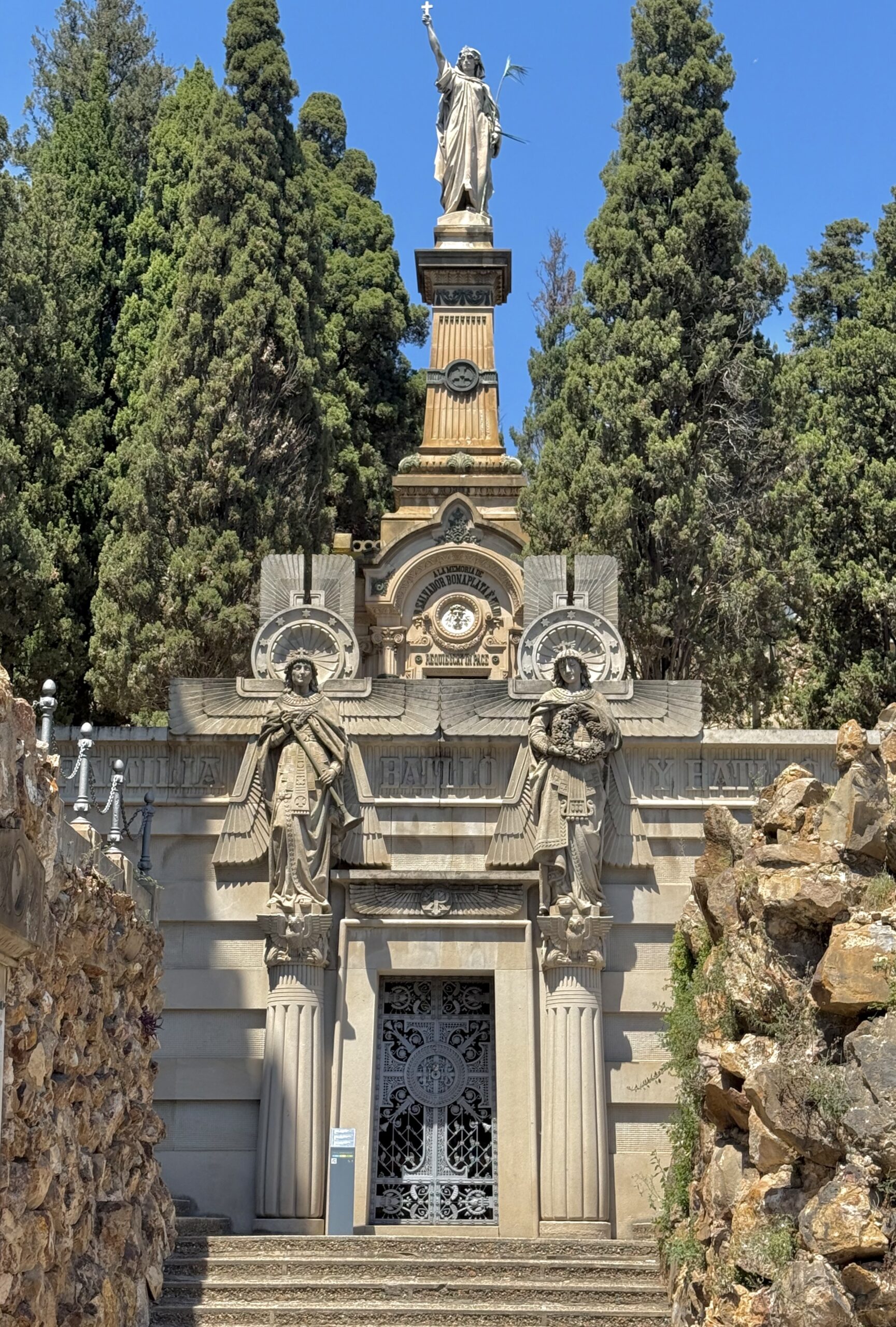
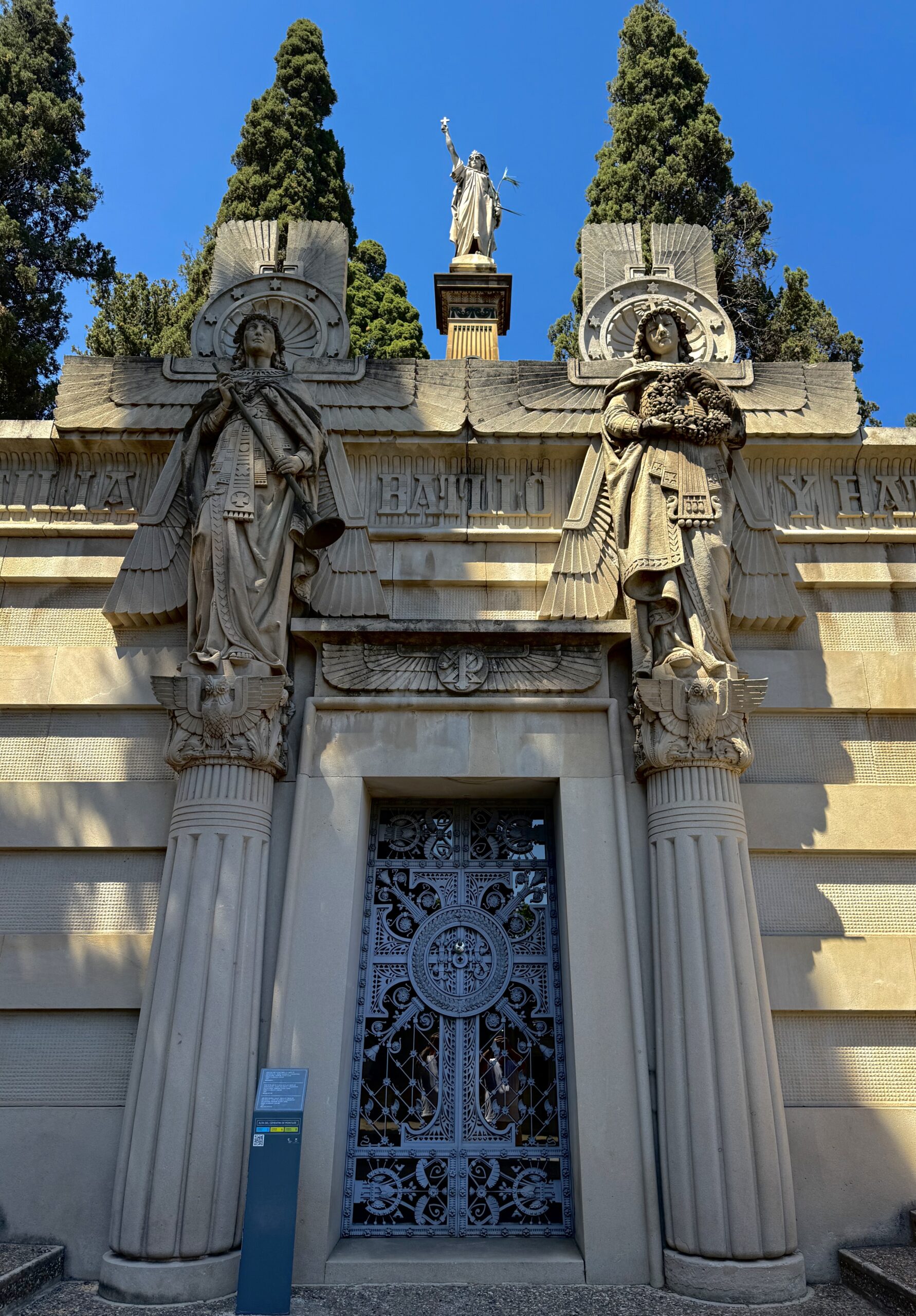
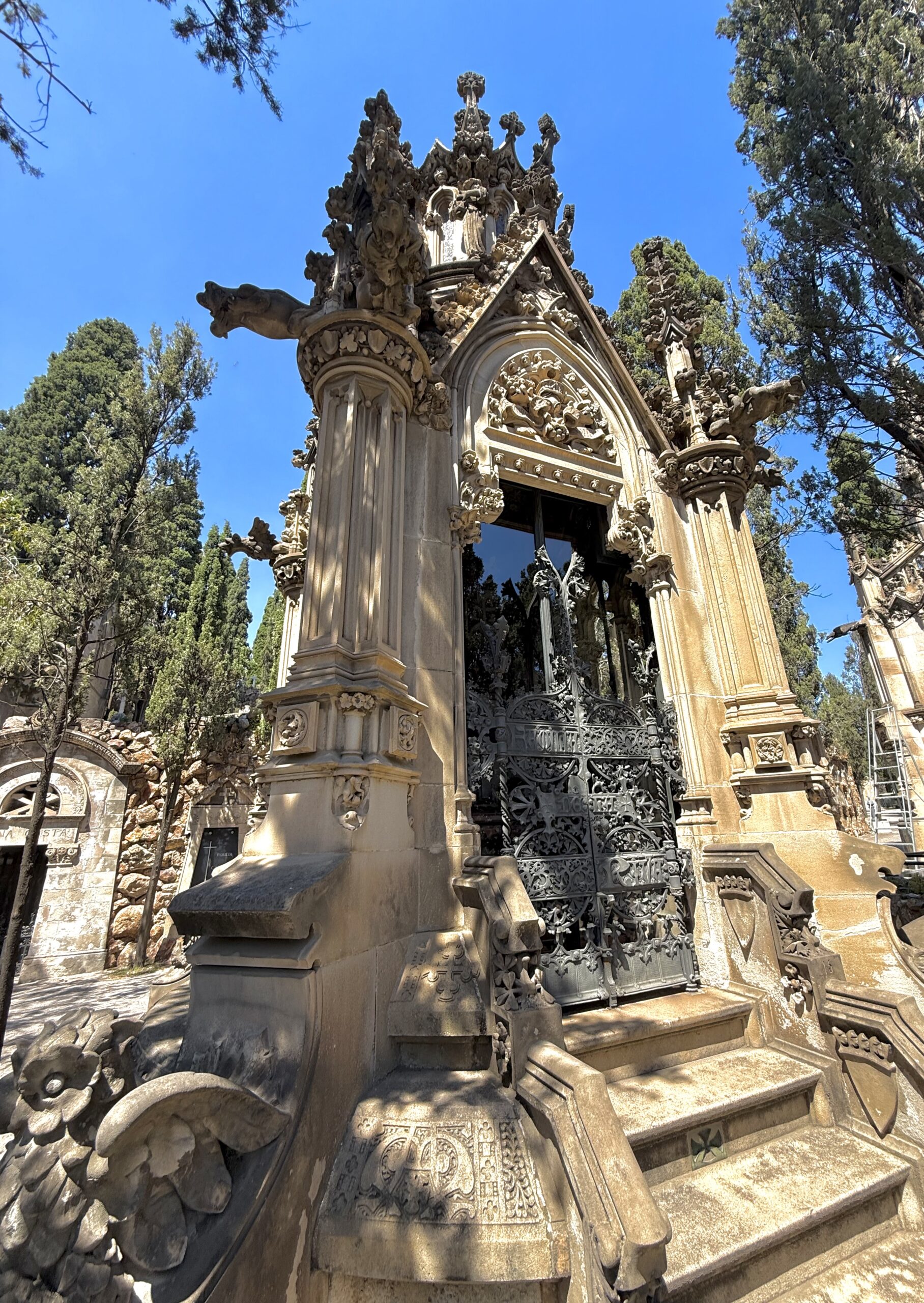
They hired the same designers who were building their Eixample mansions: Puig i Cadafalch, Domènech i Montaner, Sagnier. The same sculptors carving the Sagrada Família façades: Llimona, Arnau, Clarasó. The result is an imposing city of the dead with more than 150,000 plots, and over a million burials, staged on a vertical hillside above the sea, half open-air museum, half cathedral. One million inhabitants. A city of the dead, larger than most cities of the living.
Every “world’s most beautiful cemeteries” list names the same ten or so, Père-Lachaise in Paris, La Recoleta in Buenos Aires, Highgate in London, the Old Jewish Cemetery in Prague. But Montjuïc, with its vertical city of modernista mausoleums, more sculptures than in many art museums, its skeleton in marble shroud and its quarry full of bones, goes uncited every time. I have walked through a few other cemeteries here, but none of them did to me what this one did in a single afternoon.
The cemetery offers three free walking routes: artistic, historical, and combined. Yesterday I followed none of them. I just walked.
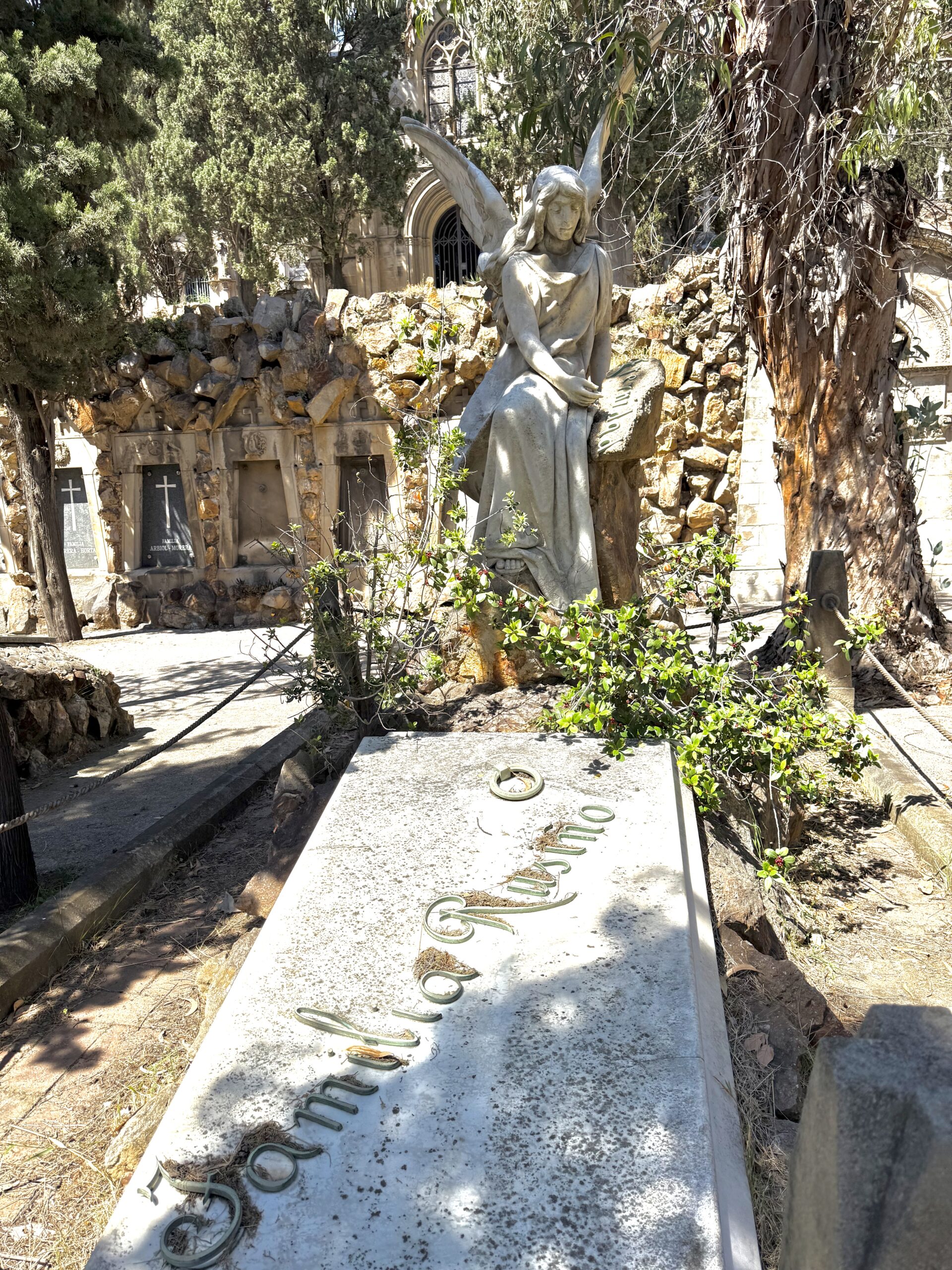
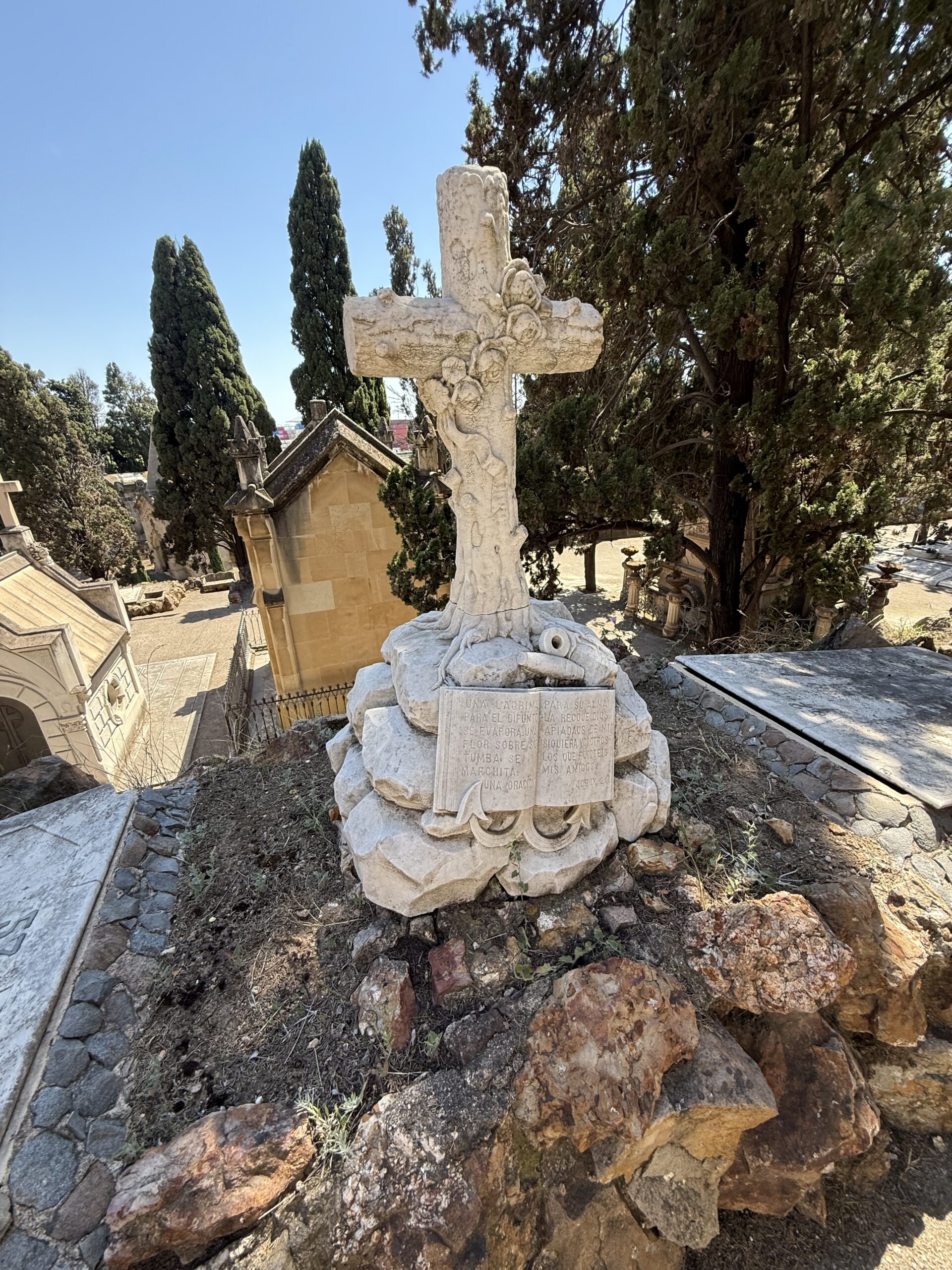
The first thing that struck me was that the silence wasn’t silent. The wind off the harbor moved through the pines and the cypresses. A seagull cawed, an eerie laugh from a cross atop a pantheon. I learned later that the cemetery keeps peacocks; they wander among the tombs like small kings. Marble figures stared down from every angle: angels with folded wings, women collapsed across stone coffins, sons whose fathers had paid the most renowned sculptors of their generation to grieve in stone forever.
And then I found Dr. Farreras Framis. His students had commissioned the tomb in 1888 as a final anatomy lesson for the professor who had taught them how the body comes apart. A marble skeleton, wrapped end to end in a marble shroud, skull and bony hands exposed. Memento homo. Remember, man, that from dust you came. I stood in front of him for a long time. The honesty of it fascinated me. No coy angel. No veiled woman. No soaring cross. Just the bones, stripped to what we all become.
A short walk farther on and up a hill, I found a pantheon with the door smashed. The stained glass was gone. A twisted length of fence wire had been wound through the broken lock to hold it shut. I peered in. A blanket. A few water bottles. Shoes and a garish, filthy orange blanket lined the floor beneath a sarcophagus altar. A living person had made their bed in there beside the dead one. Maybe they were still inside the cemetery walls somewhere, sleeping out the afternoon among the marble widows.
I tried to imagine going to sleep in that pantheon. The cold stone. The aura of spirits dancing above my head. The dead keeping watch over the living. And then a question rose that is haunting me: who, in that broken pantheon, is more alive? The squatter, or me, the person looking in? They at least know they are borrowing time from the dead. I walk around pretending I am not.
This is what the graveyards do here. They do not let you forget you are temporary. They make a mission of it.
And there is a darker reading the Catalan modernistas understood: the marble bodies on these tombs, the widow draped across her sarcophagus, the nude laborer mid-strike with his pickaxe, the shroud clinging to the skeleton’s hipbones, are erotic, and the patrons who paid for them knew it. Necrophilia (perhaps the ultimate taboo) is the literal collapse of that boundary. Sex with the dead is what Jung would call shadow at its rawest: eros drawn toward its own end, the body desired in the moment of its return to dust.
I am going back the week after next. There is too much to see in one walk. Fabled Barcelona artist Joan Miró is buried there, and I want to stand there with him. Lluís Companys is there: the president of Catalonia during the Spanish Civil War. His bones lie in the Fossar de la Pedrera, a former rock pit hidden in the cemetery’s western wing, where the Franco regime dumped bodies under quicklime to hurry them along. Roughly four thousand skeletons lie in that pit, the city’s poor, the unidentified, along with President Companys, who was thrown there after his firing squad at Montjuïc Castle on the hill nearby, along with anarchists and republicans and schoolteachers and priests whose names were never written down. An unmarked field in the city of the dead. Barcelona has made a memorial of the site now. I want to stand there too.
There, in the Fossar de la Pedrera, I will have to sit with a question I have spent a lifetime avoiding. People have called me innocent my whole life. Gentle. Soft-spoken. I have worn it like an identity. But you cannot stand above an unmarked field of four thousand bones, many of them put there on a single man’s order, and not try to comprehend the evil humans do to other humans. We are made of the same material. The gentle and the cruel and the innocent share a hillside, and share a species. All now dust. Yet another reason that I renounced whatever god I was taught to believe long before I came to Barcelona. The Fossar will not be a moment of loss. It will be the confirmation.
And I am going to find Carlos Ruiz Zafón. Part of his ashes rest at Montjuïc — the man who wrote The Shadow of the Wind, who built the entire Cemetery of Forgotten Books in the reader’s imagination, who taught a whole generation of us that the dead of Barcelona still speak. I am going to leave a tiny folded note at his grave. It will say only:
It was your idea, I wrote it, The Mysteries of Barcelona.
I am also taking a notebook. A new book is forming in my head, a Barcelona book again, the way The Mysteries of Barcelona is a Barcelona book, but darker. The Undead of Barcelona, perhaps. A novel set in the marble city above the harbor, where the living, the living dead, the dead, and the dead dead share a hillside, and the line between them is exactly as thin as a marble skin.
I’ll let you know what I find when I get back.
Part Two Coming Friday: Humans Walk Around Pretending the Dead Are Not Dead.


Leave a Reply