At last I have come into my Neverland. I am released from care. I am unknown, unlearning. I can redeem my lost childhood. Time no longer owns me; the minutes have become moments as I vow to see everything possible now that I am home.
Dec. 7, 2023 (First day in Barcelona, from my journal)
For nearly three years I have moved through Barcelona unnoticed: a white, ordinary-looking American of middle age, about as Spanish as a bowl of grits, struggling on my best days to speak the language.
I look at everything, including what millions of visitors have looked at before me and taken for granted. I take my time. I look hard, then I think about what I saw. I am a natural observer, forever marveling and ogling, and I hope I can help you look through my eyes; I hope the seeing brings a freshness to what I write. I loved Barcelona at once. I needed no seducing and no season of courtship. I felt at home the first week, and better simply for living among the people.
Nobody here recognizes this odd American or pays me any mind, which is exactly how I like it.
Gina and I said very little in Spanish those first two years. Then I threw caution to the wind and started talking, right and left, right and wrong, an unadorned Tarzan in a loincloth of vocabulary, swinging over ditches and hedges, genders and cases, nouns, adjectives, and irregular verbs of every sort. Everything shows. Every mangled verb and misplaced gender dangles in public. I can lie naked on Mar Bella without a blush, yet one wrong subjunctive turns me redder than a sunburn. Me Tarzan, you barista, and still the perfect cortado appears.
What is the mysterious allure of this city? What holds my heart and imagination? One afternoon I lay stark naked on Playa de la Mar Bella, salt air tickling my skin, and the answer rolled in with the waves. On the sand nobody asks me to conjugate. The Mediterranean is the life artery. Everything else flows from it.
Then there is the light, soft and golden, pouring over the Modernisme façades until the whole city glows. I have never known a place like it. From below, I gaze up at La Sagrada Familia. From Tibidabo, I look down and take in the panorama at a glance: art, movement, history, pleasure, pageantry, and power.
The Catalans chose to set their city apart with beauty. They decorated it, embellished it, and never recanted.
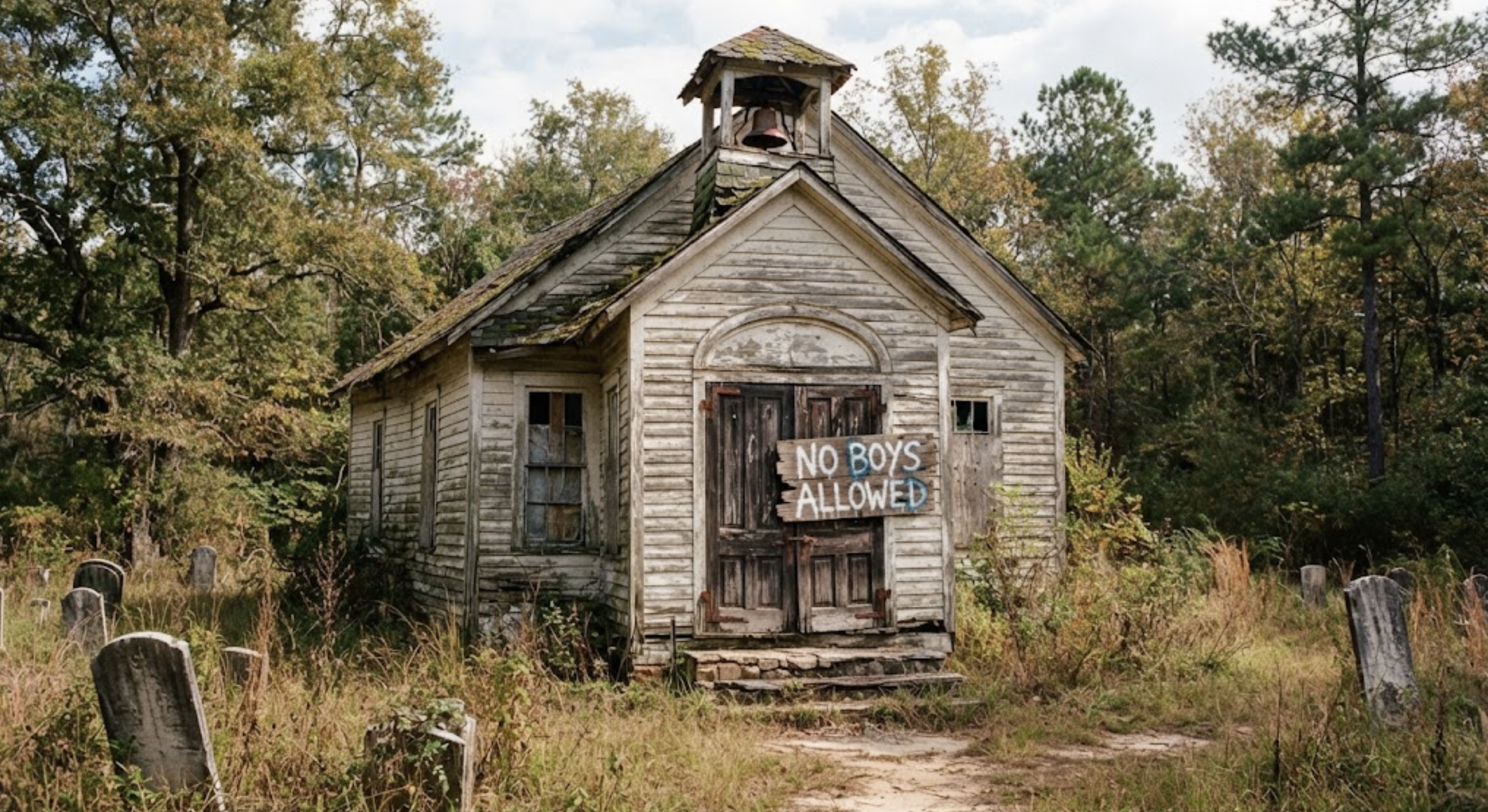
Inside La Sagrada Familia, gazing up into the forest of columns, I feel a sublimity I can’t analyze or express. It is a long way from the moldy one-room clapboard church in Mt. Olive, Tennessee, where I grew up singing, a child with no childhood.
I find myself drawn more and more to the buildings themselves. Ciutat Vella and L’Eixample fill most of my days. I know nothing of the rules of design, but I trust my eye. Gaudí strikes me as Mozart in stone.
I love the Block of Discord on Passeig de Gràcia, where Casa Lleó Morera, Casa Amatller, and Casa Batlló stand shoulder to shoulder and refuse to agree. I walk the length of it, then cross the street and take in the whole row. Up close I study the shimmering skin of Batlló. A monotonous style puts me to sleep. Variety wakes me up.
I can spend hours in front of the Sagrada. I gaze until the cranes and the crowds fade and I am alone in the middle of the city. Those spires are no accident. They soar madly, hungering for heaven. Murano glass mosaics breathe life into the pinnacles.
Then comes the Slaughter of the Innocents on the Nativity Façade. What a cold purpose in that soldier’s stony eye! In one hand he holds a squirming baby high above his head. In the other he wields the sword. A mother clings to his arm, pleading. Look down, and you will see his six-toed foot, the mark of an everyman. Gaudí made the executioner one of us. He carved no more faithful rendering of his medieval theme, and no pleading touches that cold heart. Late in life, Gaudí said of himself: “My good friends are dead; I have no family and no clients, no fortune nor anything. Now I can dedicate myself entirely to the Church. Life is love and love is sacrifice.”
Here was a man who gave everything to beauty and to God. I think about the human need for beauty, and how religion starved me of it as a child. Sometimes I feel cruelly, senselessly cheated. The faith I was raised in denied the body’s pleasures and proclaimed the denial holy. Year after year, the beautiful and the sensual were crushed out of me until the withering was complete. It still grieves me.
Every child arrives with an appetite for beauty. Watch a baby stare at the mobile above the crib, a toddler fall in love with a colorful blanket, a child color outside the lines. Then the censoring begins. In the church of my childhood, it never let up, and the body’s hungers and longings died a lingering death of smothered desire, pining, and weary starvation.
That slaughter of the innocents is a severe indictment of my upbringing, and of American life. It took Barcelona to show me a glimpse of what freedom can be, to raise me to life once again.
I know because my body remembers.
Peter Pan’s Neverland belongs to the boy who refused to grow up. Mine belongs to the boy who was never allowed to be one. Every morning I go out and get the passion back: golden light on ancient stone, sand on naked skin, lust hungering for beauty, a city that gives seduction a new meaning. At 68, I am finally playing with my body parts. And it feels good.
Leave a Reply