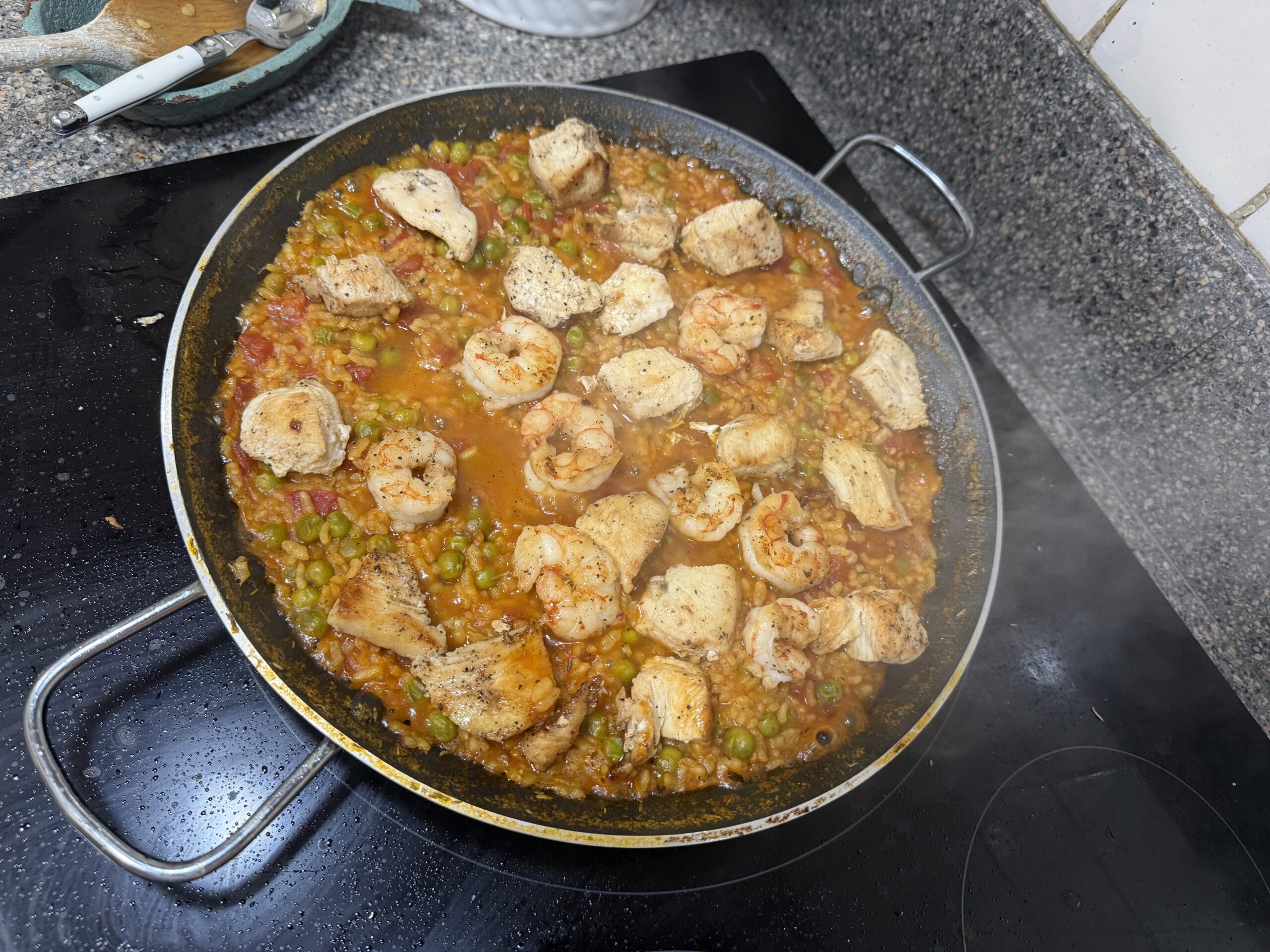
Tuesday One: Clean Food
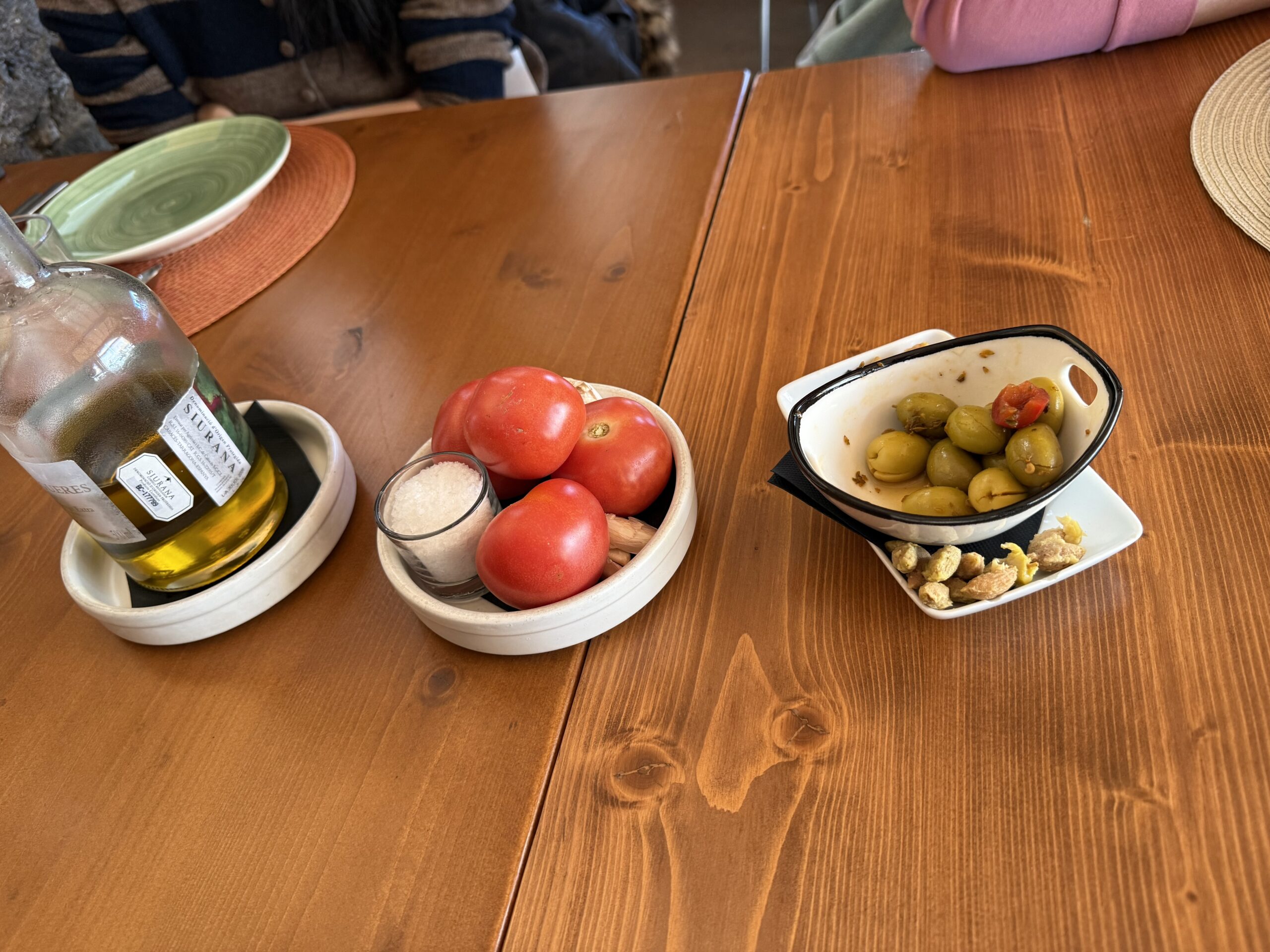
The first time a tomato tasted like a tomato, I had been in Barcelona for about four months. Gina brought home a tomàquet de penjar from the woman at Mercat de Galvany who keeps them hanging on a string by the entrance — small, ribbed, almost ugly, hung in clusters. She halved one, rubbed it on a freshly-made barra still warm from the oven, drizzled a little arbequina olive oil across the top, and set the plate in front of me.
I took a bite, and the world stopped.
I love tomatoes. I had been eating them for fifty-some years. In Nashville. In Tampa. On cruise ships. At every restaurant, from greasy-spoon to white-tablecloth. I thought I knew what a tomato tasted like. I did not. What I had been eating for half a century was a watery, pink, refrigerated approximation of a tomato — bred for shelf life, picked unripe, gassed in a warehouse, trucked 2,000 miles. The thing on the toast in front of me was a different food entirely. Sweet, bright, saline, faintly grassy. The juice ran down my chin.
That was the morning everything changed.
There is a phrase gaining traction in American food debates right now: “ultra-processed.” The acronym is UPF. Researchers use it to describe foods built in factories from substances that did not exist a hundred years ago — emulsifiers, dough conditioners, glucose-fructose syrup, hydrolyzed soy protein, “natural flavors” engineered in lab bays in New Jersey. About 60% of the average American diet is now UPF. In Spain, the figure is closer to 20%, and the gap is closing only because globalization eventually reaches everyone.
The number matters less than what the number means. It means most Americans have spent their entire adult lives eating food their grandparents would not recognize as food.
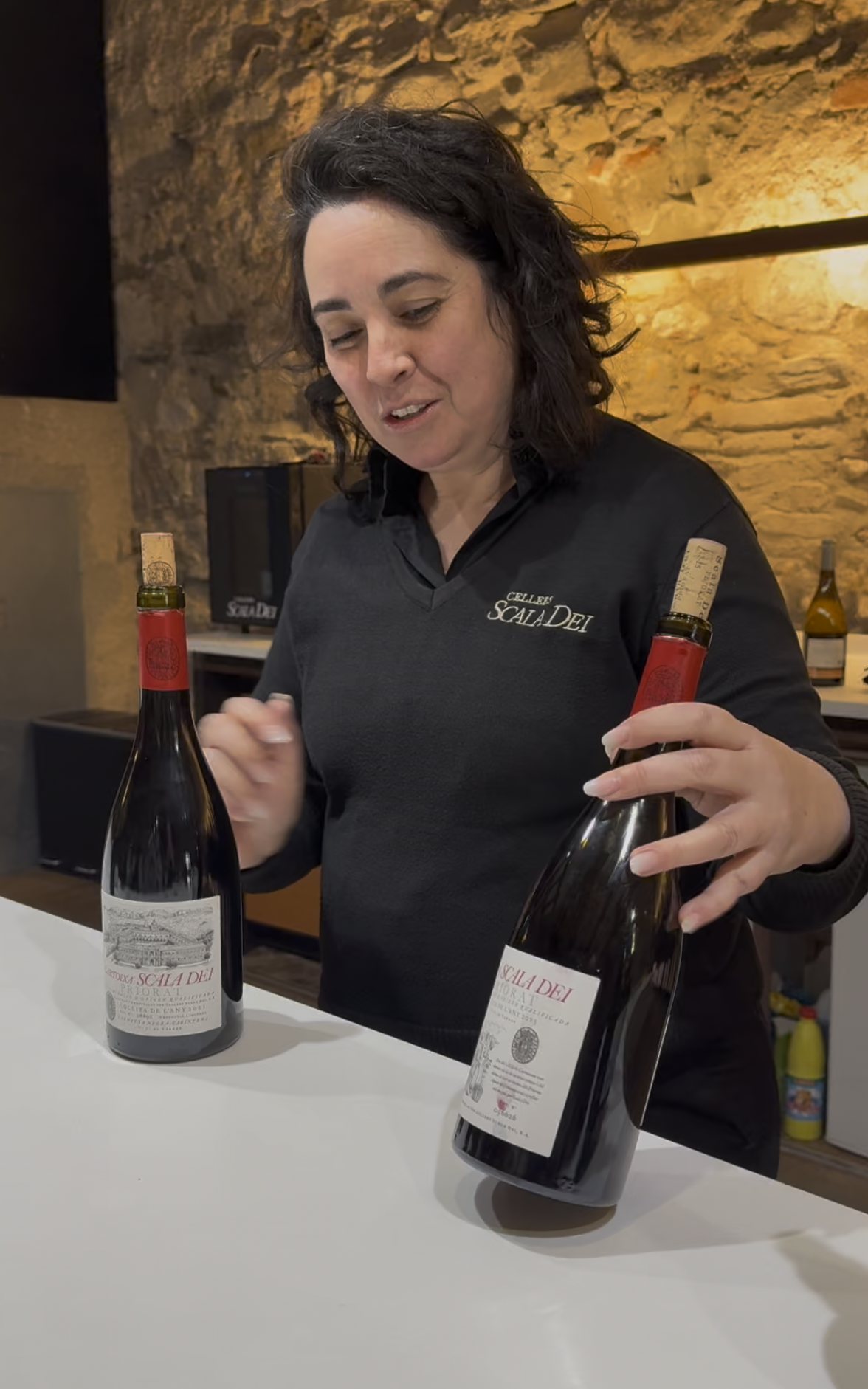
Last spring at Scala Dei — the 12th-century Carthusian monastery in Priorat where it all began — our guide, Veronica, walked us past the concrete vats and the sunken stone pits where the wine is still fermented and stirred by hand.
Vernica was from a family that had made wine on those slopes for generations. We make it the way the monks did, she said. The way our grandparents did. In Priorat, she told us, every home used to be a winery. They sold the wine in one-liter jugs for three euros. Then James Suckling, the American wine critic, discovered the region. Now a single bottle can fetch a hundred. It’s the same wine. Made the same way.
This is the difference.
In Spain, the grandparents are still in the room. Their wisdom and presence are revered rather than ignored.
Here is the thesis, three paragraphs in: Clean isn’t a fad. Clean is a manifesto.
Clean isn’t deprivation. It isn’t austerity. It isn’t another wellness performance with a tracker app and a virtuous Instagram grid. Clean is a palate trained back to the food itself — to the saline brightness of a real tomato, the chew of bread that actually fermented, the buttery complexity of a fat that came from an animal that ate acorns under the holm oaks of the dehesa.
You can’t five-step your way into this. You have to taste your way in. And once you do, the fast food stops working.
ºººº
A handful of the swaps that have rewired our kitchen, in case you want to start somewhere concrete.
- The Bread. Turris, at the L’Illa shopping center, is a short walk across the boulevard from our flat — the bakery Xavier Barriga built into a small empire of slow-fermented loaves. Their masa madre goes hard in two days because nothing in it is built to outlast it: flour, water, salt, time. American supermarket bread is engineered to stay soft for three weeks. A loaf that does not go stale isn’t bread. It’s an emulsified product wearing a bread costume. In America, real masa madre in America, means a local artisan baker.
- The Meat. Mercat de Galvany is a few blocks from our flat — a Modernista hall where Jesús, our carnisser, fresh-grinds chuck eye twice every week for our bolognese and our burgers. Early on, he handed me a length of his butifarra across the counter, which is a sentence I cannot type with a straight face but which is also exactly what happened, and told me to take it home and grill it. I have eaten it every week since. Jesús doesn’t do cured pork, so the jamón ibérico de bellota comes from Casa Pepe, the colmado down the street that I walked into one Saturday and have been walking back to ever since. Hand-sliced off a leg that has been hanging for two to four years. Two ingredients: pork, sea salt. The fat is high in oleic acid — the same monounsaturated fat that makes olive oil heart-healthy. By contrast, American deli ham is roughly 60% meat by weight. The rest is water, dextrose, sodium phosphate, and a phrase printed in small type: natural flavors. In America, Whole Foods carries some Ibérico now. It is not cheap.
- The Chips. Ametller Origen, the Catalan grocery next door to our apartment, sells a potato chip with three ingredients: potato, olive oil, salt. Casa Pepe sells unbranded sacks of artisan chips fried that morning by a churrería across town. Ruffles — even the Spanish version with a friendly jamón on the bag — contains zero ham and a long list of flavor compounds engineered to keep your hand reaching back in. There is no ham in Ruffles Jamon. There never was. In America, Boulder Canyon’s olive oil chips, Kettle’s three-ingredient line, Trader Joe’s olive oil potato chips, and some Whole Foods 365 varieties.
- The Coffee. I buy 100% Arabica beans, tueste natural, ground at home every morning. American supermarket coffee is designed for shelf life — vacuum-sealed cans of pre-ground robusta blends, sometimes sprayed with artificial vanilla or hazelnut to mask the staleness. The Spanish version of the same shortcut is a tradition called torrefacto — beans roasted with up to 15% added sugar that burns onto the bean as a black glaze. It looks like coffee. It tastes like coffee mixed with charred caramel. If you’re shopping here, read the bag: tueste natural is roasted with nothing but heat, mezcla is partly torrefacto, torrefacto is all of it. Once your palate knows the difference, you cannot unknow it. In America, find them at a specialty roaster.
- The Milk. The aisle of unrefrigerated boxed milk is what most expats reach for first because it never spoils. UHT milk has been heated to 275°F to kill everything inside it. Leche fresca — pasteurized at lower temperatures and kept in the cold case — tastes like the inside of a cow rather than the inside of a Tetrapak. Switch once, and you will never go back. In America, Strauss in California, Kalona in the Midwest, Snowville in Ohio, plus regional non-homogenized brands at most Whole Foods and co-ops. Look for the cream line at the top of the bottle.
- The Beans. Ametller’s mongeta blanca cuita extra are white beans cooked that morning, packed in a glass jar, with three ingredients on the label: beans, water, salt. The American canned bean is engineered with calcium chloride to stay firm and EDTA to stay pink. Spanish cooked beans are creamy because they were boiled. That is the only trick. In America, Rancho Gordo for dried heirlooms cooked at home. For canned, Eden Organic in glass jars (no BPA, no EDTA) is the closest equivalent to Ametller’s mongeta blanca.
ºººº
I would like to pretend we eat this way every meal. We don’t.
Gina misses Oreos. She finds the European version slightly off — the EU bans the dyes and certain syrups, and the result is a cookie that tastes more like flour and less like chemistry. She dips them in water, which is its own quiet rebellion against milk-and-cookies orthodoxy. I love her for it.
We are aiming for our clean food to have a 90/10 ratio. The 10% is the “dirty” part: Oreos, Ruffles, and a rare frankfurter or Five Guys burger. If you take those away, you’ve optimized away two of our few comfort foods and guilty pleasures.
Here is what I have come to understand, two and a half years in. This isn’t really about food.
It’s about a culture that has refused to surrender every meal to speed. Sobremesa — the long table-time after the food is finished — is a national instinct here. Lunches run two hours because food worth eating is worth sitting with. Markets close at 2 PM because the fresh food is gone. Strawberries arrive in March and leave in May. There is an artichoke season, a mushroom season, an oyster season, and a scallop season. You eat what is here right now, or you wait. The American expectation that everything should be available all the time at the lowest possible price is, once you step away from it, a strange way to live.
Clean food is the doorway, not the destination.
Update: We began cleaner menu preparation this week, and already my palette is happier. Fresh peas instead of frozen, arbequina extra virgin olive oil instead of regular, fresh milk in our coffee rather than UHT boxed milk. And wow! I will try to publish our menu and ingredients for the week soon.
Next Tuesday: what happens when speech stops being ultra-processed.
Randy Elrod is writing about the Clean Life from Barcelona every Tuesday.
Leave a Reply