
Last week I wrote about why conservative men fear powerful women. The piece struck a nerve. Thousands of you read it. A few of you wrote to tell me I had lost my soul. You may be right.
Today, the other side of the coin. The confession underneath the indictment.
I love powerful women. I have built my whole life around them. I married one. I have mentored one for thirty years. I have painted them in watercolor for two decades, the nude female form, again and again, because they symbolize my anima, the feminine living inside me, asking to be seen. And this past year I sat at my desk in Barcelona and conjured two more of them out of thin air, then handed them a city to conquer.
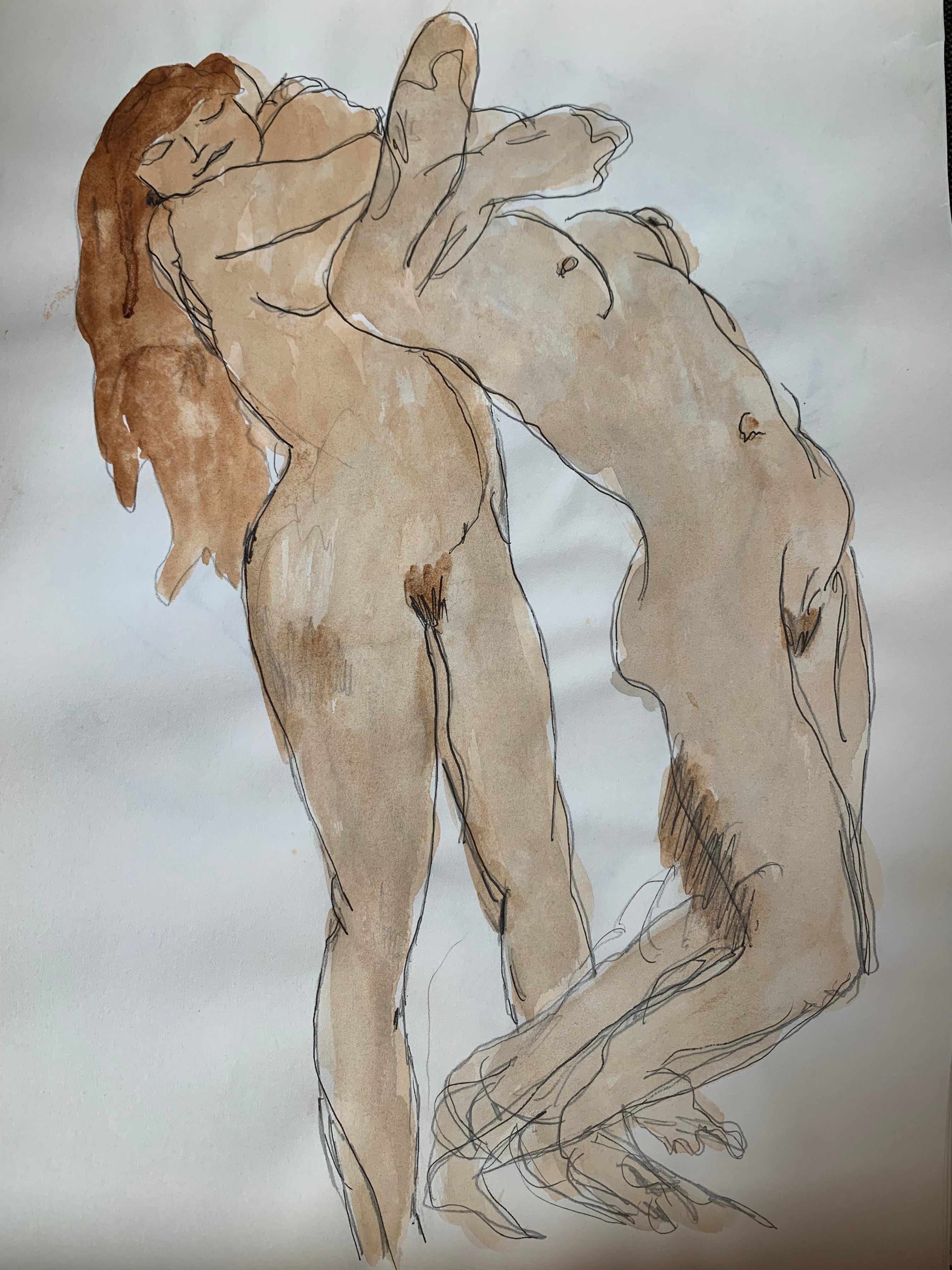
A whole woman, I wrote last week, is a mirror, and frightened men cannot stand what they see in it.
For me, that mirror is the best view in the house.
A conservative man sees a powerful woman and reaches for a weapon of destruction. I see one and reach for a comfy sofa, a dram of whiskey, and the rest of the night. I am a highly sensitive man. I feel everything, always have, and the thing I feel most keenly in this world is the electricity of a woman who knows exactly who she is. It does not diminish me. It wakes me up. And turns me on.
Let me tell you about a few of them.
Gina
In the fifteen years we have been together, we have moved twelve times. Across the American map, homeless to city to suburb to farm to another country and another language. Twelve times. We made every decision together, one in purpose and essence.
The truest test came on fifty-four acres of Appalachian bramble and rocks.
We lived in an RV. I had never held a drill before in my life. She had. We built my atelier first (the Hawk’s Nest) with our own four hands. Then a lodge. Then cabins. We blazed trails across fifty-four acres, laid hardwood floors, stacked stone walls, dug french drains across undulating ground, raised fences, built stables and haylofts, rescued horses, grew our own vegetables, and survived one of the worst winters Smith County had seen on record. Gina was right there with me the whole time—shoulder to shoulder in the mud, a coequal in every blistered, cursing, exhausted, occasionally glorious hour. Never behind me. Never decoration. We turned brambles and stone into a stunning compound, and she swung a hammer for every inch of it.
She had been a champion show jumper as a girl. Try jumping a six-foot fence. When we finally got horses onto that land, I watched a woman in her sixties move a thousand-pound animal with a whisper and a shift of her weight, and I understood power has very little to do with volume…or gender.
And when this fourth-generation Floridian with sand in her shoes said, Let’s leave America, I said yes. We told our friends we were moving to Spain, and they admired our courage, but neither of us fully grasped how much courage it would take until we were standing in the middle of it, in a populous city that did not speak our language, building a life from scratch yet one more time. She has faced every daunting, unfamiliar day of it with a bravery that leaves me in awe.
She is my muse and my anam cara, the Celtic phrase for the soul friend who sees all the way to the bottom of you and stays anyway. “There are no words,” I wrote years ago, “to express what an extraordinarily strong woman she is.” There still are not. I just keep trying to find them.
Melissa
Then there is Melissa.
I have known her since she was a teenager, wowing me in an audition for a solo. Over thirty years ago. Her teenage daughter now dances with her the way she once sang with me. We have spent weekends alone together in solitary mountain cabins, dreaming, laughing, communing, the kind of intimacy that loses track of the hour. She championed me when I was at my lowest.
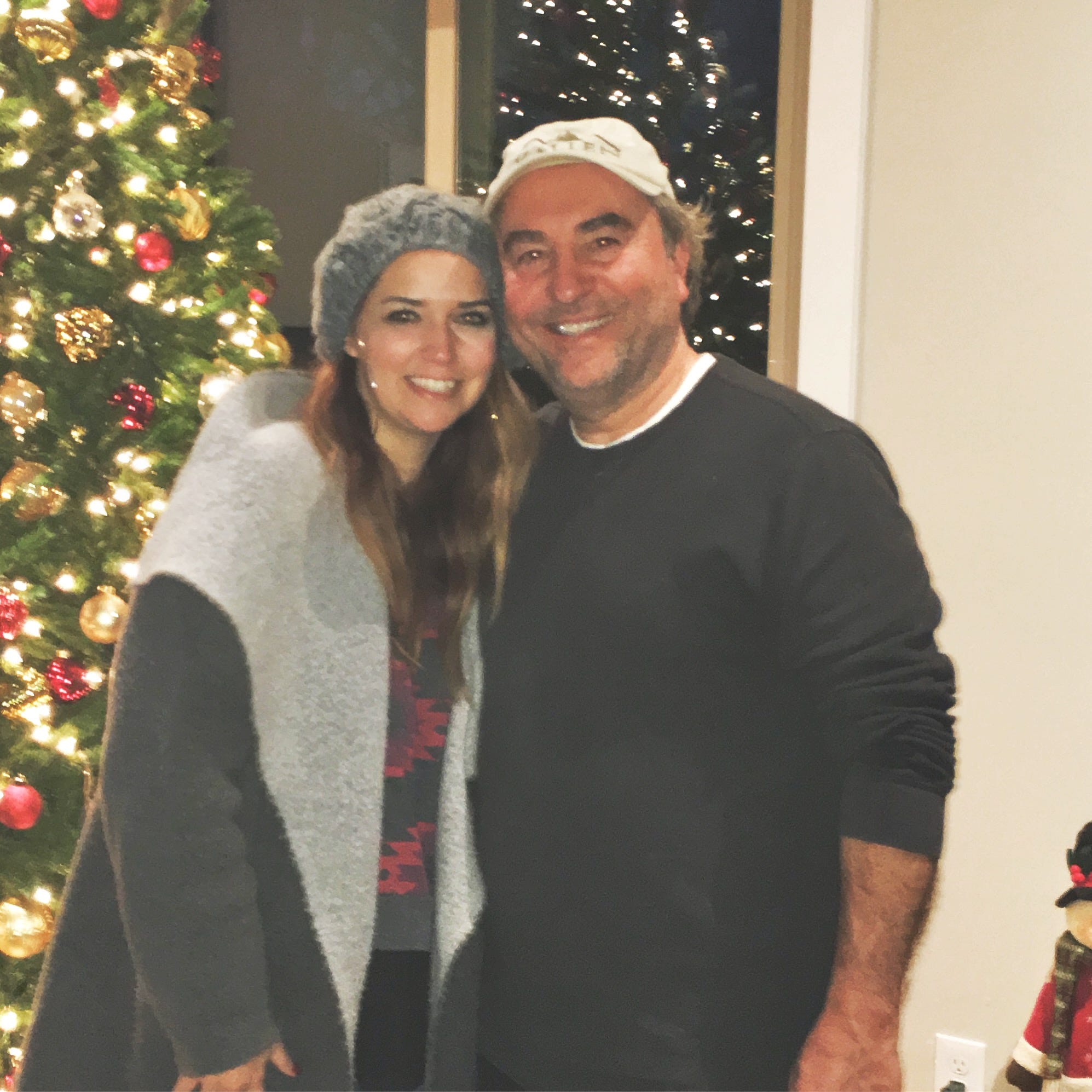
She commands every room she enters—physical and soulish presence at once, a gravity that turns every head before she has said a word. And she is, flat out, one of the best preachers I have ever heard. And I have heard thousands. I am not exaggerating to land a point.
She has walked away from more achievements than most people are ever handed. She left a successful career in Christian music near the height of it. Then a white male pastor recruited her into ministry with a promise: she would stand as his coequal, share the leadership, share the pulpit. And then she walked in and did the thing she does, filled the room, moved the people, preached rings around him, and he could not bear it.
The promise evaporated. The fear I wrote about last week is not theory to me. I have watched it conquer men in real time. And I watched from afar as a frightened man tried to shrink my dearest friend down to a size he could control. She refused. She left, and she carried her power out the door with her, the way few women do.
Every time a box got too small, she chose courage. Out of the music industry. Out of the institution. Eventually onto public stages that celebrate unconditional love and inclusivity instead of regulating fear into doctrine. She did the bravest thing a person can do: she trusted her own values over everything she was handed, and she kept choosing them even when it cost her salary, the platform, and the ready-made identity.
This is the part of her story that makes me want to stand up and shout. A few weeks ago, Melissa and her former bandmate Michael Passons in the award-winning contemporary Christian group Avalon—Michael was quietly pushed out of that group years ago for being gay—joined with the first openly gay country music star Ty Herndon to re-record Avalon’s old hit “Testify to Love.”
The same song. New meaning. The true meaning. A declaration that love arrives without exception. It shot to number one on the iTunes Christian chart that once would have had no shelf for it, and music superstar Amy Grant herself reached out, undone by what they had made. In a glorious twist of fate, they will sing it together June 24 on the stage of the Grand Ole Opry. The woman a frightened pastor could not stand beside is now helping an entire genre tell the truth.
The church that could not hold her is smaller now. Melissa’s world is exponentially larger.

Chloé and Montse
I spent this past year conjuring two more powerful women out of thin air. In my debut novel, The Mysteries of Barcelona, there is a woman named Chloé Permanyer. She arrives in the story carrying scars left by fearful men—and rather than break beneath them, she learns to take the very tool those men weaponized against her, desire, and forge it into an instrument of justice. She becomes a hunter. And the predators of nineteenth-century Barcelona—the priests and jailers and magistrates who believed their power made them untouchable—discover, one by one, how wrong they were.
Then there is Montse, a Spanish dancer who waited ten patient years to become the woman she was always meant to be, and then became it overnight.

I did not sit down to write a manifesto. I sat down to write a gothic thrill ride through my adopted city—automatons and catacombs and immortals beneath Tibidabo. But two powerful women had minds and lives of their own and took the book away from me, and made it better, the way so many powerful women have enriched my life, in every possible way. By the end, the two of them walk arm in arm through the Gothic Quarter, unowned and undimmed and dangerous and free, while the men of the city stare and quake and make, always, the same mistake.
I think you would like them. The Mysteries of Barcelona is available now. Consider this your invitation to join them.
A Lifetime of Them
The truth is, powerful women run all through my story like a mighty river; some for a moment, and others for a lifetime.
Grammy and Dove-winning songwriters who have held millions of people breathless—Margaret Becker, Amy Grant, Hayley Williams, and more—singing with a control and a supple power most men twice their size will never possess. Miley Cyrus, whom I watched explode onto the scene as a girl, a slip of a thing who walked onto stages built for giants and swallowed them whole.
The reformers and artists I have been lucky enough to sit beside at the table for forty years. Writers such as Simone Beauvoir, George Eliot, Sarah Bakewell, Sophie Strand, and Madeline Miller, to name only a few. The nude female I have painted ten thousand times, who turns out, every time, to be the strongest and most honest part of my unconscious.
I did not choose to love and admire powerful women out of politics or principle. I cherish them because they have gifted me abundant life. My life has been immeasurably enriched by them—made larger, braver, and more alive every time I have stood near, with, or beside one.
The Whole Difference
I am sixty-eight years old. I write this from a terrace in Barcelona where the most powerful woman I know is two rooms away, and where her mind is the most exciting thing in any room she enters, and where her pleasure—with me or without me—is a gift and never a threat.
The Southern Baptist men in Orlando and the Manosphere spend their energy building walls higher to keep women like these out.
I have spent my whole life opening doors to welcome them in.
That is the difference. That is the whole difference.
Leave a Reply