Last week I was talking with a family member about my parents’ future. They are eighty-six now, both ailing, and the conversation carried the weight those talks always carry. Then it came. “Well, at least some of us can’t run away from home to a foreign country and escape everything.”
It landed like a slap to the face. (It was meant to.)
I went quiet. Gina knows that quiet. And later during cocktails, the thought hit me: you can’t run away from home if it was never home.
I was the black sheep before I knew the word, the complicated, highly sensitive, artistic kid who flinched at everything and felt it all deep within. My mother said it to my face once, love and bewilderment in equal measure: “I’m not sure how I birthed you.” She meant it kindly. It still tells you everything.
The home metaphor frays further when you do the math. We moved twelve times in twelve grades of school. Twelve. I have moved more than thirty times in sixty-eight years. When someone tells me they grew up in one house, the house their grandfather built, I look at them like they’re describing life on Saturn. I cannot conceive of it.
So which home, exactly, did I run away from? The grey house on Fifth Avenue? The parsonage? The next parsonage? Home was a U-Haul and a forwarding address.
I tried to go home. Once. At fifty-seven, after three million miles of wandering across sixteen countries and four continents, I sold my snazzy white sports car, bought the first pickup truck of my life, and moved back to the hills of Tennessee. I quoted Thomas Wolfe to myself like a prayer. I built a cabin with my own hands. I wanted to live of the land, not just on it.
Wolfe was right. You can’t go back home; the home you reach for was a young man’s dream, and the young man never lived there. Five years of solitude in those mountains taught me the thing I had been running from was never a place. It was the absence of one.
Then there is America. My birth home.
For most of my life, I assumed the disconnect was mine. Highly sensitive people don’t get to filter the noise; we absorb it, all of it: every siren and screen and scream and murder and mass shooting. As I read more, learned more, digested more true history, my country started to look like a foreign land. Then Trump glided down his golden escalator. Then January 6th. Gina and I watched the coup attempt unfold on television and felt the earth move under our feet. We did what human beings have always done when the ground turns hostile. We left. People have crossed deserts and oceans for less.
So no, I didn’t flee my nuclear home, and I didn’t flee my birth home. You cannot abandon a house you were never handed the key to.
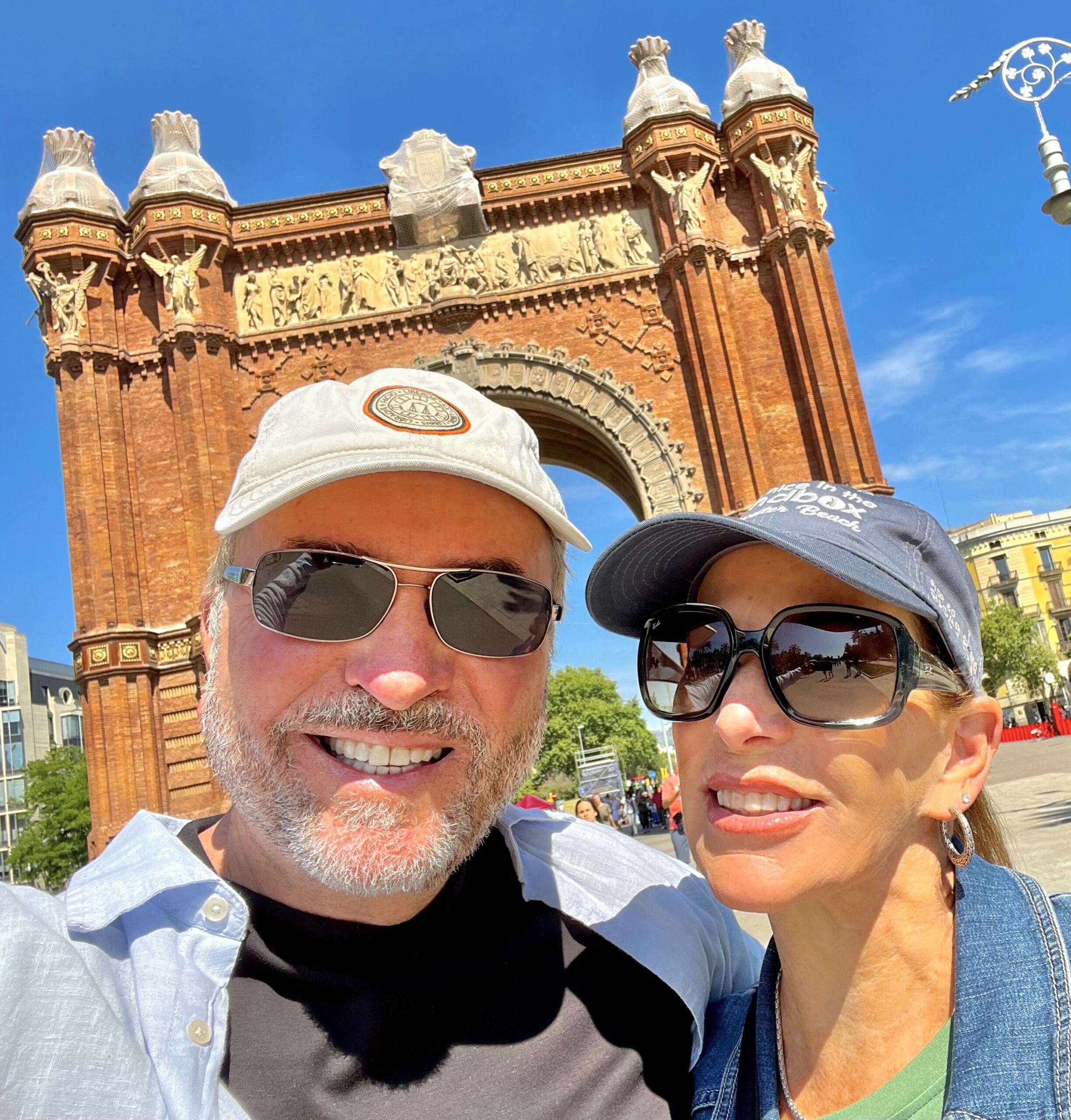
This morning, as Gina and I walked hand in hand to our favorite sidewalk café for breakfast. Pavers underfoot, the Barcelona mandala, four petals around a center, the same four essentials I’ve organized my whole life around. Tinto de verano weather. A camerero who knows our order before we say a word. And I said it out loud, the truest sentence I’ve spoken in years:
“I feel more at home here than at any time in my life.”
My sensibilities and this Spanish culture are in full agreement. The slowness. The sobremesa that lets a meal dissolve into an afternoon. The tranquilo that drops my shoulders an inch every single day. A country that lets a sixty-eight-year-old man be exactly as sensitive, as curious, as hungry, and as free as he actually is.
I didn’t run away from home.
I ran toward it. For sixty-eight years. And one ordinary morning, on a sidewalk in Barcelona, with the woman I love and a café table waiting, I finally arrived.
I have, at long last, found a home.
Leave a Reply